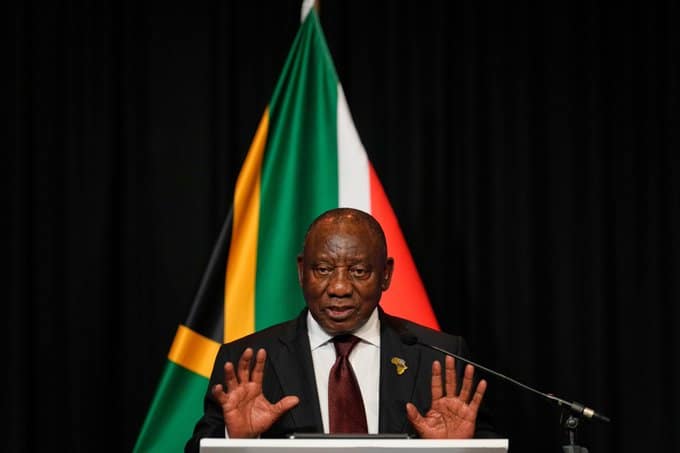
President Cyril Ramaphosa has firmly ruled out any diplomatic push by South Africa to rally fellow G20 nations into boycotting the United States’ 2026 presidency events, including the critical Sherpa track meetings scheduled to begin in Washington next week. The announcement comes amid escalating diplomatic friction and calls from several Global South capitals for a collective response to what they term “exclusionary practices” by Washington.
Speaking at the Union Buildings during a year-end media briefing, Ramaphosa emphasized a principle of non-interference in the sovereign decisions of other nations. “South Africa will not be lobbying for any boycott of the G20 process,” he stated, his tone measured. “While we engage constructively within the forum to raise concerns, we believe countries must take their own decisions based on their national interests and foreign policy principles.”
The President’s comments follow weeks of behind-the-scenes tension within the G20, a group representing the world’s largest economies. The core of the dispute stems from recent U.S. legislation and accompanying State Department guidelines that effectively bar official delegates from several nations—including Russia, Iran, and Belarus—from attending preparatory meetings on American soil due to existing sanctions regimes. While the U.S. has offered virtual participation as an alternative, several member states have denounced this as a de facto exclusion that undermines the G20’s consensus-driven, inclusive nature.
A bloc of nations, understood to be led informally by China and Russia but with sympathy from others including Indonesia and Brazil, has been privately discussing a coordinated protest. Options reportedly ranged from sending lower-level delegations to the Washington Sherpa meetings to a full-scale boycott of the U.S. presidency year altogether, a move that would cripple the forum’s 2026 agenda.
South Africa’s position, as outlined by Ramaphosa, carves a distinct middle path. “The G20 remains an indispensable platform for navigating complex global challenges—from debt distress and climate financing to food security,” he argued. “Its paralysis benefits no one, least of all the developing world. Our approach is to remain at the table, to voice our objections clearly, and to seek diplomatic solutions that preserve the forum’s integrity.”
Analysts suggest Pretoria’s stance is a calculated blend of principle and pragmatism. “South Africa is walking a tightrope,” said Dr. Lindiwe Nkosi, a senior fellow at the Pretoria-based Institute for Global Dialogue. “It has strong BRICS affiliations and a history of challenging Western unilateralism, but it also values its trade and investment ties with the U.S. and sees the G20 as a key stage. By refusing to lobby for a boycott, Ramaphosa is avoiding alignment with any polarizing camp, positioning South Africa as a potential bridge-builder.”
The reaction from other capitals has been mixed. Officials from the boycott-leaning bloc expressed disappointment, hoping South Africa’s moral authority in the Global South would lend weight to their protest. Western diplomats, meanwhile, welcomed Pretoria’s statement as a moderating influence.
The upcoming Sherpa meetings in Washington, where senior officials negotiate the groundwork for leaders’ summits, will now be a critical test. All eyes will be on which nations follow through on boycott threats and how the U.S. manages the fallout. South Africa, Ramaphosa confirmed, will be present and represented by its Sherpa.
“We will go to Washington,” the President concluded, “not to endorse the status quo, but to engage, to negotiate, and to insist that the G20 must function as a forum for all its members. The path forward is through dialogue, not disengagement.”
About The Author