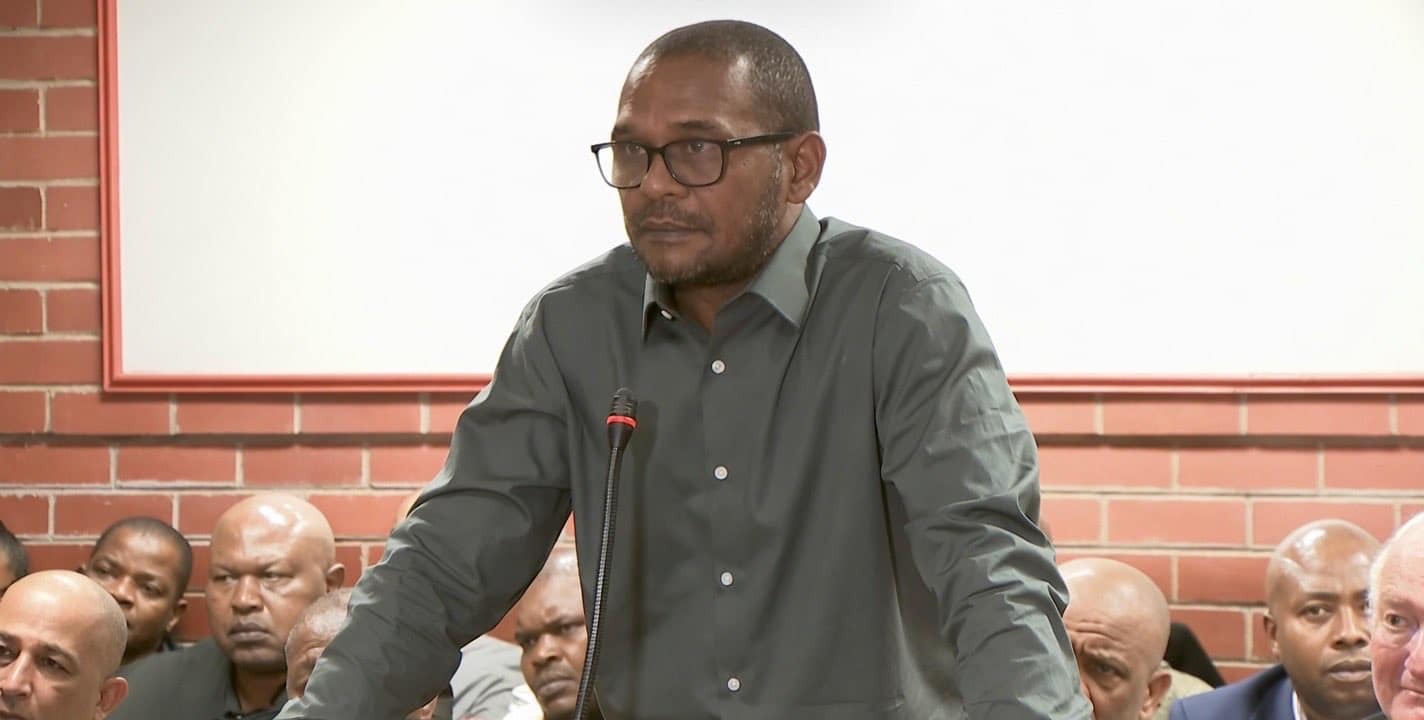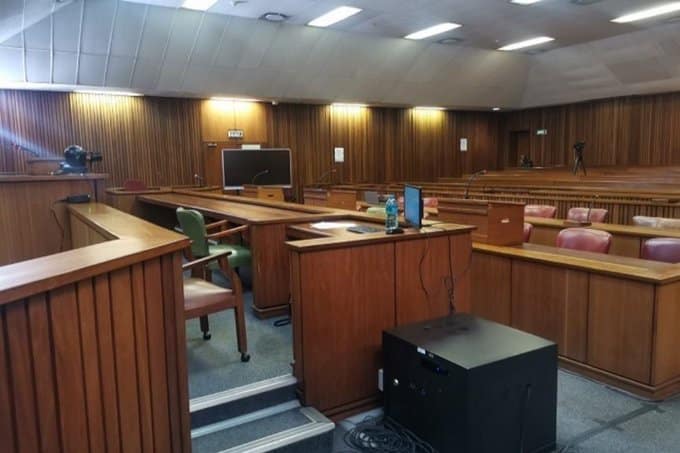
South African police are investigating serious allegations that a prominent religious leader raped a 13-year-old girl, a case that has sent shockwaves through the congregation and the wider community, sparking widespread concern about the abuse of trust and the vulnerability of children within places of worship. The allegations, which the religious leader has strongly denied through his legal representatives, have prompted an urgent and sensitive investigation by the Family Violence, Child Protection and Sexual Offences (FCS) unit.
The suspect, whose name cannot be disclosed until he appears in court or formally charged, is a well-known figure in KwaZulu-Natal’s religious landscape. He presides over a large Pentecostal congregation with thousands of members and runs a network of community outreach programs, including a children’s feeding scheme and a youth mentorship initiative. His face has appeared on billboards, his sermons have been broadcast on community radio, and he has been photographed alongside provincial politicians and business leaders.
But behind the public image of piety and charity, police allege, lurked a predator.
According to a statement issued by the National Prosecuting Authority (NPA) on Monday afternoon, the investigation was launched after the teenage victim, accompanied by her mother, laid a formal complaint at the Durban Central Police Station on 9 April 2026. The girl alleged that the religious leader had raped her on multiple occasions over a six-month period, beginning when she was 12 years old and continuing until she turned 13. The alleged incidents took place at the leader’s private residence, at his church office, and during what the victim described as “private counselling sessions” held under the guise of spiritual guidance.
“The allegations are deeply disturbing,” said NPA regional spokesperson Natasha Ramkisson-Kara. “The State takes any allegation of sexual violence against a child with the utmost seriousness. Given the nature of the charges and the position of trust occupied by the accused, this matter is being prioritized at the highest level. We urge anyone with additional information to come forward.”
The Allegations: A Pattern of Grooming and Abuse
According to the victim’s statement, which has been seen in part by legal aid representatives, the religious leader first met the girl when she attended a youth camp organized by his church in early 2025. The girl, who comes from a single-parent household in a Durban township, had been recruited to the camp by a friend. She was reportedly struggling with anxiety and self-esteem issues following the death of her father in a car accident.
The religious leader, the statement alleges, took a “special interest” in the girl, offering her private counselling sessions, buying her small gifts (including a smartphone and clothing), and messaging her frequently on WhatsApp. He told her that God had “chosen her for a special purpose” and that their relationship was “a holy secret.”
The alleged sexual abuse began in August 2025, when the girl was 12. The first incident allegedly occurred after a late-night counselling session at the leader’s home, when his wife was away visiting relatives. According to the statement, the leader told the girl that “this is how God shows love to his chosen ones” and warned her that if she told anyone, “the devil would destroy her family.”
The abuse continued until March 2026, when the girl began showing signs of distress at school. A teacher noticed that she had become withdrawn, was crying in class, and had stopped eating. The teacher alerted the school’s social worker, who conducted a preliminary interview with the girl. The girl initially denied anything was wrong but eventually broke down and disclosed the abuse.
The school social worker contacted the girl’s mother, who confronted her daughter. After an emotional family meeting, the mother decided to lay a criminal charge. The girl has since been placed in a safe house and is receiving trauma counselling.
The Religious Leader: A Profile in Contradiction
The religious leader at the center of the storm is no obscure pastor. In his mid-50s, married with three adult children, he has spent over two decades building a religious empire that includes a 5,000-seat church in Durban’s northern suburbs, a private Christian school, and a registered non-profit organization that receives government funding for its anti-poverty programs.
He has cultivated close relationships with local politicians, including members of the KwaZulu-Natal legislature, and has been invited to deliver opening prayers at official events. His annual “Mega Miracle Service” draws crowds of up to 15,000 people and is broadcast live on a local television channel.
But behind the polished exterior, there have been warning signs. Several former members of his congregation have come forward since the allegations became public, claiming they had previously raised concerns about the leader’s behavior with young female congregants but were ignored or dismissed.
“I left that church three years ago because I saw how he looked at young girls,” said one former member, who asked to remain anonymous for fear of reprisal. “He would put his arm around them for too long. He would ask them to stay after services for ‘special prayer.’ When I mentioned it to an elder, I was told I was being ‘jealous’ and ‘divisive.’ They closed ranks. They protected him. And now look what has happened.”
Another former staff member alleged that the leader had a “private office” at the church that was kept locked and that he would sometimes take young female congregants there with the door closed. “We all knew something was wrong,” the staff member said. “But he was the boss. He was the man of God. Who were we to question him?”
The Church’s Response: Shock, Denial, and Damage Control
The church’s governing board issued a brief statement on Sunday evening, expressing “shock and sadness” at the allegations and stating that they had “immediately suspended” the leader from all ministerial duties pending the outcome of the police investigation.
“We are deeply disturbed by the allegations that have come to light,” the statement read. “Our church has always stood for the protection of children and the vulnerable. We have zero tolerance for any form of abuse. We are cooperating fully with law enforcement and urge our members to refrain from speculation or vigilante action. Let the law take its course.”
However, several church elders have reportedly resigned in protest, accusing the board of having “ignored warning signs for years.” One elder, who resigned on Monday morning, told a local newspaper: “We have blood on our hands. We knew. We didn’t act. We enabled him. And now a child has suffered. I cannot live with that.”
The leader’s legal team has denied all allegations, describing them as a “calculated and malicious smear campaign” orchestrated by “enemies of the ministry” who seek to destroy his reputation and his life’s work.
“My client is innocent,” said his attorney, who also asked not to be named due to the sensitivity of the case. “He has dedicated his entire adult life to serving God and serving the community. He has helped thousands of people. He has never been accused of any misconduct in over 25 years of ministry. These allegations are false. They will be proven false in a court of law. We urge the public not to rush to judgment.”
The Investigation: A Delicate and Complex Process
The FCS unit has assigned a team of five experienced investigators to the case, including a forensic social worker and a child psychologist. The investigation will focus on several key areas:
Forensic Evidence: A medical examination of the victim was conducted at a designated Thuthuzela Care Centre (a one-stop facility for rape survivors) on the day the complaint was lodged. The examination revealed physical injuries consistent with sexual assault, according to sources close to the investigation. DNA samples have been collected and are being analyzed at the national forensic laboratory in Pretoria. Results are expected within two to three weeks.
Digital Evidence: Investigators have seized the religious leader’s mobile phone, tablet, and laptop, as well as those of the victim. They are examining WhatsApp messages, social media direct messages, call logs, and location data to establish a timeline of contact between the two. The girl’s mother has also handed over the smartphone the leader allegedly gave her daughter.
Witness Testimony: Investigators are interviewing current and former church members, staff, and elders to determine whether anyone had knowledge of the alleged abuse or had observed suspicious behavior. The victim’s friends, teachers, and school social worker are also being interviewed.
Pattern Evidence: The FCS unit is checking whether any other complaints have been lodged against the religious leader, either formally or informally. They have issued a public appeal for any other potential victims or witnesses to come forward, promising confidentiality and support.
“We are conducting a thorough, methodical investigation,” said Brigadier Phindile Radebe, provincial head of the FCS unit. “We understand the public interest in this case, but we must balance that with the need to protect the victim and preserve the integrity of the evidence. We will not be rushed. We will not cut corners. Justice will be served.”
The Broader Context: A Crisis of Trust in Religious Institutions
The case has reignited a painful national conversation about the vulnerability of children within religious institutions and the tendency of some faith communities to prioritize the protection of their leaders over the protection of the vulnerable.
South Africa has seen a series of high-profile cases involving religious leaders accused of sexual abuse in recent years. In 2023, a popular televangelist was convicted of raping a 16-year-old congregant and sentenced to 22 years in prison. In 2024, a prominent pastor in the Eastern Cape was arrested for allegedly molesting six boys over a decade. In each case, victims and whistleblowers spoke of a culture of silence, denial, and intimidation.
“This is not an isolated incident,” said Dr. Naledi Mkhize, a child protection expert at the University of KwaZulu-Natal. “Religious leaders occupy a unique position of power and trust. They are often seen as infallible, as closer to God than ordinary people. Predators exploit that perception. They know that victims will be afraid to speak out. They know that congregations will circle the wagons. They know that police are often reluctant to intervene in ‘church matters.’ It is a perfect storm of vulnerability.”
Mkhize called for mandatory training for all religious leaders on child protection, as well as the establishment of independent oversight bodies for faith-based organizations. “The current system relies on churches policing themselves,” she said. “That has clearly failed. We need external, enforceable standards. We need reporting mechanisms that victims can trust. And we need consequences—criminal and civil—for institutions that cover up abuse.”
The Victim: A Life Interrupted
Behind the legal proceedings, the police statements, and the media headlines is a 13-year-old girl whose childhood has been stolen. According to her mother, who spoke briefly to reporters outside the Durban child protection unit, the girl has not slept through the night since disclosing the abuse. She wakes up screaming. She refuses to be alone with any man, including her own grandfather and uncles. She has stopped attending school.
About The Author