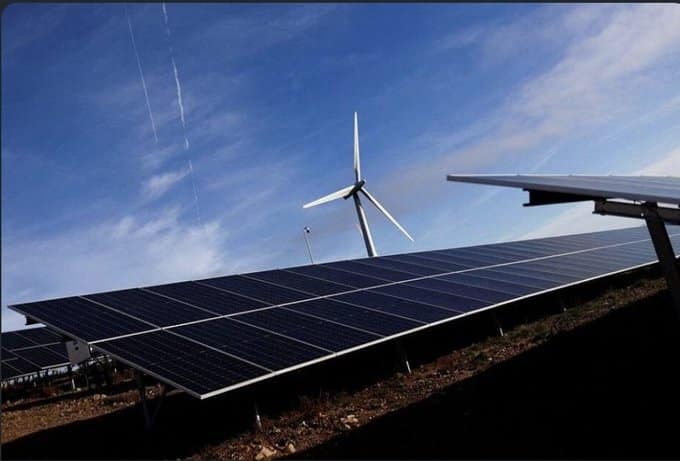
In a vast, sun-scorched landscape where temperatures routinely exceed 40 degrees Celsius in summer and the wind howls across semi-desert plains for months on end, the Northern Cape government is placing a monumental bet on renewable energy projects to breathe new life into the province’s struggling economy. The plan—ambitious, risky, and potentially transformative—aims to turn South Africa’s largest but most sparsely populated province into the nation’s undisputed green energy capital, creating tens of thousands of jobs and reversing decades of economic decline.
The Northern Cape, which accounts for nearly 30% of South Africa’s land area but only 2% of its population, has long been the country’s forgotten province. Its economy, traditionally dependent on mining (diamonds, iron ore, and manganese) and agriculture (sheep farming and grapes), has stagnated for years. Unemployment stands at 38.7%—the second-highest in the nation after the Eastern Cape—and youth unemployment exceeds 55%. Poverty is endemic, particularly in rural areas and smaller towns like De Aar, Prieska, and Kuruman.
But now, provincial leaders believe they have found a lifeline: the very elements that have made the Northern Cape harsh and inhospitable—its relentless sunshine and powerful winds—are being harnessed as the province’s most valuable natural resources.
“The Northern Cape has been left behind for too long,” said Premier Zamani Saul, speaking at the official launch of the province’s Renewable Energy Master Plan in Upington on Monday. “We have the best solar and wind resources in the country. We have vast tracts of land. We have a willing workforce. And we have a government that is finally serious about moving beyond rhetoric. The sun and the wind will lift us out of poverty. That is not a slogan. That is a strategy.”
The Plan: A Tripling of Renewable Capacity by 2030
The Northern Cape Renewable Energy Master Plan, a 200-page document developed in partnership with the national Department of Mineral Resources and Energy, the Development Bank of Southern Africa, and several international development finance institutions, sets out an aggressive roadmap:
- By 2028: Increase installed renewable energy capacity in the province from the current 2,800 megawatts (MW) to 5,000 MW.
- By 2030: Reach 8,500 MW, enough to power approximately 4 million homes and making the Northern Cape responsible for over 60% of South Africa’s total renewable energy generation.
- By 2035: Position the province as a net exporter of green hydrogen, produced using renewable electricity to split water into hydrogen and oxygen, with target markets including Germany, Japan, and South Korea.
To achieve these targets, the provincial government has identified 23 priority projects, including:
- Seven new utility-scale solar photovoltaic (PV) plants in the Hantam, Khâi-Ma, and Dawid Kruiper municipalities, with a combined capacity of 1,800 MW.
- Five new wind farms in the Nama Khoi and Richtersveld areas, where coastal winds create some of the best onshore wind conditions in Africa.
- Three concentrated solar power (CSP) plants using mirrors to concentrate sunlight and generate heat, allowing power to be stored and dispatched even after sunset.
- Two green hydrogen production facilities near Boegoebaai on the west coast, a site chosen for its deep-water port potential and proximity to both solar and wind resources.
- A 600-kilometer high-voltage transmission line connecting the Northern Cape’s renewable energy hub to the national grid via Eskom’s existing infrastructure in the Western Cape and Free State.
The total estimated investment required for these projects is R340 billion over the next decade, with funding expected to come from a mix of private sector investment (through the Renewable Energy Independent Power Producer Procurement Programme, or REIPPPP), development finance institutions (including the World Bank and the African Development Bank), and government guarantees.
Jobs, Jobs, Jobs: The Economic Promise
The most immediate and politically potent promise of the renewable energy bet is job creation. According to the master plan’s economic modeling, the build-out of the 23 priority projects will create:
- 12,000 direct construction jobs over the next five years, including civil engineers, electricians, crane operators, and site managers.
- 4,500 permanent operations and maintenance jobs once the plants are online, including technicians, security personnel, and administrative staff.
- An estimated 25,000 indirect jobs in supply chains, logistics, hospitality, retail, and housing construction.
For a province with a working-age population of just over 800,000, these numbers are transformative. But Premier Saul and his team are keenly aware that past infrastructure projects have often failed to deliver lasting local employment, with contractors importing skilled workers from Gauteng or the Western Cape.
“That is not going to happen this time,” Saul said emphatically. “Every single project that receives provincial approval will be required to submit a Local Employment Plan. At least 60% of construction workers must be recruited from within a 50-kilometer radius of the project site. At least 30% of permanent jobs must go to youth (under 35). And at least 20% of management positions must be filled by women. These are not suggestions. They are conditions.”
The province has also established the Northern Cape Renewable Energy Skills Academy in Upington, a partnership with the South African Renewable Energy Technology Centre (SARETEC) and the German development agency GIZ. The academy will train 5,000 young people over the next three years in solar panel installation, wind turbine maintenance, battery storage systems, and grid management.
“I was sitting at home for two years after matric,” said Thabo Sebeko, 22, one of the academy’s first intake of students. “There are no jobs in my village. The mines are closing. The farms are mechanizing. I thought I would have to move to Johannesburg and sleep on a cousin’s floor. Now I am learning how to fix a wind turbine. Next year, I will have a job. Next year, I will have a future.”
The Green Hydrogen Gamble: High Risk, High Reward
The most ambitious—and controversial—element of the Northern Cape’s plan is the push into green hydrogen. Produced by using renewable electricity to electrolyze water, green hydrogen is seen by many energy experts as a critical tool for decarbonizing heavy industry (steel, cement, chemicals) and long-distance transport (shipping, aviation, heavy trucks).
The Northern Cape’s Boegoebaai site has been identified as one of the world’s best locations for green hydrogen production, combining world-class solar and wind resources with access to seawater (for electrolysis) and a deep-water port (for export). The provincial government has already signed memoranda of understanding with German utility company RWE, Danish renewable energy giant Ørsted, and South Africa’s own Sasol to explore a 5,000 MW green hydrogen hub.
But critics warn that green hydrogen is still expensive (two to three times the cost of grey hydrogen produced from natural gas) and that global demand remains uncertain. A 2025 report by the International Renewable Energy Agency (IRENA) noted that while green hydrogen production costs are falling rapidly, the market is unlikely to reach commercial scale before 2030 at the earliest.
“Green hydrogen is exciting, but it is not a sure thing,” said energy economist Dr. Phumzile Ndlovu of the University of Cape Town. “The Northern Cape is putting a significant portion of its eggs in this basket. If global demand materializes as predicted, the province could become a major exporter and transform its economy. If it doesn’t, the province will be left with billions in stranded assets. It is a high-risk, high-reward gamble.”
Premier Saul is undeterred. “South Africa has been a mining economy for 150 years,” he said. “We have sold our minerals to the world for pennies while foreign companies took the profits. Green hydrogen is different. It is a manufactured product, not a raw material. It requires skills, technology, and local value addition. We are not just digging something out of the ground and shipping it away. We are building an industry. And that industry will employ our people for generations.”
Environmental and Social Challenges: Land, Water, and Communities
The renewable energy boom is not without its critics. Environmental and social justice organizations have raised concerns about the impact of large-scale solar and wind projects on the Northern Cape’s fragile desert ecosystem and on the rights of indigenous and local communities.
Land Use: Solar and wind farms require vast tracts of land. The 23 priority projects will cover a combined area of approximately 35,000 hectares—roughly the size of 50,000 football fields. Conservationists worry about the impact on the Succulent Karoo biome, one of the world’s most biodiverse arid regions, home to over 6,000 plant species, 40% of which are found nowhere else on Earth.
“We are not opposed to renewable energy,” said Dr. Liesel van der Merwe of the Southern African Environmental Observation Network (SAEON). “But we are opposed to doing it carelessly. Solar farms should be placed on already degraded land, not on pristine veld. Wind farms should avoid critical bird migration routes. The provincial government’s environmental impact assessments need to be rigorous and transparent. So far, we are not convinced they are.”
Water Use: Concentrated solar power (CSP) plants, which use steam turbines to generate electricity, require significant amounts of water for cooling—typically 2,000 to 3,000 liters per megawatt-hour. In a province that already faces chronic water shortages, this is a major concern. The master plan acknowledges the issue and commits to using dry-cooling technology for all new CSP plants, reducing water consumption by 90% but increasing costs by 10-15%.
Community Consent: In several areas identified for new solar projects, local communities have complained about a lack of consultation. In the Khâi-Ma municipality, a proposed 500 MW solar plant has been delayed by protests from Nama pastoralist communities who say they were not properly informed about the project and fear it will disrupt their grazing lands.
“We are not against development,” said Petrus Witbooi, a community leader from the area. “But we cannot have developers coming in, putting up fences, and telling us that our cattle must go elsewhere. This is our land. Our ancestors are buried here. We need to be partners, not just bystanders.”
The provincial government has responded by establishing a Community Renewable Energy Forum, which includes representatives from affected communities, traditional leaders, environmental organizations, and project developers. The forum has no veto power but can make recommendations that the provincial government has pledged to take seriously.
“We are learning as we go,” admitted MEC for Economic Development, Abraham Vosloo. “We have made mistakes. We have not always consulted as early or as deeply as we should have. But we are committed to doing better. The renewable energy transition must be just. It must benefit the people who live here. If it doesn’t, then what is the point?”
The Grid Challenge: Eskom’s Weak Link
Even if all 23 priority projects are built, they will be useless without a functioning grid to transmit the electricity to customers. And here, the Northern Cape faces its most daunting challenge: Eskom.
The national power utility’s transmission infrastructure in the province is outdated, overloaded, and prone to failures. The existing 400 kV line from the Northern Cape to the Western Cape is already operating at near-full capacity, and Eskom has warned that without urgent upgrades, new renewable energy projects will face “curtailment”—being forced to switch off during peak production times because there is nowhere for the power to go.
The master plan includes a R45 billion transmission upgrade program, including a new 765 kV line from Upington to Koeberg (near Cape Town) and a second 400 kV line from De Aar to Bloemfontein. But these upgrades depend on Eskom’s ability to raise capital—a tall order for a utility that is R450 billion in debt and relies on government bailouts to stay afloat.
“Eskom is the biggest risk to this plan, period,” said energy analyst Chris Yelland. “The Northern Cape can build all the solar and wind farms in the world, but if Eskom can’t build the transmission lines, the power will never reach the cities and industries that need it. The national government needs to step up and either fund Eskom’s transmission division properly or create a separate, independent transmission company. The current situation is untenable.”
Premier Saul has called on President Ramaphosa to declare the Northern Cape transmission upgrades a “national strategic project,” which would fast-track approvals and unlock dedicated funding. The president’s office has not yet responded.
A Model for the Nation? Or a Cautionary Tale?
As the Northern Cape embarks on its renewable energy gamble, the rest of South Africa is watching closely. If the province succeeds, it could become a model for other regions—the Eastern Cape’s wind-rich coast, the Free State’s open plains, the Karoo’s solar potential. If it fails, it will be a cautionary tale of overreach, poor planning, and broken promises.
For now, the signs are mixed. The first wave of projects—the 100 MW Kathu Solar Park and the 140 MW Roggeveld Wind Farm—are already operational and have created hundreds of jobs. The town of De Aar, once a sleepy railway stop, has been transformed into a hub for wind turbine manufacturing, with a factory operated by Danish company Vestas employing 350 people.
But other projects have stalled. The 500 MW Redstone CSP plant, originally scheduled to come online in 2023, remains incomplete after its Chinese contractor ran into financial difficulties. And the planned green hydrogen hub at Boegoebaai has yet to secure final investment decisions from any of its proposed partners.
“I am optimistic, but I am not naive,” said Premier Saul. “We are fighting against decades of underinvestment, a weak national grid, and a global economy that is unpredictable. But what is the alternative? To do nothing? To watch our young people leave for Gauteng or Cape Town because there is no work here? To accept that the Northern Cape will always be a backwater? No. We refuse. We are betting on ourselves. And I believe we will win.”
Voices from the Ground: Hope and Hesitation
In the small town of Pofadder, 120 kilometers south of the Namibian border, the renewable energy boom is already being felt. A new 200 MW solar plant under construction on the outskirts of town has employed 300 local workers, injecting much-needed cash into a community where the only other employer is a small abattoir.
“My husband was a farm laborer,” said Maria Kock, 44, whose spouse now works as a security guard at the solar plant. “He earned R2,500 a month. Now he earns R6,500. We can finally pay school fees. We can finally fix the roof. We can finally breathe.”
But in the nearby town of Springbok, there is skepticism. A planned wind farm has been delayed by two years due to legal challenges from environmental groups, and local businesses that had invested in anticipation of the project are struggling.
“They promised us jobs in 2024,” said restaurant owner Ahmed Bawa. “It is now 2026, and nothing has happened. I expanded my kitchen. I hired extra staff. Now I am laying them off. I am happy for Pofadder, but what about us? The government talks about ‘just transition,’ but it feels like some communities are being left behind.”
The Road Ahead
The Northern Cape’s renewable energy bet is a story still being written. Over the next five years, billions of rands will be invested, thousands of workers will be trained, and hundreds of megawatts will come online. Whether that translates into lasting prosperity—or merely a temporary boom followed by bust—depends on factors both within and beyond the province’s control.
What is certain is that the Northern Cape can no longer afford to wait. Its people have waited for jobs, for investment, for hope. Now, they are being asked to bet on the sun and the wind—the same sun that burns their skin, the same wind that whips dust into their eyes.
“This is our chance,” said Thabo Sebeko, the 22-year-old renewable energy trainee, as he adjusted his hard hat and walked toward the solar panel training field. “I am not going to waste it. My children will not grow up like I did—hungry, hopeless, stuck. They will grow up with light. With power. With a future. That is what renewable energy means to me.”
In the distance, the sun blazed down on the red earth of the Northern Cape, indifferent to the hopes and fears of the people who call it home. But for the first time in a long time, those people are looking up—not with resignation, but with expectation.
About The Author