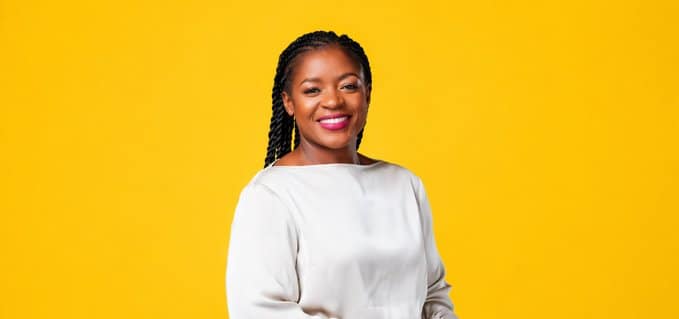
The golden arches are getting a new strategic mind. McDonald’s South Africa has announced the appointment of Millicent “Milly” Maroga as its new Impact Director, a move that signals the fast-food giant’s deepening commitment to social responsibility, sustainability, and community engagement in one of its most important African markets.
Maroga, a seasoned executive with more than two decades of experience spanning the beverage and financial services sectors, steps into a role that sits at the intersection of corporate strategy, public affairs, and purpose-driven leadership. Her mandate? To ensure that McDonald’s does more than serve billions of burgers—that it leaves a positive, measurable footprint on the country and the communities it operates within.
“I have spent my career building brands that matter,” Maroga said in a statement released by the company on Tuesday. “But impact is not just about brand perception. It is about real, tangible change in people’s lives. McDonald’s has the scale, the reach, and the will to make that change. I am honored to help lead that work.”
The New Role: What Does an Impact Director Do?
The title “Impact Director” might sound nebulous to those outside the corporate world. But within the fast-moving consumer goods (FMCG) sector, it is a role of growing importance—and growing scrutiny.
In essence, the Impact Director is responsible for overseeing a company’s environmental, social, and governance (ESG) strategy. That includes:
- Environmental sustainability: Reducing carbon emissions, minimizing food waste, transitioning to eco-friendly packaging, and sourcing ingredients responsibly.
- Social impact: Investing in local communities, supporting youth employment, promoting diversity and inclusion within the workforce, and ensuring ethical treatment across the supply chain.
- Governance: Ensuring transparency, accountability, and compliance with local and international regulations.
For McDonald’s South Africa, which operates over 300 restaurants and employs thousands of people across the country, the Impact Director’s job is enormous. Every decision—from the straws used in soft drinks to the farms that supply potatoes for fries to the training programs for young crew members—falls under Maroga’s purview.
“This is not a ceremonial title,” said marketing and corporate affairs analyst Thabo Mofokeng. “This is a strategic role that touches every part of the business. Milly Maroga is not just a spokesperson for good deeds. She will be expected to deliver measurable results, report on progress, and be held accountable by both the company and the public.”
The Journey: Two Decades of High-Stakes Experience
Maroga arrives at McDonald’s with a résumé that reads like a blueprint for modern corporate leadership.
She began her career at Old Mutual, one of South Africa’s largest financial services groups, where she cut her teeth in corporate affairs, stakeholder engagement, and reputation management. It was there, she has said in previous interviews, that she learned the delicate art of balancing shareholder expectations with broader societal responsibilities.
“At Old Mutual, I saw how a company could be both profitable and principled,” she once told a business publication. “It is not an either/or. It is a both/and. That lesson stayed with me.”
From Old Mutual, Maroga moved to HEINEKEN Beverages, one of the world’s largest brewers, where she spent the bulk of her career. Over more than a decade, she rose through the ranks, ultimately serving as Senior Director of Corporate Affairs and Transformation. In that role, she led initiatives around responsible drinking, women’s empowerment in the alcohol industry, and sustainable sourcing of agricultural inputs.
Her work at HEINEKEN earned her recognition as one of South Africa’s leading voices on corporate social investment (CSI) and black economic empowerment (BEE) transformation. She was frequently invited to speak at conferences, mentor young professionals, and advise government on private-sector partnerships.
“Milly has a rare combination of strategic rigor and genuine compassion,” said a former colleague at HEINEKEN, who spoke on condition of anonymity. “She holds people accountable, but she also holds their hands. She pushes for results, but she never forgets that results are about people. That is why she is so effective.”
Now, she brings that same approach to McDonald’s—a brand that is simultaneously global and local, ubiquitous and intimate, beloved and criticized.
The Challenge: McDonald’s in South Africa
McDonald’s first opened its doors in South Africa in 1995, the year after the country’s first democratic elections. The timing was deliberate: the brand wanted to be part of South Africa’s new dawn, a symbol of opportunity and connection to the global economy.
Nearly 30 years later, McDonald’s South Africa is a household name, with restaurants in every province, a workforce of over 12,000 employees (many of them young people in their first jobs), and a supply chain that supports thousands of local farmers, processors, and distributors.
But with scale comes scrutiny. In recent years, McDonald’s South Africa has faced increasing pressure to:
- Reduce its environmental footprint, particularly around plastic waste, energy consumption, and water usage in a water-scarce country.
- Deepen its local sourcing, moving beyond potatoes and chicken to include more smallholder farmers and black-owned suppliers.
- Address youth unemployment, one of South Africa’s most urgent crises, by creating more entry-level jobs, learnerships, and career pathways.
- Navigate the complexities of South Africa’s transformation agenda, including BEE ownership, management diversity, and enterprise development.
These are the challenges that Maroga now inherits.
“The low-hanging fruit has been picked,” said independent retail analyst Syd Vianello. “McDonald’s has done the easy stuff—donating to charities, sponsoring community events, putting solar panels on a few roofs. Now the bar is higher. Milly Maroga will need to drive systemic change, not just symbolic gestures. That is a much harder job.”
The Strategy: What Maroga Brings
Those who know Maroga say she is not intimidated by hard jobs. If anything, she is drawn to them.
Colleagues describe her as a systems thinker—someone who does not see impact as a separate department but as a lens through which every business decision should be viewed. She is known for asking uncomfortable questions: Why are we doing it this way? Who benefits? Who is left out? How do we measure success beyond the press release?
“She is not afraid to challenge the status quo,” said another former HEINEKEN colleague. “And she does it with such grace that people don’t even realize they are being challenged until they have already agreed to change.”
At McDonald’s, that skill will be essential. The company operates on razor-thin margins; every decision has financial implications. Maroga will need to make the business case for sustainability and social impact—not just the moral case.
Fortunately for her, the evidence is mounting that good ESG practices are also good for the bottom line. Studies have shown that companies with strong sustainability credentials enjoy lower borrowing costs, higher employee retention, greater customer loyalty, and reduced regulatory risk.
“Consumers, especially younger consumers, are voting with their wallets,” said marketing expert Lebogang Mokoena. “They want to buy from brands that share their values. McDonald’s knows this. That is why they created this role and hired someone of Milly’s caliber.”
The First Priorities: What Comes Next?
While Maroga is still settling into her new role, industry insiders expect her to focus on several key areas in her first 100 days:
- Packaging and Waste: McDonald’s has committed to sourcing 100% of its guest packaging from renewable, recycled, or certified sources by 2025, and to recycling packaging across all restaurants. South Africa has lagged behind some other markets in this regard. Maroga is expected to accelerate progress.
- Youth Employment: With South Africa’s youth unemployment rate hovering above 60%, McDonald’s has an opportunity—and a responsibility—to create more jobs and training pathways. Maroga may expand existing programs like the McDonald’s Youth Employment Initiative.
- Local Sourcing and Supplier Diversity: While McDonald’s South Africa already sources many ingredients locally (including beef, chicken, potatoes, and lettuce), there is room to deepen that commitment, particularly with black-owned and black-female-owned suppliers.
- Energy Resilience: South Africa’s ongoing load-shedding crisis has forced businesses to invest in alternative energy. McDonald’s has already installed solar panels and backup generators at many locations. Maroga may push for a more aggressive renewable energy strategy.
- Community Engagement: Beyond corporate programs, Maroga will likely seek to embed McDonald’s more deeply in the communities it serves—through local hiring, school feeding programs, and partnerships with nonprofits.
“Milly is a doer, not a talker,” said a source close to the company. “She will not spend six months writing a strategy document. She will start moving on day one. That is what McDonald’s needs right now.”
The Personal: Who Is Milly Maroga?
Outside the boardroom, Maroga is known as a private person who lets her work speak for itself. She is a mother, a mentor, and a passionate advocate for education, particularly for young women in STEM and business fields.
In a rare profile piece published last year, she spoke about growing up in Soweto, the daughter of a nurse and a teacher, who instilled in her the belief that “excellence is the best revenge against a system that expects you to fail.”
“I did not have an easy path,” she said. “But I had people who believed in me. My parents. My teachers. My first managers. They gave me chances. Now I spend my life giving chances to others.”
She is also known for her love of live music, her collection of contemporary African art, and her willingness to speak truth to power—even when it is uncomfortable.
“I am not here to be liked,” she has said. “I am here to make a difference. If people like me along the way, that is a bonus. But it is not the goal.”
The Industry Reaction: Applause and Expectations
News of Maroga’s appointment has been met with enthusiasm from industry observers, though tempered with realistic expectations.
“Milly Maroga is a fantastic hire,” said corporate governance expert Nthabiseng Molefe. “She has the experience, the credibility, and the relationships to succeed. But she is walking into a complex environment. McDonald’s has a global brand to protect, local realities to navigate, and shareholders to satisfy. Balancing those forces will test even her considerable skills.”
The appointment has also been praised as a signal of McDonald’s commitment to transformation and gender diversity. Maroga joins a leadership team that includes several other Black women in senior roles—a rarity in South Africa’s still male-dominated corporate landscape.
“It matters that young Black women see someone who looks like them in positions of power,” said Lindiwe Mkhize, a junior brand manager at a competing FMCG company. “Milly’s appointment is not just good for McDonald’s. It is good for the entire industry. It says, ‘You can get here too.'”
Epilogue: A New Chapter for the Golden Arches
As Maroga unpacks her boxes in her new office at McDonald’s South Africa’s headquarters in Bryanston, Johannesburg, she knows the honeymoon will be short. The world is watching. Competitors are circling. And the challenges—from climate change to unemployment to energy insecurity—are not waiting.
But if her career is any guide, she is ready.
“The best leaders do not wait for perfect conditions,” she once said. “They act in imperfect conditions. They move forward. They adjust along the way. That is what I intend to do.”
McDonald’s South Africa has not yet announced Maroga’s start date or the specific metrics by which her success will be judged. But the company’s CEO, who personally oversaw the hiring process, expressed confidence in the choice.
“Milly embodies what we want McDonald’s to stand for,” the CEO said in a statement. “She is strategic, compassionate, and unafraid to lead. We are thrilled to welcome her to the family.”
For Maroga, the journey from beers to burgers is more than a career move. It is a chance to shape the legacy of a brand that feeds millions of South Africans every week—and to prove that fast food can also be good food, for both people and the planet.
“The golden arches are a symbol that spans generations,” she said. “My job is to make sure they also stand for something deeper. For opportunity. For sustainability. For dignity. That is the impact I want to have. And I cannot wait to get started.”
About The Author