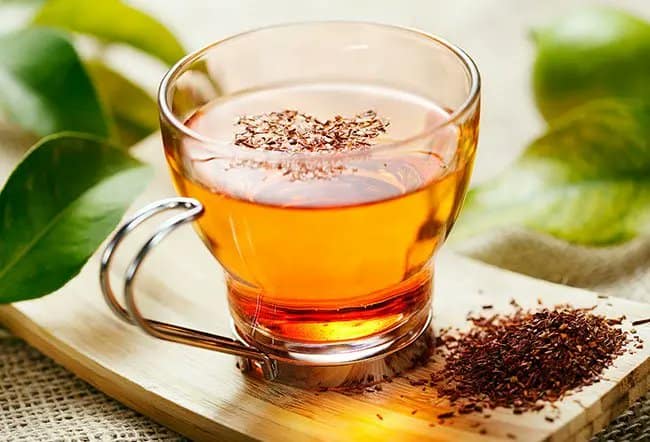
In a landmark victory for South African agriculture, Rooibos exporters have been granted tariff-free access to the Chinese market following the introduction of a new zero-duty policy that took effect on 1 May 2026. The announcement, which has sent waves of optimism through the fragrant tea fields of the Cederberg region, represents the single most significant trade breakthrough for the indigenous South African herbal tea since it first gained international recognition two decades ago.
China, the world’s largest tea-consuming nation—with a market that drinks nearly two million tons of tea annually—has traditionally been dominated by its own green, black, white, and oolong varieties. But shifting consumer preferences, a growing middle class, and an increasing appetite for health-conscious beverages have created a space for premium imports. Rooibos, with its naturally caffeine-free profile, high antioxidant content, and distinct earthy-sweet flavour, appears perfectly positioned to fill that space.
The South African Rooibos Council (SARC), the industry’s primary advocacy body, has welcomed the move with measured jubilation, describing it as “a significant opportunity to expand the industry’s international footprint in one of the world’s most dynamic consumer markets.”
“This is not just a win for Rooibos producers,” said Adele du Toit, spokesperson for the South African Rooibos Council, speaking from the council’s headquarters in Bellville. “This is a win for every farmworker, every packer, every truck driver, and every small-scale farmer in the Cederberg and surrounding regions whose livelihood depends on this golden leaf. Tariff-free access to China changes the game entirely.”
The Long Road to Zero: Years of Negotiation Bearing Fruit
The journey to tariff-free status has been neither quick nor easy. For years, South African Rooibos exporters faced a double barrier when trying to enter the Chinese market. First, there was the logistical challenge of establishing supply chains and meeting China’s stringent phytosanitary requirements. Second, and more daunting, was the tariff wall: duties as high as 15% on processed Rooibos products, which made South African tea significantly more expensive than local alternatives.
The breakthrough came after intense diplomatic and technical negotiations. The South African government, through the Department of Agriculture, Land Reform and Rural Development and the Department of Trade, Industry and Competition, has been engaged in bilateral talks with Chinese authorities since 2022. The signing of a comprehensive Rooibos trade agreement during the BRICS summit in 2024 laid the groundwork, but it took another two years of product certification, quality assurance protocols, and health safety audits to finally unlock the zero-duty status.
“We have been knocking on this door for a very long time,” said Trade Minister Ebrahim Patel in a statement issued shortly after the policy took effect. “China does not open its market lightly. They have exacting standards, and rightly so. Our Rooibos industry met every single requirement. This is a testament to the quality and safety of South African agricultural products.”
The zero-duty policy applies to unflavored Rooibos tea in bulk form, as well as to certain packaged retail products. However, blended Rooibos products—those mixed with other herbs, fruits, or flavourings—remain subject to a lower but still significant tariff, an issue the industry hopes to address in future negotiations.
Why China? The Perfect Match of Tradition and Trend
At first glance, selling Rooibos to China might seem like taking coals to Newcastle. China has been drinking tea for over 5,000 years. It has thousands of its own varieties, a deeply embedded tea culture, and a domestic industry that produces more than enough to meet national demand. Why would Chinese consumers buy a tea from a small country at the southern tip of Africa?
The answer lies in two converging trends: health and novelty.
The Health Boom: China’s rapid economic growth has brought with it classic “diseases of affluence”: diabetes, hypertension, obesity, and stress-related disorders. As the country’s middle class has swelled to over 400 million people, so has demand for products that promise wellness. Rooibos, which is packed with aspalathin (a unique antioxidant found nowhere else) and other polyphenols, has been linked to improved heart health, blood sugar regulation, and reduced oxidative stress. Crucially, its complete lack of caffeine makes it suitable for evening consumption, children, and those sensitive to stimulants.
“Chinese consumers are becoming increasingly health-savvy,” said Dr. Wei Zhang, a food and beverage market analyst based in Shanghai. “They are moving away from sugary drinks and toward functional beverages. Rooibos fits perfectly into this ‘better-for-you’ category. It is natural, it has scientific backing, and it is exotic without being intimidating.”
The Novelty Factor: While tea is deeply traditional in China, there is also a growing appetite for new experiences. Younger consumers, in particular, are curious about international products. Rooibos, with its striking red colour when brewed and its unique flavour profile—often described as nutty, woody, with hints of vanilla and honey—offers something genuinely different. In a market saturated with green tea, Rooibos stands out.
“I first tried Rooibos at a friend’s house in Beijing,” said Li Na, a 28-year-old marketing professional. “She had been to South Africa on holiday and brought some back. I loved it—so smooth, no bitterness. Now I buy it online. It is more expensive than local tea, but I drink it at night when I don’t want caffeine. It has become part of my routine.”
The Economic Impact: Millions of Rands in New Revenue
For South African Rooibos producers, the zero-duty policy comes at a critical time. The industry has faced significant headwinds in recent years: drought in the Western Cape, rising input costs, and increased competition from other herbal teas globally. Export markets in Europe, Japan, and North America remain strong, but growth has been sluggish. China offers the prospect of a genuine second leg of growth.
In 2025, South Africa exported approximately 7,500 tons of Rooibos globally, with a total value of just over R1.2 billion. Of that, China accounted for less than 5%—around 350 tons. The high tariffs were a major deterrent. Industry analysts project that with zero-duty access, exports to China could double within 18 months and reach 2,000 tons annually within five years, adding an estimated R300 million to R500 million in new annual revenue.
“That is not a small number,” said Dawie de Klerk, a third-generation Rooibos farmer from Clanwilliam, as he walked through his sun-drenched fields. “That is the difference between a good year and a great year. That is the difference between laying off workers and hiring more. That is the difference between survival and real prosperity.”
The benefits will not flow only to large commercial farms. The Rooibos industry includes numerous small-scale and emerging black farmers, many of whom are part of land reform and redistribution programmes. The Rooibos Council has been actively working to ensure that these smaller producers are integrated into export supply chains, with training programmes, quality control support, and cooperative marketing initiatives.
“Tariff-free access is meaningless if only the big players benefit,” said du Toit. “We are committed to an inclusive growth model. Every Rooibos farmer, regardless of size, should have a shot at the Chinese market.”
Challenges Ahead: Logistics, Marketing, and Quality Control
Despite the optimism, significant challenges remain. The zero-duty policy removes one barrier, but others persist.
Logistics: Shipping Rooibos from the Cederberg to Shanghai involves a long and complex supply chain. Products must be packed to preserve freshness, shipped in temperature-controlled containers, and cleared through Chinese customs—a process that can take weeks. Any delays or quality issues could damage the product’s reputation before it even reaches store shelves.
Marketing: Rooibos is not a household name in China. While some premium tea drinkers have discovered it, the vast majority of Chinese consumers have never heard of it. Building brand awareness will require significant investment in marketing, influencer partnerships, and in-store promotions. The South African government and the Rooibos Council have allocated a modest budget for a “Savour South Africa” campaign, but industry insiders say it is a fraction of what is needed.
Quality Control: China’s food safety regulations are among the strictest in the world. The country has a painful history of contaminated food imports, and authorities are vigilant. South African Rooibos has an excellent safety record, but any lapse—a shipment contaminated with pesticide residues, for example, or mold due to improper storage—could trigger a blanket ban that would take years to reverse.
“We cannot afford a single mistake,” said de Klerk. “Every bag of Rooibos that goes to China must be perfect. No exceptions. The industry knows this. We are ready.”
The Chinese Market: Beyond Bulk Tea
While the initial focus will be on bulk exports to Chinese tea packers and distributors, the long-term opportunity may lie in value-added products. Rooibos is increasingly being used in cosmetics, dietary supplements, and functional foods. Chinese consumers, who are already familiar with herbal ingredients in skincare and health products, could become major buyers of Rooibos-based lotions, capsules, and even energy bars.
Several South African companies are already exploring these possibilities. Cape Natural Tea Products, one of the largest Rooibos processors, has established a subsidiary in Shanghai to handle distribution and product development. The company is in talks with Chinese partners to develop a line of Rooibos-based iced teas and ready-to-drink beverages specifically formulated for Chinese palates.
“The Chinese market does not want a copy of what we sell in Europe,” said the company’s export manager, speaking on condition of anonymity due to ongoing negotiations. “They want products designed for them. That means different sweetness levels, different packaging sizes, different flavour infusions—perhaps goji berry or jasmine. We are listening. We are adapting.”
Environmental and Ethical Considerations
As demand for Rooibos grows, so do concerns about sustainability. The Cederberg region is a biodiversity hotspot, with unique fynbos vegetation that exists nowhere else on Earth. Expanding Rooibos cultivation into virgin land could threaten this ecosystem. The industry has committed to a “no new clearance” policy, meaning that all new production must come from existing agricultural land or from higher yields on current farms.
Water is another concern. Rooibos is relatively drought-tolerant compared to other crops, but it still requires water to grow. With climate change predicted to make the Western Cape even drier, farmers will need to invest in more efficient irrigation techniques and potentially in desalination or water recycling technologies.
“We are acutely aware of our environmental responsibilities,” said du Toit. “Rooibos is a gift from nature. We cannot be greedy. We must be stewards. That means growing sustainably, even if it means growing more slowly.”
Conclusion: A Sip of the Future
As the sun rises over the Cederberg, casting long shadows across the rust-coloured soil, the Rooibos harvest is in full swing. Workers move between the rows, cutting the needle-like leaves by hand, bundling them, loading them onto trucks. The leaves will be dried, chopped, pasteurized, and packed—and then, for the first time without the burden of tariffs, shipped to China.
It is a small moment in a long history. Rooibos has been harvested in these mountains for centuries, first by the indigenous Khoisan people, then by settlers, then by a modern industry that has become a symbol of South African ingenuity and resilience. But it is also a beginning—the first page of a new chapter in which this humble red bush tea finds a home in the world’s most populous nation.
“This is not just about tea,” said de Klerk, wiping the sweat from his brow and looking out over his fields. “This is about connection. Two countries, two cultures, two continents—brought together by a leaf. That is something worth raising a cup to.”
In Shanghai, in Beijing, in Guangzhou, the first shipments of tariff-free Rooibos are already arriving. They will be unloaded, inspected, distributed. And somewhere, in a modern apartment or a traditional tea house, someone will brew their first cup—perhaps without knowing the decades of negotiation, the hopes of an industry, and the labour of a community that brought it to their table.
They will simply sip, and smile, and maybe—just maybe—say gan bei. Cheers. To Rooibos. To South Africa. To a new beginning.
About The Author