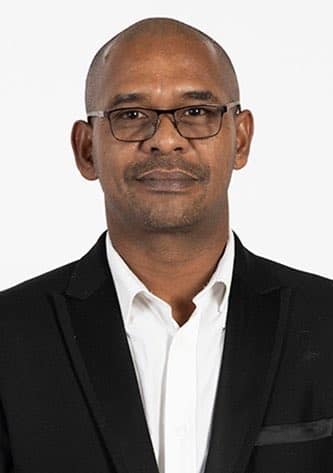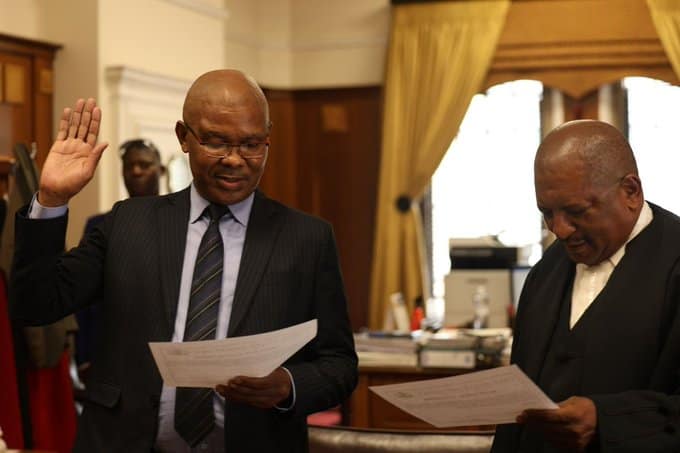
The Free State Province has an acting premier. For one week—from May 4 to May 11, 2026—Mr Jabu Mbalula will occupy the province’s highest political office, standing in for Premier Maqueen Letsoha-Mathae, who is expected to be away on official or personal business.
The appointment, formalized in a brief statement from the Office of the Premier on Monday morning, is a routine administrative matter. But in the corridors of power in Bloemfontein, any change in leadership—even for seven days—draws attention.
“Premier Maqueen Letsoha-Mathae has appointed Mr Jabu Mbalula as Acting Premier of the Free State for the period 4 May 2026 up to and including 11 May 2026,” the statement read. “The Office of the Premier wishes Mr Mbalula well in his acting responsibilities and assures the people of the Free State that all government functions will continue without interruption.”
The announcement was devoid of drama. No press conference. No fanfare. Just a statement, a signature, and a quiet transfer of authority.
But for those who follow Free State politics closely, the appointment raises questions: Who is Jabu Mbalula? Why was he chosen? And what does an acting premier actually do?
The Acting Premier’s Role: More Than a Seat Warmer
Under Section 133 of the South African Constitution, the Premier of a province may appoint an Acting Premier when she is absent from the province, temporarily unable to perform her duties, or on leave. The Acting Premier exercises all the powers and functions of the Premier—subject to any limitations the Premier may specify.
That means, for seven days, Jabu Mbalula will:
- Sign off on provincial legislation and executive decisions.
- Chair the Executive Council (the provincial cabinet).
- Represent the Free State at national forums, including meetings of the President’s Coordinating Council.
- Authorize provincial expenditure within approved budgets.
- Receive diplomatic visitors and attend official functions.
- In an emergency, authorize the deployment of provincial disaster management resources.
“An acting premier is not a ceremonial position,” said political analyst Dr. Khotso Mokoena of the University of the Free State. “For the duration of the appointment, that person has the full authority of the premier. They can make binding decisions. They can sign documents into law. They can fire officials. The only limitation is the trust placed in them by the premier who appointed them.”
However, in practice, acting premiers rarely make major decisions. The short duration—just seven days—suggests that Mbalula’s role will be caretaker in nature, ensuring continuity while Letsoha-Mathae is away.
“This is not a ‘shake things up’ appointment,” Mokoena added. “This is a ‘keep the lights on’ appointment. The premier trusts Mbalula to manage routine matters without drama. That speaks well of him.”
Who Is Jabu Mbalula?
For those unfamiliar with Free State politics, the name “Mbalula” immediately conjures images of Fikile Mbalula, the national ANC Secretary-General and former minister of police, sport, and transport. But Jabu Mbalula—no relation to Fikile, as far as public records show—is a figure in his own right.
Jabu Mbalula has served in the Free State provincial government for several years, most recently as the Head of the Free State Provincial Government—the province’s top administrative official, equivalent to a Director-General at national level. In that capacity, he has overseen the implementation of provincial policies, managed the bureaucracy, and advised Premier Letsoha-Mathae on governance matters.
Prior to his current role, Mbalula held senior positions in:
- The Free State Department of Cooperative Governance and Traditional Affairs (COGTA), where he worked on municipal stabilization and infrastructure delivery.
- The Office of the Premier under previous administrations, including during the tenure of former Premier Sisi Ntombela.
- The national Department of Public Service and Administration, where he focused on public sector reform and anti-corruption measures.
Colleagues describe him as a “quiet operator”—a technocrat rather than a politician, more comfortable with spreadsheets and policy documents than with microphones and podiums.
“Jabu is not a headline seeker,” said a senior official in the Free State government who spoke on condition of anonymity. “He gets things done without drama. That is why the premier trusts him. When she needs someone to hold the fort, she calls Jabu.”
Mbalula holds a Master’s degree in Public Administration from the University of the Free State and has completed executive leadership programs at the University of Pretoria’s Gordon Institute of Business Science (GIBS). He is believed to be in his late forties, though his exact age has not been publicly disclosed.
The Premier: Maqueen Letsoha-Mathae
To understand the significance of the appointment, one must understand the woman who made it.
Maqueen Letsoha-Mathae became Premier of the Free State in June 2024, following the provincial elections that saw the African National Congress (ANC) retain the province despite a reduced majority. She is the first woman to hold the position since Ace Magashule’s tumultuous tenure ended in 2018, and only the second woman ever to lead the province.
Her premiership has focused on:
- Stabilizing dysfunctional municipalities — The Free State has several municipalities under administration, including the Maluti-a-Phofung Local Municipality, which has been plagued by service delivery failures and financial mismanagement.
- Improving healthcare — The province’s hospitals have faced shortages of staff, medicines, and equipment, leading to patient deaths and political embarrassment.
- Economic revival — The Free State’s economy, heavily dependent on agriculture and mining, has struggled with job losses and investment outflows.
- Fighting corruption — Letsoha-Mathae has launched several investigations into tenders awarded during the Magashule era, promising to “cleanse the province of the rot of state capture.”
Her tenure has been marked by both achievements and controversies. Supporters praise her steady hand and willingness to take on powerful interests. Critics accuse her of moving too slowly and failing to hold her own comrades accountable.
Now, for one week, she will be absent. The reasons for her absence have not been publicly disclosed—a decision that has sparked speculation.
“Is she attending an ANC meeting? Is she on leave? Is she unwell?” asked political commentator Sipho Dlamini. “The statement is silent. That silence is unusual. Normally, the Office of the Premier would say something like ‘Premier Letsoha-Mathae is attending a national COGTA summit’ or ‘the Premier is on a scheduled break.’ The lack of explanation invites questions.”
The Office of the Premier did not respond to requests for clarification.
The Significance: Why One Week Matters
At first glance, a seven-day acting appointment seems trivial. But in the context of Free State politics, any change in leadership—even temporary—is noteworthy.
First, the Free State has a history of leadership instability. Between 2018 and 2024, the province had four premiers: Ace Magashule (removed due to corruption charges), Sisi Ntombela (completed a term), Mxolisi Dukwana (served briefly after Ntombela), and now Letsoha-Mathae. The perception of a “revolving door” at the top has undermined governance and investor confidence.
Second, the appointment of a technocrat rather than a political figure is unusual. In many provinces, acting premiers are chosen from among the MECs (Members of the Executive Council)—the political heads of departments. By choosing Mbalula, a senior civil servant, Letsoha-Mathae is signaling that she wants professional administration rather than political ambition to guide the province in her absence.
“This is a smart move,” said Dr. Mokoena. “If she appointed an MEC, that MEC might use the week to position themselves for future leadership contests. By appointing a non-political actor, she removes that risk. No one is going to launch a coup in seven days with a civil servant at the helm.”
Third, timing matters. The appointment runs from May 4 to May 11. During that week, several important events are scheduled:
- A sitting of the Free State Provincial Legislature, where the provincial budget may be debated.
- A meeting of the Free State Executive Council, where key decisions on municipal interventions are on the agenda.
- A visit by national Deputy President Paul Mashatile to the province for a service delivery imbizo.
- The release of the province’s quarterly financial report, which is expected to show a slight improvement but persistent challenges.
It is unclear whether Mbalula will preside over some or all of these events. The Office of the Premier has not released his schedule.
The Reaction: Political and Public Response
Reaction to the appointment has been muted—largely because few people outside government circles know who Jabu Mbalula is.
“I’ve never heard of him,” said Thabo Mokoena, 34, a cashier at a Bloemfontein supermarket. “But I don’t really follow politics. As long as the government works, I don’t care who is in charge for a week.”
Political parties, however, have taken notice.
The Democratic Alliance (DA) issued a statement expressing “no objection” to the appointment but calling for transparency about the premier’s absence. “The people of the Free State have a right to know why their elected premier is stepping away from her duties, even temporarily,” said DA Free State leader Patricia Kopane.
The Economic Freedom Fighters (EFF) were more critical. “Another Mbalula in power?” said EFF provincial chairperson Mapheule Liphoko. “We have seen how the other Mbalula (Fikile) has failed South Africa. We hope this one does better. But we are not hopeful.”
The uMkhonto weSizwe (MK) Party, which has a small presence in the Free State legislature, dismissed the appointment as “irrelevant.” “One week is nothing,” said a party spokesperson. “Call us when something real happens.”
The African National Congress (ANC) in the Free State issued a brief statement expressing “full confidence” in Mbalula and wishing him “wisdom and strength” during his acting tenure.
The Precedent: Acting Premiers in South Africa
Acting premiers are not rare. Every province appoints acting premiers when the elected premier travels abroad, falls ill, or takes leave. Some have served for months when premiers resigned or were removed.
Notable examples include:
- In 2021, when Western Cape Premier Alan Winde took medical leave, Finance MEC David Maynier served as acting premier for three weeks.
- In 2022, after KwaZulu-Natal Premier Sihle Zikalala resigned, MEC Ravi Pillay served as acting premier for several weeks while the ANC finalized a successor.
- In 2024, following Gauteng Premier Panyaza Lesufi’s brief hospitalization, MEC Matome Chiloane acted in his place for 10 days.
None of these appointments generated significant controversy. The machinery of government is designed to function regardless of who sits in the premier’s chair.
“An acting premier is like an understudy in a theater production,” said governance expert Professor Thabo Rapoo. “If the lead actor cannot perform, the understudy steps in. The audience should not notice the difference. If they do, something has gone wrong.”
The Man Himself: Jabu Mbalula’s Silence
As of Monday evening, Jabu Mbalula had not made any public statement about his appointment. No press conference. No social media post. No interview requests granted.
This silence is consistent with his reputation as a technocrat who lets his work speak for itself. But it has also frustrated journalists seeking insight into his plans for the week.
“I’ve called his office three times,” said a reporter for a Bloemfontein newspaper. “They keep saying he is ‘in meetings.’ It’s his first day! What meetings could he possibly have?”
The answer, insiders say, is “preparation meetings.” Mbalula is reportedly being briefed by department heads, legal advisors, and the premier’s private office on pending decisions, potential emergencies, and the limits of his authority.
“He is taking this very seriously,” said the anonymous official. “He does not want to make a mistake. He knows that even a week in the spotlight can define a career—or destroy it.”
What Comes Next
The week of May 4–11, 2026, will likely pass without major incident. Routine government business will continue. The Free State’s municipalities will still struggle. The hospitals will still face shortages. The farmers will still tend their fields.
But for one week, the man signing the documents, chairing the meetings, and representing the province will be Jabu Mbalula—a name few knew before Monday, and one some may forget by the following Tuesday.
And then, on May 11, Premier Maqueen Letsoha-Mathae will return. Mbalula will hand back the keys to the premier’s office, return to his role as head of the provincial government, and resume the quiet work of keeping the Free State’s administrative engine running.
Unless, of course, something happens.
A crisis. A scandal. A decision that cannot wait.
In that case, the acting premier will have to act. And the quiet technocrat will become a public figure—whether he wants to or not.
Epilogue: The Weight of Temporary Power
As the sun set over Bloemfontein on Monday afternoon, Jabu Mbalula sat in the premier’s office—a space he had visited many times as an advisor but never occupied as the decision-maker.
The desk was neat. The files were organized. The phone had not rung.
He looked out the window at the Naval Hill, the dormant volcano that watches over the city, and the statue of Nelson Mandela that stands at its peak.
“One week,” he said to himself, though no one was there to hear.
He had no grand plans. No agenda. No scores to settle.
He simply intended to do the job—carefully, competently, quietly.
And then, on May 11, he would leave.
That is the paradox of acting power: it is everything and nothing, all at once. For seven days, Jabu Mbalula will be the most powerful person in the Free State Province. And then, like Cinderella at midnight, he will return to being a civil servant.
He does not seem to mind.
The question is whether the province will remember him.
About The Author