The blue lights of the Johannesburg Metropolitan Police Department (JMPD) flickered across the wet asphalt of the M1 highway near the Crown Interchange. It was 2 a.m. on a Tuesday—the witching hour when the city’s nightclubs have released their last patrons and the bravest or most foolish drivers take to the roads.
Officer Thabo Mthethwa held up his hand. A silver BMW slowed, hesitated, then stopped. The driver’s window rolled down. The smell that emerged was unmistakable: stale alcohol, sweet and sour, mixed with cheap perfume.
“Good evening, sir. Have you been drinking?”
The driver, a man in his early forties wearing a crumpled suit jacket, blinked slowly. “Just one beer,” he slurred. “Just one.”
He failed the breathalyser. Then he failed the roadside sobriety test—unable to walk a straight line, unable to stand on one foot, unable to recite the alphabet past the letter ‘M’. He was handcuffed, placed in a police van, and driven to the nearest holding cell.
He was number 23 of what would become 252 arrests by the time the week-long crackdown concluded.
The Operation: How the JMPD Caught 252 Drunk Drivers
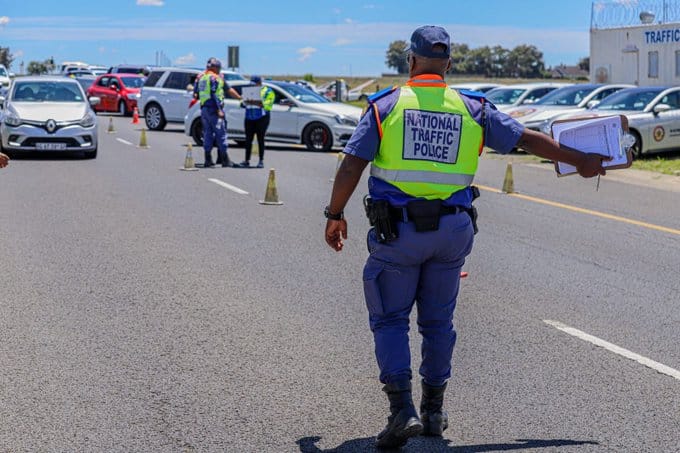
The operation, codenamed “Operation Phaphama” (Wake Up), ran from Monday, April 27, to Sunday, May 3, 2026. It was not a single roadblock but a coordinated, city-wide campaign targeting known hotspots for drunk driving.
JMPD spokesperson Superintendent Xolani Fihla outlined the scale of the operation:
- 22 roadblocks across all seven regions of Johannesburg, including Soweto, Sandton, the Johannesburg CBD, Midrand, Roodepoort, Ennerdale, and Diepsloot.
- Over 8,000 vehicles stopped for routine checks.
- 3,400 breathalyser tests administered.
- 252 positive tests for driving under the influence (DUI), representing a 7.4% failure rate among those tested.
- 47 additional arrests for other offenses, including reckless driving, driving without licenses, and possession of counterfeit goods.
- 112 vehicles impounded.
“These numbers are deeply troubling,” said Superintendent Fihla, addressing the media at JMPD headquarters in Martindale. “We are talking about over a quarter of a thousand people who decided—deliberately, consciously—to get behind the wheel of a motor vehicle while intoxicated. Each one of them was a potential killer. Each one of them is lucky they were stopped before they killed someone.”
The operation involved 340 JMPD officers, supported by 15 traffic vehicles from the Gauteng Provincial Government and a contingent of 50 reservists. Overtime costs alone exceeded R1.2 million. But city officials say it was money well spent.
“Every drunk driver we take off the road is a potential tragedy averted,” said Johannesburg Mayor Dada Morero in a statement. “This operation saved lives. We will continue them, and we will expand them.”
The Numbers Behind the Crisis
To understand the significance of 252 arrests, one must understand the scale of drunk driving in South Africa.
According to the Road Traffic Management Corporation (RTMC), alcohol is a contributing factor in approximately 27% of fatal crashes in South Africa. During holiday periods—December, Easter, and long weekends—that figure can rise to over 50%. The South African Medical Research Council estimates that one in every two drivers killed in road crashes has a blood alcohol concentration above the legal limit.
The legal limit in South Africa is 0.05 grams per 100 milliliters of blood for standard drivers, and 0.02 grams for professional drivers (taxis, trucks, buses). But many of those arrested during Operation Phaphama had readings three, four, or even five times the legal limit.
“We had one driver blow 0.24,” said Sergeant Marlene Jacobs, a JMPD officer stationed at the Diepkloof roadblock. “That is not ‘had a few drinks’ territory. That is ‘should be in a coma’ territory. He was still driving. He had his three-year-old daughter in the back seat, unbelted. I have been doing this for twelve years, and that still made me cry.”
The Human Stories: Beyond the Statistics
Behind each of the 252 arrests is a story—some tragic, some infuriating, some heartbreaking.
The Wedding Guest
A 29-year-old woman was arrested on the M2 near George Goch after her vehicle was seen swerving across three lanes. She was returning from a friend’s wedding. Her blood alcohol level was 0.18. In the passenger seat was her wedding gift: a bottle of champagne, half-empty. She told officers she was “fine” and that she “only had a few glasses of wine.”
“I’m supposed to be at work tomorrow,” she sobbed as she was placed in the van. “I’m going to lose my job.”
She was charged with DUI. Her license was suspended on the spot. Her car was impounded. She spent the night in a holding cell at the Johannesburg Central Police Station, surrounded by people she would never have met in any other context.
The Uber Driver
A 42-year-old man, driving a rental sedan with Uber decals on the windshield, was pulled over in Sandton after failing to stop at a red light. He had four passengers in the car—a family of tourists from the United Kingdom. They had no idea their driver was drunk.
“I’m sorry,” he kept repeating as officers administered the breathalyser. “I’m sorry. I need this job. Please. I’m sorry.”
His blood alcohol level was 0.09. He was arrested. The tourists, shaken and angry, were given a free ride to their hotel by a sober JMPD officer.
“He could have killed us,” said the father of the family, who declined to give his name. “We trusted him. We got into his car. And he was drunk. I don’t know how we are supposed to feel safe in this city.”
The Repeat Offender
Perhaps the most disturbing arrest was that of a 55-year-old man in Midrand who was stopped for speeding—30 kilometers over the limit—at 11 p.m. on a Thursday. He failed the breathalyser. A records check revealed that his license had been suspended in 2023 for a previous DUI conviction. He had never completed the required rehabilitation program. He had simply continued driving.
“He told us he ‘couldn’t afford’ the rehabilitation classes,” said the arresting officer. “But he could afford the BMW he was driving. He could afford the bottle of whiskey we found in his glove compartment. Priorities, I guess.”
The man now faces charges of DUI, driving with a suspended license, and contempt of court.
The Teenager
A 19-year-old student was arrested on William Nicol Drive after his friends—all visibly intoxicated—were seen hanging out of the windows of his hatchback, shouting at passing cars. The driver himself was barely coherent. His blood alcohol level: 0.14.
“I’m only 19,” he told officers, as if that were a defense. “I can’t go to jail. My parents will kill me.”
His parents, when called, arrived at the station in tears. His father, a respected physician in the northern suburbs, could not look at his son.
“I failed him,” the father whispered. “I failed him.”
The Enablers: Who Else Is Responsible?
While the JMPD focuses on arresting drunk drivers, the broader community must also confront its own complicity.
Bars and shebeens: Many establishments continue to serve alcohol to patrons who are clearly intoxicated, then watch them walk to their cars without intervention. While South African liquor laws prohibit serving alcohol to visibly drunk individuals, enforcement is rare.
Friends and family: How many of the 252 arrested drivers were given their car keys by someone who knew they had been drinking? How many were allowed to drive home because “it’s only a short distance” or “he’s fine, he drives better when he’s drunk”?
Employers: Some of those arrested were driving company vehicles. Others were returning from work functions where alcohol was freely available. Corporate South Africa has a role to play in promoting responsible drinking and providing alternative transport.
“We cannot arrest our way out of this problem,” said road safety advocate and founder of the Southern African Road Safety Association, Meryl Smith. “We need a culture shift. We need people to say, ‘No, you cannot drive. Here are my car keys. I will call you an Uber.’ That simple intervention saves lives.”
The Legal Consequences: What Happens to the 252?
For the 252 motorists arrested, the next few weeks and months will be a legal and financial nightmare.
Immediate consequences:
- Vehicle impounded (costs: towing + storage, typically R3,000–R5,000)
- Driver’s license suspended on the spot
- Arrest and detention (average 12–24 hours in holding cells)
- Court appearance (usually within 48 hours)
Potential legal penalties (if convicted):
- Fine of up to R120,000 (depending on blood alcohol level and whether it’s a first offense)
- Imprisonment of up to six years (for repeat offenders or crashes causing injury)
- Suspension of driver’s license for a minimum of six months (first offense) or five years (repeat offense)
- Mandatory attendance of a rehabilitation program (cost: R5,000–R15,000)
- Criminal record, affecting employment, travel, and professional licenses
Additional costs:
- Legal fees (R20,000–R100,000)
- Increased insurance premiums (often double or triple)
- Loss of income if job requires driving
“This is not a ‘slap on the wrist’ offense,” said criminal defense attorney Mpumelelo Zikalala, who has represented dozens of DUI clients. “The courts take drunk driving very seriously. Judges have heard too many victim impact statements from families who lost children, parents, spouses to a drunk driver. They have no mercy. And frankly, they shouldn’t.”
The Toll: What Drunk Driving Costs South Africa
The human cost of drunk driving is measured in lives lost, families shattered, and futures stolen. But there is also an economic cost.
According to the Road Traffic Management Corporation (RTMC):
- Drunk driving costs the South African economy an estimated R18 billion per year in medical expenses, emergency services, property damage, lost productivity, and legal costs.
- Over 1,500 people die annually in alcohol-related crashes in South Africa.
- For every person killed, approximately 10 are seriously injured — many with lifelong disabilities requiring ongoing care.
“Behind every number is a name,” said Superintendent Fihla. “Behind every name is a mother, a father, a child, a friend. The 252 people we arrested this week could have been the cause of 252 funerals. We stopped them. But we cannot stop everyone. That is why we need the public’s help.”
The Public’s Response: Support and Skepticism
The JMPD’s week-long crackdown has drawn a mixed response from the public.
Supporters praised the operation as necessary and long-overdue.
“Finally, someone is doing something,” said commuter Nomsa Dlamini, 34, who takes the bus from Soweto to Sandton each day. “Every weekend I see people driving drunk. They swerve, they speed, they almost hit pedestrians. I have been scared to cross the street on a Saturday night. Maybe now people will think twice.”
Skeptics argued that the operation was a revenue-generating exercise, not a genuine safety campaign.
“They impound your car, they charge you storage fees, they fine you thousands of rands,” said a man who identified himself only as a “regular driver” but refused to give his name. “It’s a business. They don’t care about safety. They care about money.”
The JMPD rejected this accusation.
“If we wanted to generate revenue, we would fine people for minor offenses—expired license discs, broken taillights, tinted windows,” said Superintendent Fihla. “Drunk driving is not minor. It is a crime. A serious crime. And we treat it as such.”
The Prevention Question: What Else Can Be Done?
Arresting drunk drivers is reactive. The ultimate goal must be prevention. Experts have proposed several interventions:
1. Lower the legal limit
South Africa’s limit of 0.05 is higher than many European countries (0.02 in Sweden, 0.05 in the UK, 0.00 in Hungary and Romania). Some advocates argue for 0.02 or even zero tolerance.
2. Increase random breathalyser testing
Currently, police must have “reasonable suspicion” to stop a driver. Allowing random breathalyser tests (as in Australia and parts of Europe) would increase deterrence.
3. Mandatory alcohol interlocks for repeat offenders
An interlock device requires the driver to blow into a breathalyser before the car will start. If alcohol is detected, the car remains immobilized. Several countries mandate these for DUI offenders.
4. Strengthen liquor licensing laws
Hold establishments accountable for serving alcohol to visibly intoxicated patrons who then drive. Financial penalties or license suspensions could create powerful incentives.
5. Public awareness campaigns
South Africa’s “Arrive Alive” campaign has been successful but underfunded. A sustained, well-funded media campaign—including graphic television ads, social media content, and school programs—could shift cultural norms.
6. Expand affordable alternative transport
In many parts of Johannesburg, ride-hailing services like Uber and Bolt are expensive or unavailable, especially in townships. Subsidized late-night transport could provide a safer option for those who have been drinking.
“We need a comprehensive strategy,” said Meryl Smith. “Arrests are part of the solution. But they are not the whole solution. We need to change behavior, change culture, change the environment. That takes time, money, and political will.”
The Victims: Voices from the Other Side
While the JMPD focuses on arresting drunk drivers, the victims of drunk driving crashes often feel forgotten.
Thabo Ndlovu, 52, lost his 17-year-old son, Sipho, in 2022 when a drunk driver ran a red light and T-boned the car Sipho was driving home from his part-time job.
“The driver had three previous DUI convictions,” Thabo said quietly. “Three. He had been given chance after chance. And then he took my son. My only son.”
The driver was sentenced to eight years in prison. He will likely serve half.
“Eight years,” Thabo repeated. “For a life. My son was going to be a mechanic. He was going to get married. He was going to have children. All of that is gone. And the man who took it will be out in four years. Where is the justice in that?”
Stories like Thabo’s are not rare. They are the background hum of a country where drunk driving is normalized, penalized, but never truly eradicated.
“I don’t want revenge,” Thabo said. “I want prevention. I want young people to be afraid to drive drunk. I want bars to be afraid to overserve. I want the laws to be enforced. Not for me. For the next parent who doesn’t want to get that phone call.”
The Future: What Comes Next?
The JMPD has announced that Operation Phaphama will continue, with additional roadblocks planned for the winter months—a period when drunk driving typically increases due to holiday parties, festive season events, and longer nights.
“The 252 arrests are not a one-time achievement,” said Superintendent Fihla. “They are a beginning. We will be back. We will keep coming back. Until drunk driving is as socially unacceptable as drunk flying.”
The city has also allocated R5 million for a public awareness campaign targeting shebeens, taverns, and nightclubs. Posters will be distributed. Banners will be hung. Radio ads will be broadcast in multiple languages.
“Don’t be the 253rd,” the campaign’s tagline reads. “Plan your ride before you take your first sip.”
About The Author