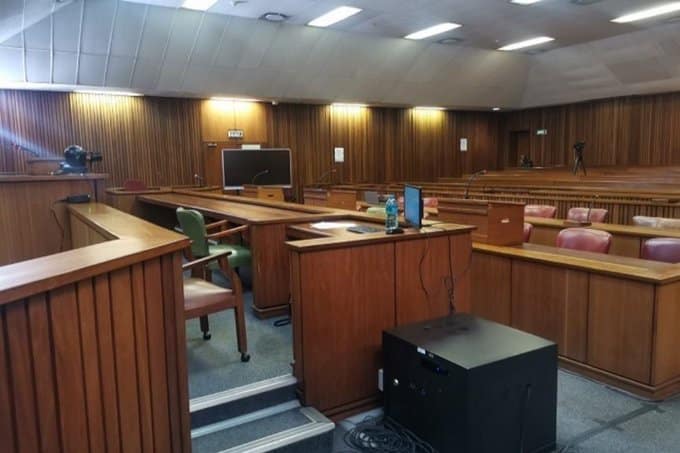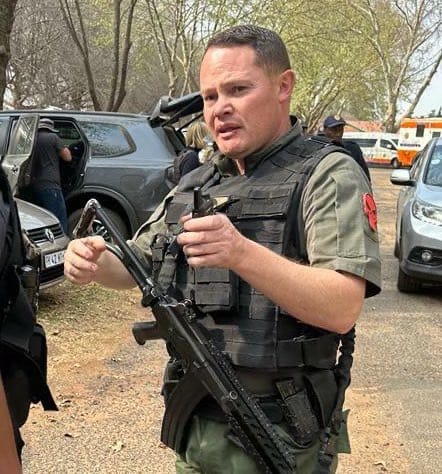
The Judicial Commission of Inquiry into Criminality, Political Interference, and Corruption in the Criminal Justice System has been plunged into a state of crisis and mourning following the execution-style murder of a crucial witness. In a somber and unusually emotional statement released late Friday, 5 December 2025, the Commission, chaired by the esteemed retired Constitutional Court Justice Mbuyiseli Madlanga, confirmed the killing of Mr. Marius “Vlam” van der Merwe, expressing its “profound sadness and outrage” at an act it described as “a direct assault on the administration of justice itself.”
Van der Merwe was not merely a witness; he was a lynchpin in one of the Commission’s most explosive and dangerous lines of investigation. His testimony was central to untangling a dense web of alleged criminality, fraud, and political protection within the Ekurhuleni Metropolitan Municipality and the Ekurhuleni Metropolitan Police Department (EMPD). According to sources close to the inquiry, he was prepared to provide detailed evidence on a multi-faceted corruption scheme involving:
- Tender Manipulation: The systematic rigging of municipal contracts—from waste management and security services to infrastructure projects—in favor of companies linked to organized crime figures.
- Police Complicity: How senior officers within the EMPD allegedly provided protection for illegal mining operations (zama zamas), drug trafficking rings, and cash-in-transit heist syndicates in exchange for bribes and a share of proceeds.
- Political Interference: The channeling of illicit funds to certain local political figures and the deliberate obstruction of internal investigations and criminal prosecutions to shield key perpetrators.
Justice Madlanga’s statement explicitly acknowledged van der Merwe’s “courage” and the “vital importance” of his cooperation, confirming that his evidence had already been partially given in a closed, in-camera session to protect his safety. This admission underscores the devastating blow the assassination represents to the Commission’s work. “The loss of Mr. van der Merwe is not only a personal tragedy for his family,” the statement read, “but a severe impediment to our mandate of uncovering the truth and restoring integrity to our criminal justice system.”
The killing has ignited a firestorm of condemnation and raised urgent, uncomfortable questions that now loom over the entire inquiry:
- Intimidation and Impunity: The murder is seen as a brazen message to other potential witnesses, a chilling demonstration that the criminal networks under investigation are willing and able to eliminate threats with ruthless efficiency, even against someone believed to be under some level of state protection.
- Security Failure: Despite van der Merwe having expressed fears for his life, the level of protection afforded to him appears to have been catastrophically inadequate. This failure points to either a grave misjudgment of the threat level by the South African Police Service’s Witness Protection Unit, or something more sinister: the possibility of intelligence leaks from within the very institutions the Commission is probing.
- The Commission’s Future: Can the Madlanga Commission proceed effectively when its witnesses are being assassinated? The immediate challenge is twofold: to conduct a thorough, unimpeded investigation into the murder itself, and to radically overhaul witness security protocols to prevent further bloodshed. There are already calls for the Commission to be provided with its own independent, specialized protection unit, separate from the SAPS.
- The Ekurhuleni Nexus: The assassination throws a harsh, public spotlight directly onto the corruption ecosystem in Ekurhuleni. It suggests that the criminal-political nexus there is far more entrenched and dangerous than previously understood, willing to strike at the heart of a national judicial process to protect its interests.
As police investigators comb the crime scene in Brakpan and the Commission regroups, the path forward is fraught with peril. The murder of Marius van der Merwe has transformed the Madlanga Commission from an investigative body into a frontline in a shadow war. Its ability to navigate this crisis—to secure its remaining witnesses, follow the evidence trail from the murder back to its masterminds, and continue its work undeterred—will be the ultimate test of its authority and a defining moment for South Africa’s faltering battle against systemic corruption. The nation now watches to see if this killing will silence the inquiry, or if, in the face of terror, it will find a renewed and more determined voice.
About The Author