In a glittering ceremony at the John F. Kennedy Center for the Performing Arts, the intricate tapestry of the 2026 FIFA World Cup was finally revealed, mapping out a breathtaking journey that will span three nations and captivate the globe. The December 5th draw didn’t just assign groups—it scripted narratives, beginning with a colossal opening act that will write a new chapter in football history.
Opening Ceremony: A Clash of Legends and Hopefuls in Mexico City
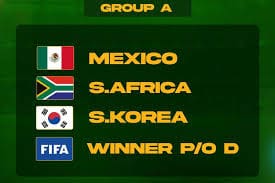
The 48-team tournament, the largest ever assembled, will officially commence on June 11, 2026, at the hallowed Estadio Azteca in Mexico City. In a poetic twist of fate, the Mexican national team, one of the three co-hosts, will raise the curtain against South Africa’s Bafana Bafana. This fixture is laden with symbolism: the Azteca, the only stadium to have hosted two World Cup finals, will now stage a historic third opener, welcoming a South African side that, as hosts in 2010, delivered one of the tournament’s most memorable opening matches. For Mexico, it’s a chance to ignite home fervor; for South Africa, a daunting yet glorious opportunity to announce their return to the world’s biggest stage.
Co-Hosts Enter the Arena: Pressure and Promise
The other co-hosts begin their campaigns the following day, June 12th, under the weight of immense expectation.
- The United States, placed in Group C, will launch their quest at the colossal SoFi Stadium in Los Angeles against a tactically robust Paraguay. The USMNT, eager to prove their evolution since 2022, will aim to start with a statement victory in front of a star-studded Hollywood crowd.
- Canada, in Group D, will have the honor of a home opener at BMO Field in Toronto. Their opponent will be the winner of a crucial intercontinental playoff—a slot that could be claimed by a fallen giant, Italy, should the Azzurri navigate their precarious qualifying path. The possibility of Italy’s opening match being in Toronto has already sent shockwaves through the Canadian football community, promising a tactical and emotional duel of the highest order.
The New Tournament Tapestry: Expanded Field, New Dynamics
The 2026 edition’s expansion to 48 teams introduces a novel first round: 12 groups of four. The top two finishers from each group, plus the eight best third-place teams, will advance to a new, mammoth 32-team knockout stage. This format ensures a relentless month of football, where every match carries consequence and the margin for error is slim.
A Continent-Spanning Spectacle
The draw solidified the tournament’s truly continental scale. From Vancouver’s BC Place to Guadalajara’s Estadio Akron, and from Miami’s Hard Rock Stadium to Kansas City’s Arrowhead, the World Cup will be a cultural and sporting caravan across North America. The sprawling schedule promises to test teams’ logistics and endurance as much as their footballing prowess, with climate, travel, and diverse fan atmospheres becoming key factors.
The road will end on July 19, 2026, at the MetLife Stadium in East Rutherford, New Jersey, where 104 matches will have distilled the field to two finalists battling for immortality.
Narratives Forged, Dreams Defined
Beyond the hosts, the draw crafted other compelling stories: revival projects for nations like Germany and Spain, the persistent underdog hope of teams like Jamaica or Uzbekistan (if they qualify), and the final World Cup campaigns of legends like Lionel Messi, who will aim to defend his crown in a familiar continental setting.
With the groups now known, the countdown intensifies. For South Africa, the focus is on the Azteca’s intimidating bowl; for Mexico, on carrying a nation’s opening-day dreams; and for the entire football world, on a unique, unprecedented tournament that promises to be not just a competition, but a celebration spanning a continent. The draw is complete. The stage is set. The long wait for the beautiful game’s greatest festival has truly begun.
About The Author