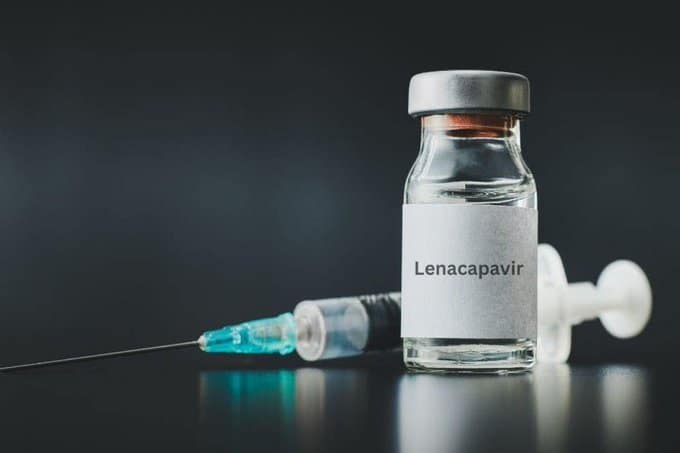
South Africa has taken a monumental step forward in the decades-long battle against HIV with the arrival of the first batch of nearly 38,000 doses of Lenacapavir, a groundbreaking twice-yearly injectable medicine that offers high-level protection against HIV infection. The shipment, which touched down at OR Tambo International Airport on Monday morning aboard a temperature-controlled cargo flight from Belgium, marks the beginning of what health officials are calling “a new era” in HIV prevention—one that could finally bend the curve of new infections in the country with the world’s largest HIV epidemic.
The arrival of Lenacapavir, developed by US-based pharmaceutical giant Gilead Sciences, has been hailed by activists, healthcare workers, and government officials as a potential game-changer. Unlike daily oral pre-exposure prophylaxis (PrEP), which requires consistent adherence to be effective, Lenacapavir is administered as a subcutaneous injection once every six months—a feature that could dramatically improve real-world protection, particularly among young women and adolescent girls who face the highest risk of infection.
“This is not just a new medicine. This is a new paradigm,” said Dr. Sandile Buthelezi, Director-General of the National Department of Health, speaking at a press conference at the airport’s cargo facility, where pallets of carefully packaged vials sat under the watchful eyes of security personnel. “For years, we have struggled with adherence. We have asked young people to take a pill every day, to remember to refill their prescriptions, to overcome stigma at the clinic. Lenacapavir removes those barriers. Two injections a year. That is it. That is the difference between vulnerability and protection.”
The Science: How Lenacapavir Works
Lenacapavir belongs to a new class of antiretroviral drugs known as capsid inhibitors. Unlike traditional HIV medications that target viral enzymes (such as reverse transcriptase or protease), Lenacapavir attacks the virus’s protective protein shell—the capsid—disrupting its ability to replicate and infect new cells. The result is a potent, long-acting antiviral effect that persists for months after a single injection.
Clinical trials have produced stunning results. In the PURPOSE 1 trial, conducted across multiple sites in sub-Saharan Africa, Lenacapavir demonstrated 100% efficacy in preventing HIV infection among young women and adolescent girls. No participants who received the twice-yearly injection acquired HIV during the trial period. In the PURPOSE 2 trial, which included men who have sex with men, transgender women, and non-binary individuals, efficacy was 99.9%.
“These are numbers we have never seen before in HIV prevention,” said Professor Linda-Gail Bekker, director of the Desmond Tutu HIV Centre at the University of Cape Town, who served as a principal investigator for the PURPOSE trials. “We have good tools already—oral PrEP works when taken consistently. But real-world adherence is challenging. Lenacapavir takes adherence out of the equation. You get your injection, you are protected for six months. It is as close to a vaccine as we have ever come.”
The medicine is administered as two subcutaneous injections (one in each buttock) given at the same visit. After a loading dose, a maintenance injection is given every six months. Side effects are generally mild and include injection-site reactions (redness, swelling, pain) that typically resolve within a few days.
The Logistics: Getting 38,000 Doses to the People
The arrival of 37,800 doses of Lenacapavir—enough to protect approximately 18,900 people for one year (since each person requires two doses per year)—is the first tranche of a larger order. The National Department of Health has secured commitments for 300,000 doses over the next 18 months, enough to cover 150,000 individuals.
But getting the medicine from the airport to the people who need it is a logistical challenge of significant proportions. Lenacapavir must be stored at temperatures between 2°C and 8°C (standard cold chain requirements) and administered by trained healthcare professionals. The injections cannot be self-administered.
The department has identified 150 facilities across the country as “early adopter” sites, including:
- 50 large community health centres in high-burden districts (Gauteng, KwaZulu-Natal, Western Cape, Mpumalanga, and Eastern Cape)
- 40 dedicated youth-friendly clinics targeting adolescent girls and young women
- 30 facilities serving key populations (men who have sex with men, sex workers, people who inject drugs)
- 20 tertiary hospitals that will serve as training hubs
- 10 mobile clinics operating in remote rural areas
“We have been planning this rollout for over a year,” said Dr. Thabo Mnguni, head of the department’s HIV and TB directorate. “We have trained 1,200 nurses and clinicians in how to administer the injection. We have procured 200 dedicated cold-chain refrigerators. We have developed a patient registry to track who receives which injection and when they are due for their next dose. This is not a pilot. This is a full-scale implementation.”
The first injections are expected to be administered within two weeks, pending final quality assurance checks and distribution to provincial depots.
The Context: South Africa’s HIV Epidemic by the Numbers
To understand why the arrival of Lenacapavir is such a significant moment, one must understand the scale of South Africa’s HIV epidemic:
- 8.2 million people living with HIV in South Africa—the largest population of any country in the world.
- 150,000 to 200,000 new infections each year, despite years of prevention efforts.
- Adolescent girls and young women (aged 15-24) account for over 25% of new infections, despite being only 10% of the population. In some districts of KwaZulu-Natal, HIV incidence among young women exceeds 5% per year—meaning one in twenty becomes infected annually.
- Only 48% of young women who are eligible for oral PrEP have ever initiated it, and of those, fewer than 30% are still taking it after six months.
“The adherence problem is not a moral failing,” said Dr. Bekker. “It is a structural problem. A young woman in Soweto or Umlazi has to find transport to a clinic, wait in line for hours, face judgmental staff, remember to take a pill every day at the same time, hide it from her family or partner if she has not disclosed her risk. That is a lot to ask. Lenacapavir reduces that burden to two clinic visits a year. That is manageable. That is sustainable.”
The Activists’ Response: ‘A Victory, But Not the End’
The arrival of Lenacapavir has been met with jubilation from HIV activists, who have fought for years to accelerate access to new prevention technologies. But alongside the celebration is a sober recognition that the rollout must be done equitably—and that the medicine’s high cost could limit access.
“Make no mistake: this is a victory,” said Sibongile Tshabalala, chairperson of the Treatment Action Campaign (TAC). “Fifteen years ago, we were fighting for access to antiretroviral treatment for people already dying of AIDS. Now we are talking about a medicine that can prevent infection entirely. That is progress. That is hope.”
But Tshabalala and others have raised concerns about pricing. Lenacapavir’s list price in high-income countries is approximately $40,000 (R750,000) per patient per year—an astronomical figure that would make it inaccessible to the vast majority of South Africans. However, Gilead Sciences has granted licenses to generic manufacturers in India and South Africa to produce lower-cost versions for low- and middle-income countries.
The National Department of Health has negotiated a price of approximately $42 (R800) per dose, or $84 (R1,600) per patient per year—a 99.9% discount from the list price. This is still significantly more expensive than oral PrEP (which costs approximately $60 per patient per year), but the department argues that the improved adherence and efficacy justify the higher cost.
“We have modeled the cost-effectiveness,” said Dr. Buthelezi. “Even at the negotiated price, Lenacapavir is a good investment. Every infection prevented saves the health system hundreds of thousands of rands in lifetime treatment costs. Prevention is not just morally right. It is economically smart.”
Gilead Sciences has also committed to donating 500,000 doses over the next two years to the Global Fund to Fight AIDS, Tuberculosis and Malaria, which will distribute them to high-burden countries including South Africa.
The Healthcare Workers: Training and Preparedness
At the Helen Joseph Hospital in Johannesburg, one of the designated early adopter sites, nurses and clinicians have been undergoing intensive training on Lenacapavir administration. The medicine comes as a powder that must be reconstituted with sterile water before injection—a multi-step process that requires careful attention to sterility and dosing.
“It is not difficult, but it is different,” said Sister Nomsa Dlamini, a senior nurse who will be administering the injections. “We are used to giving vaccines intramuscularly, in the arm. This is subcutaneous, in the buttocks. The volume is larger. We have to be precise. But after a few dozen injections, it will become routine.”
The training also covers how to counsel patients about what to expect: the injection itself is described as “mildly uncomfortable,” and some patients experience a small lump at the injection site that resolves over several days. Patients are advised not to massage the area, as this can disperse the medication prematurely.
“We have to manage expectations,” said Dr. Mnguni. “This is not a cure. It does not treat existing HIV. It is not 100% effective if doses are missed—if you miss your six-month injection window, protection wanes. But for the vast majority of patients who adhere to the schedule, it is as close to 100% as anything we have ever seen.”
The First Recipients: ‘I Want to Live Without Fear’
Among the first people expected to receive Lenacapavir is 22-year-old Thandi Nkosi (not her real name), a university student from Soweto who has been on oral PrEP for two years but has struggled with adherence.
“I forget sometimes,” she said in an interview arranged by a community health organisation. “I am busy. I have classes, work, a social life. The pills make me nauseous if I take them on an empty stomach, so I try to take them with food, but then I forget. I have had three pregnancy scares because I was off PrEP and had unprotected sex. I know it is risky. I know I should do better. But it is hard.”
When she heard about Lenacapavir, she immediately wanted to enroll. “Two injections a year? That is nothing. I can do that. I want to live without fear. I want to finish my degree, get a job, have a family—without worrying that every new partner could change my life forever. This medicine gives me that chance.”
The Challenges Ahead: Equity, Access, and Stigma
Despite the optimism, significant challenges remain. The first batch of 38,000 doses will reach only a fraction of the estimated 1.5 million South Africans who could benefit from Lenacapavir. The department has prioritized young women in high-incidence districts, but many others will have to wait.
“Scaling up will take time,” acknowledged Dr. Buthelezi. “We are dependent on global supply chains, on generic manufacturing timelines, on funding from donors and the national treasury. We cannot flip a switch and have millions of doses tomorrow. But we have started. And starting is the most important step.”
Stigma also remains a formidable barrier. Young women who seek HIV prevention services are often assumed to be “promiscuous” or “already HIV-positive.” Men who have sex with men face discrimination and violence in many communities. Sex workers are criminalized and often avoid clinics altogether.
“A medicine is only as good as the system that delivers it,” said TAC’s Sibongile Tshabalala. “If young women are too afraid to go to the clinic because the nurses will judge them, Lenacapavir will not help them. We need to combine this medical breakthrough with community engagement, with anti-stigma campaigns, with youth-friendly services. The pill is not enough. The injection is not enough. We need a movement.”
The Global Implications: South Africa Leading the Way
South Africa is the first country in the world to begin a large-scale rollout of Lenacapavir for HIV prevention, ahead of even the United States and European Union, where regulatory approval is still pending. The decision to move forward based on trial data—rather than waiting for full registration—reflects the urgency of the country’s epidemic.
“This is South Africa showing leadership,” said Dr. Bekker. “We did not wait. We negotiated, we planned, we trained, and now we are delivering. Other countries will watch us. They will learn from our successes and our mistakes. And hopefully, they will follow.”
The World Health Organization has indicated that it will issue formal guidance on Lenacapavir for HIV prevention by the end of 2026, but has encouraged countries with high HIV burdens to begin rollout “as soon as feasible.”
The Long-Term Vision: Ending AIDS as a Public Health Threat
UNAIDS has set a goal of ending AIDS as a public health threat by 2030—a target that seemed impossibly ambitious just a few years ago. The arrival of Lenacapavir, combined with existing tools (oral PrEP, voluntary medical male circumcision, condoms, and antiretroviral treatment for those living with HIV), has made that goal more plausible.
“We are not there yet,” said Dr. Buthelezi. “But for the first time in a long time, I can see the finish line. A generation of young people growing up without HIV. A generation that does not know the fear of a positive test result. That is what Lenacapavir represents. That is why this moment matters.”
The Final Word: A New Dawn
As the sun set over Pretoria on Monday evening, the temperature-controlled vials of Lenacapavir sat safely in a secure warehouse, awaiting distribution. In clinics across the country, nurses studied their training manuals. In townships and rural villages, young women dreamed of a future without fear.
The road ahead is long. The challenges are real. But for one day, at least, the news was unambiguously good. A new medicine had arrived. A new tool had been added to the arsenal. And in the fight against HIV—a fight that has claimed millions of lives and caused incalculable suffering—there was finally, unmistakably, reason to believe that the end might be in sight.
“This is not the end of HIV,” said Professor Linda-Gail Bekker. “But it is the beginning of the end. And that is something worth celebrating.”
About The Author