In the quiet, tree-lined streets of Florida, a suburb not typically associated with cross-border criminal syndicates, an intelligence-led operation unfolded in the early hours of Thursday morning that has sent a clear message to vehicle theft rings operating in Gauteng: the border is no longer a guarantee of escape.
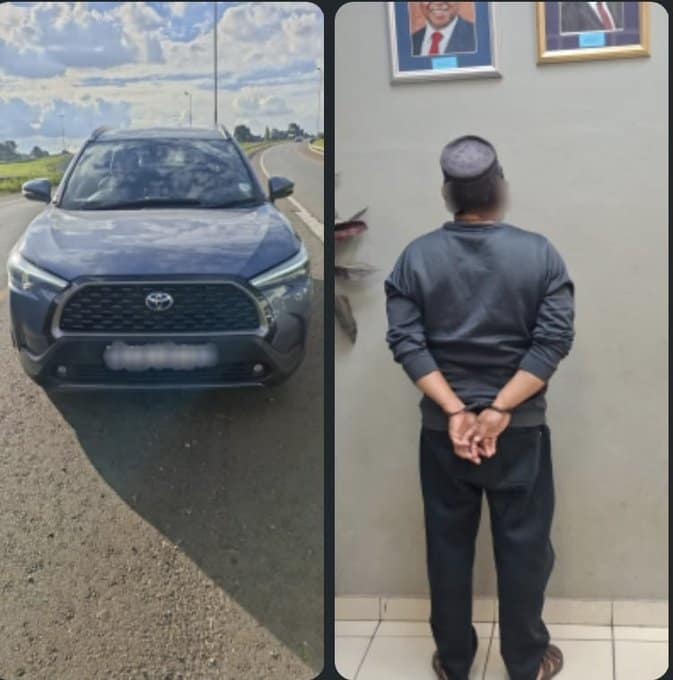
The Johannesburg Metropolitan Police Department (JMPD) has confirmed that its officers intercepted a stolen vehicle destined for Zimbabwe and arrested a foreign national suspect in a meticulously planned takedown that highlights the growing sophistication of the city’s efforts to combat cross-border vehicle crime.
The operation, conducted by the JMPD’s elite Intelligence-Driven Operations Unit, targeted a vehicle that had been reported stolen earlier in the week from a residential driveway in Midrand. According to JMPD spokesperson Superintendent Xolani Fihla, the suspects had already begun the first leg of what is believed to be a well-established smuggling route—taking stolen luxury vehicles from affluent Johannesburg suburbs through Limpopo province and across the Beitbridge border post into Zimbabwe, where they are either sold locally or stripped for parts.
“We have been tracking this particular syndicate for several weeks,” Fihla said during a media briefing at the JMPD’s central headquarters in Marshalltown. “Our intelligence indicated that a stolen vehicle was being prepared for cross-border movement. We placed the vehicle under surveillance and waited for the right moment to strike. That moment came in Florida, where the suspect was taken into custody without incident.”
The Operation: How It Unfolded
The details of the operation, as reconstructed from JMPD sources, paint a picture of patient, methodical police work.
On Monday evening, a 2023 BMW X3 was reported stolen from a gated community in Midrand. The owner, a 45-year-old business executive, had returned from a business trip to find his driveway empty. Tracking devices installed in the vehicle had been disabled—a telltale sign of a professional operation, not an opportunistic joyride.
The JMPD’s Intelligence-Driven Operations Unit, which works closely with private tracking companies and the Hawks’ serious organised crime unit, began tracing the vehicle’s last known signals before the tracker went dark. Using a combination of CCTV footage from the Midrand area, automatic number plate recognition (ANPR) data, and human intelligence from informants within the stolen vehicle underground, officers were able to piece together the vehicle’s likely route.
By Wednesday, the unit had established that the vehicle was being held at a storage facility in Roodepoort, where it was being fitted with false number plates and having its VIN (vehicle identification number) tampered with. The plan, according to intelligence, was to move the vehicle to a second location in Florida, where it would be transferred to a transporter or driven directly to the border by a hired driver.
On Thursday morning, just after 4am, officers from the unit established a covert observation post near the intersection of Florida Road and Oak Avenue. At approximately 5:45am, a silver Toyota Hilux towing a covered car trailer arrived at the predetermined location. A single occupant exited the Hilux and opened a lock-up garage, revealing the stolen BMW inside.
As the suspect began maneuvering the BMW onto the trailer, the JMPD team moved in. Officers boxed in the Hilux with unmarked vehicles, drew their service pistols, and ordered the suspect to the ground. He complied immediately. No shots were fired. No one was injured.
The suspect, a 34-year-old foreign national whose identity has not yet been released pending verification of his immigration status, was arrested at the scene. Inside the Hilux, officers discovered a cache of false registration documents, two additional sets of false number plates, a device used to disable GPS trackers, and a significant amount of cash—R42,000 in various denominations, believed to be payment for the transport of the vehicle to the border.
“The suspect is not a small-time player,” Fihla said. “The equipment we recovered, the planning involved, the network of safe houses—this is organized crime. This is not someone stealing a car to sell to a chop shop down the road. This is a cross-border smuggling operation with established routes, communication protocols, and probably multiple vehicles moved every week.”
The Cross-Border Vehicle Smuggling Epidemic
Thursday’s arrest is a single skirmish in a much larger war. Vehicle smuggling from South Africa to Zimbabwe and other neighboring countries has reached epidemic proportions, with an estimated 15,000 to 20,000 vehicles stolen in South Africa each year ending up across the country’s borders.
According to the South African Police Service’s (SAPS) latest crime statistics, vehicle theft increased by 12% in Gauteng in 2025 compared to the previous year, with luxury SUVs and double-cab bakkies being the most sought-after targets. The Toyota Hilux and Ford Ranger, both popular in the Southern African market, are particularly vulnerable.
The smuggling routes are well-documented. From Johannesburg, stolen vehicles are typically driven north along the N1 highway toward Polokwane, then through the Limpopo River border crossings. Beitbridge, the busiest border post between South Africa and Zimbabwe, is the primary exit point, but smugglers also use dozens of illegal crossing points along the Limpopo River, where bribes to border officials are routine.
Once in Zimbabwe, the vehicles are either sold to unsuspecting buyers at discounted prices, used in other crimes, or dismantled for parts that are then shipped to markets as far away as Dubai and China. The profits are enormous: a R800,000 vehicle stolen in Sandton can be sold in Harare for the equivalent of R400,000—a 50% discount that still represents a massive profit for the smugglers, who pay only the operational costs of the theft and transport.
“The syndicates are highly organized,” said vehicle crime expert Johann van der Merwe, a former SAPS detective who now works as a private investigator. “They have lookouts, drivers, document forgers, corrupt border officials, and buyers already lined up before the vehicle is even stolen. The vehicle is in Zimbabwe within 48 hours of the theft. After that, finding it is almost impossible.”
The Foreign National Question
The JMPD’s announcement that the arrested suspect is a “foreign national” has inevitably sparked discussion about the role of cross-border criminal networks in South Africa’s vehicle theft crisis. While the JMPD did not specify the suspect’s country of origin, sources familiar with the investigation have indicated that he is a Zimbabwean national with a valid South African visa—a detail that complicates any simplistic narrative about illegal immigration.
“He is not an undocumented migrant living in the shadows,” a police source said on condition of anonymity. “He has a visa, a registered address, a bank account. He has been living in South Africa for years. He is integrated. That is what makes him effective as a smuggler. He does not stand out.”
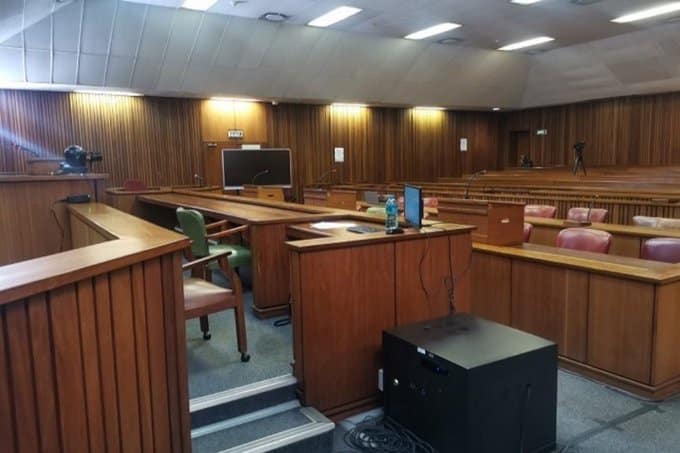
The suspect is expected to face charges of possession of a stolen motor vehicle, fraud (for the false registration documents), and potentially racketeering if the state can prove his involvement in a broader criminal enterprise. He appeared in the Roodepoort Magistrate’s Court on Friday morning and was remanded in custody pending a formal bail application scheduled for next week.
The JMPD has also confirmed that the investigation is ongoing and that further arrests are expected. “This is not a one-man operation,” Fihla said. “We are tracing the suspect’s communications, his financial transactions, his associates. We believe he is part of a larger network. We will follow the evidence wherever it leads.”
The Victim’s Relief
For the owner of the stolen BMW, the news of the interception came as a profound relief. Speaking to journalists outside his Midrand home, the businessman—who asked not to be named for security reasons—described the emotional whiplash of the past week.
“You work hard. You buy something nice for your family. And then one morning, it is just gone. You feel violated. Angry. Helpless,” he said. “I had already written it off. I assumed it was in Zimbabwe or Mozambique or stripped down to nothing. When the police called to say they had found it, I almost didn’t believe them.”
The vehicle, which sustained minor damage to its door locks and ignition system, has been returned to its owner after forensic processing. The tracking device, which had been professionally disabled, will be replaced at the owner’s expense—a small price to pay for the recovery of a nearly new luxury vehicle.
“I am grateful to the JMPD. Truly grateful,” the owner said. “But I am also angry. Angry that this is so common. Angry that these criminals operate so openly. Angry that the borders are so porous. One car recovered is good. But how many are not recovered? How many people are not as lucky as me?”
JMPD’s Evolving Strategy
Thursday’s operation is part of a broader shift in the JMPD’s approach to vehicle crime. Historically, the metropolitan police focused on reactive measures—responding to reports of stolen vehicles, setting up roadblocks, and hoping to get lucky. But under new leadership, the department has invested heavily in its intelligence capabilities.
The Intelligence-Driven Operations Unit, established in 2024, now comprises 45 dedicated officers, including analysts, surveillance experts, and former crime intelligence operatives. The unit works closely with private sector partners—including tracking companies, insurance investigators, and vehicle finance houses—to share data and coordinate responses.
“We have moved from being reactive to being proactive,” Fihla said. “We no longer wait for the crime to happen and then try to catch the criminals. We identify the criminals, map their networks, understand their methods, and then we strike when they are most vulnerable—in the act, with the evidence, before the vehicle crosses the border.”
The results are beginning to show. In the first quarter of 2026, the JMPD recorded a 22% increase in stolen vehicle recoveries compared to the same period in 2025. More importantly, the department has secured 18 convictions in cross-border smuggling cases, with sentences ranging from five to fifteen years imprisonment.
“We are making progress,” Fihla said. “But we are under no illusion. The syndicates are adaptive. When we close one route, they open another. When we arrest one driver, they find another. This is a long war. But we are winning battles.”
The Border Problem
Despite the JMPD’s successes, the fundamental vulnerability remains: South Africa’s borders are notoriously porous. The Beitbridge border post, the official crossing point between South Africa and Zimbabwe, is understaffed, under-resourced, and widely regarded as corrupt. Unofficial crossings along the Limpopo River number in the dozens, many of them unmonitored.
Efforts to address the problem have been piecemeal. The Border Management Authority (BMA), established in 2023, has made some progress in improving coordination between different agencies, but critics say the BMA is underfunded and understaffed. A proposal to install high-tech surveillance systems along the Limpopo River—including ground-penetrating radar and thermal cameras—has been stuck in the procurement process for two years.
“You can intercept stolen vehicles in Johannesburg all day long,” said van der Merwe, the vehicle crime expert. “But as long as the border is a sieve, the syndicates will keep trying. They know that if they can get the vehicle across the river, the chances of recovery drop to almost zero. The JMPD is doing its job. But the border is a national problem. It needs a national solution.”
What Comes Next
The arrested suspect will remain in custody pending his bail application. The state is expected to oppose bail vigorously, arguing that the suspect is a flight risk with access to cross-border smuggling networks. If convicted, he faces a potential sentence of up to 15 years in prison.
The JMPD, meanwhile, has announced that it will intensify its operations in the coming weeks, focusing on known smuggling routes and safe houses. “We have intelligence that the syndicates are planning a major shipment before the end of the month,” Fihla said. “We intend to be there when they try.”
For the residents of Florida, the operation was a reminder that crime is not confined to the city’s troubled townships or inner-city hotspots. The suburb, known for its well-maintained homes and quiet streets, has seen an increase in vehicle-related crime in recent months—a trend that the JMPD says it is addressing.
“We are watching,” Fihla said. “We are listening. We are gathering intelligence. And when the time is right, we will strike. That is the message to every criminal who thinks Johannesburg is an easy target: you are not as clever as you think. And we are not as far behind as you hope.”
The Last Word
As the sun rose over Johannesburg on Thursday morning, the stolen BMW sat in a JMPD impound lot, its false number plates removed, its original identity being restored through forensic analysis. The suspect sat in a holding cell, his phone and cash seized, his plans in ruins. And the syndicate that hired him began the process of adapting—finding a new driver, a new route, a new opportunity.
The war on cross-border vehicle smuggling is not over. It may never be over. But for one day, in one suburb, on one operation, the good guys won.
The JMPD will take that win. And tomorrow, they will go back to work.
Because somewhere in Johannesburg, another vehicle is being stolen. Another trailer is being hitched. Another driver is being paid. And somewhere in the intelligence unit, an analyst is watching, waiting, and planning the next takedown.
About The Author