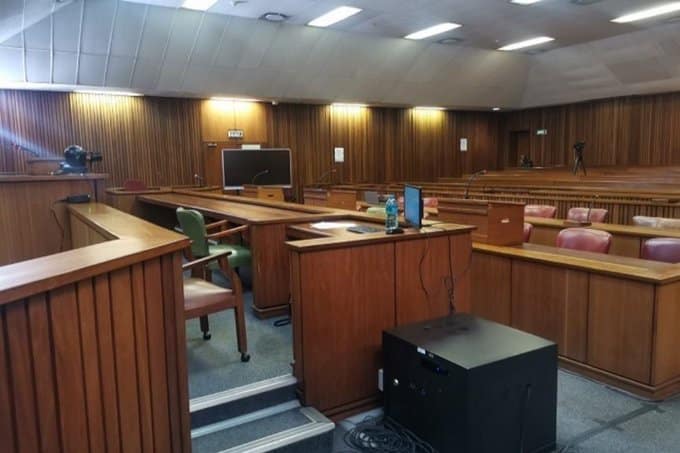
The heavy wooden doors of the Durban Magistrate’s Court swung open just after 9am on Friday, ushering in a scene that has become painfully familiar to those following one of South Africa’s most high-profile murder cases. The accused. The lawyers. The family members clutching photographs. The journalists straining for a glimpse, a word, a clue.
But this morning, something was different. The familiar rhythm of the bail application—the arguments, the objections, the权衡 of freedom against public safety—did not unfold. Instead, there was silence, then a quiet shuffling of papers, then a single, stark announcement that sent ripples through the packed gallery.
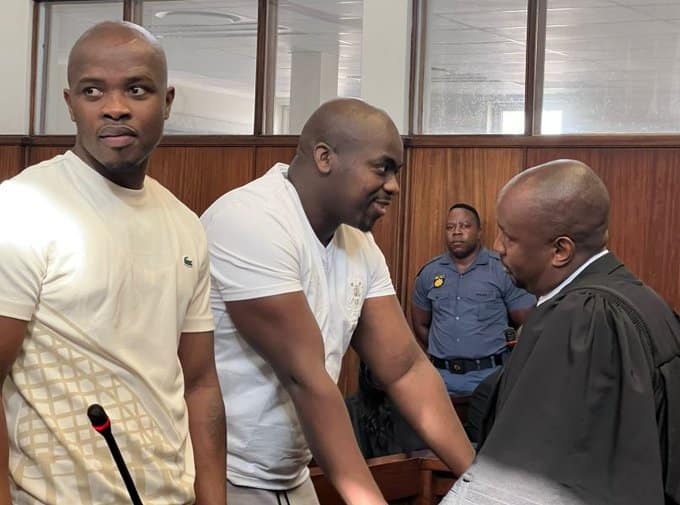
Two Ndimande brothers, linked to the brazen assassination of rapper Kiernan “AKA” Forbes and his close friend Tebello “Tibz” Motsoane, have abandoned their bail application entirely.
The decision, delivered through their legal representative without public explanation, means the brothers will remain in police custody pending their trial. No argument for freedom. No promises to surrender passports. No desperate pleas to see their children. Just a quiet surrender to the reality of their situation—a decision that speaks volumes about the strength of the state’s case against them.
“The abandonment of a bail application is not an admission of guilt,” said legal analyst Nthabiseng Mokoena, who has followed the case from the beginning. “But it is an admission of something. It is an admission that the accused, through their lawyers, have assessed the state’s evidence and concluded that no argument they could make would convince a magistrate to release them. That is not nothing. That is significant.”
The Murders That Shook the Nation
To understand the weight of Friday’s proceedings, one must return to the night of February 10, 2023. Florida Road, Durban. A street lined with restaurants, bars, and the easy energy of a Friday evening. Kiernan Forbes, known to millions as AKA, one of South Africa’s most successful hip-hop artists, had just stepped out of the popular Wish restaurant on Florida Road. He was with friends, including his longtime confidant Tebello Motsoane, known universally as Tibz.
What happened next took seconds and changed everything.
A gunman, later identified by police as one of the accused, allegedly approached the group and opened fire at close range. Forbes was hit multiple times. Motsoane, caught in the crossfire, was also struck. Both men died at the scene. The gunman fled on foot, disappearing into the crowded Durban night.
The news broke like a thunderclap. South Africa, a nation that had grown up with AKA’s music, that had followed his feuds and his loves and his triumphs, was plunged into grief and rage. How could one of the country’s most famous sons be gunned down in the street? Who would do such a thing? And why?
For weeks, the answers were scarce. Police appealed for witnesses. Conspiracy theories flourished online. The Forbes family, led by AKA’s father Tony Forbes, demanded answers with a grief-stricken fury that kept the case in the headlines.
Then, in March 2024, the breakthrough. Police announced the arrest of multiple suspects, including the Ndimande brothers—Siyabonga and Malusi Ndimande—alleged to have played key roles in the assassination plot. The arrests were the result of a painstaking investigation involving cellphone data analysis, CCTV footage, witness testimony, and intelligence gathered from informants within Durban’s criminal underworld.
The state’s case, as outlined in court documents, alleges that the brothers were part of a broader conspiracy that included the masterminding of the hit, the procurement of weapons, the surveillance of Forbes’s movements, and the actual shooting. The motive, according to prosecutors, was a combination of personal animosity and business rivalry, though the full details remain under seal pending trial.
The Bail Hearing That Wasn’t
Friday’s proceedings were supposed to be a bail hearing. The Ndimande brothers, through their legal team, had signaled their intention to apply for bail—a constitutional right enjoyed by all accused persons unless the state can show that release would be not in the interests of justice.
In a typical bail hearing, the court would hear arguments from both sides. The defense would present evidence of the accused’s ties to the community, their lack of previous convictions, their willingness to comply with bail conditions. The state would argue that the accused are a flight risk, or that they might interfere with witnesses, or that the seriousness of the charges—multiple counts of murder—militates against release.
Magistrates in such cases must weigh the presumption of innocence (every accused is presumed innocent until proven guilty) against the public interest in ensuring that those accused of serious crimes face trial.
But Friday’s hearing never reached that point.
As the magistrate took her seat and the courtroom fell silent, the defense attorney rose and made a brief, measured statement: “Your Worship, after consultation with our clients, we wish to inform the court that the bail application is withdrawn. Our clients will remain in custody and await trial.”
The magistrate nodded, made a notation on her papers, and asked: “Is there any further application from the defense?”
“No, Your Worship.”
“From the state?”
“No, Your Worship.”
And just like that, the hearing was over. The brothers, who had sat in the dock in matching grey sweatsuits, their faces impassive, were led back down the stairs to the holding cells. Their families, seated in the public gallery, exchanged confused glances. The journalists filed out, phones already buzzing with the news.
Why Drop a Bail Application? Legal Experts Weigh In
The decision to abandon a bail application is rare in high-profile cases, where accused persons and their families often fight fiercely for even a slim chance of pre-trial freedom. So why did the Ndimande brothers choose to surrender that fight?
Legal experts point to several possible explanations.
Explanation One: The State’s Case Is Overwhelming. If the prosecution has assembled compelling evidence—eyewitness testimony, forensic links, communications records—the defense may have concluded that no magistrate would grant bail regardless of the arguments presented. In such a scenario, going through the motions of a bail hearing would be pointless and potentially harmful, as it would give the state an early opportunity to preview its evidence in open court.
“When the state’s case is strong, bail is virtually impossible for serious charges like murder,” said criminal defense attorney Zola Majavu. “The court will look at the evidence and say: ‘If this is what the state has already, the accused is a flight risk because they know they are likely to be convicted.’ Abandoning the application is a recognition of that reality.”
Explanation Two: The State Has Witness Safety Concerns. In gang-related cases—and this case has alleged links to organized crime—the state often argues that releasing the accused would endanger witnesses. If the defense has been given a preview of witness statements or police intelligence, they may have concluded that they cannot rebut the state’s witness-tampering concerns.
Explanation Three: Strategic Silence. By abandoning the bail application, the defense denies the state the opportunity to cross-examine the accused or their witnesses. In a bail hearing, the accused can be called to testify, and their statements can be used against them at trial. By staying silent and staying in custody, the brothers preserve their right to a full trial without having given the state any pre-trial admissions.
“You never want to give the state a free look at your defense,” said Majavu. “A bail hearing is a mini-trial. The state gets to poke holes in your story. If you know your story has holes, you don’t give them that chance. You stay in jail, you keep your powder dry, and you fight at the trial.”
Explanation Four: Practical Realities. Even if bail were granted, it would likely come with stringent conditions: a massive cash surety, daily reporting to police, electronic monitoring, and the surrender of passports. For accused persons who lack the resources to meet such conditions, bail is a theoretical right but a practical impossibility. Abandoning the application spares the family the humiliation of being told they cannot afford the price of freedom.
What Happens Now?
With the bail application abandoned, the case moves to the next phase: trial preparation. The Ndimande brothers will remain in custody at Westville Prison, one of South Africa’s largest and most secure correctional facilities. They will have access to their legal team and will be brought to court for periodic remand hearings.
The state is expected to formally indict the brothers within the next few months, after which a trial date will be set. Given the complexity of the case—multiple accused, multiple charges, extensive forensic evidence—legal observers expect the trial to begin no earlier than late 2026 or early 2027.
“The wheels of justice turn slowly, especially in murder cases,” said Mokoena. “But the abandonment of bail suggests that the state has done its homework. This is not a case where they are scrambling for evidence. This is a case where they are ready to proceed.”
The Other Accused: A Broader Conspiracy
The Ndimande brothers are not the only accused in the AKA and Tibz murder case. Police have arrested several other individuals allegedly involved in the conspiracy, including the suspected gunman, the alleged mastermind, and individuals accused of providing logistical support such as vehicles, weapons, and safe houses.
Some of those accused have also abandoned their bail applications. Others have applied and been denied. None have been granted bail to date.
The state’s theory, as leaked to media outlets (but not yet proven in court), is that the murder was orchestrated by figures within Durban’s taxi industry and drug trade, with whom AKA had allegedly become entangled in a business dispute. The rapper, according to this theory, had invested in ventures that put him in competition with powerful criminal interests. The hit was a message.
Tony Forbes, AKA’s father, has repeatedly rejected the notion that his son was involved in organized crime, describing him as a “victim of jealousy and greed.” The Forbes family has maintained a dignified public presence throughout the case, attending court hearings and issuing statements thanking the police for their work.
“We will not rest until justice is done,” Tony Forbes said in a recent interview. “Not for revenge. For accountability. Kiernan and Tibz deserve that. Their families deserve that. South Africa deserves that.”
The Motsoane Family: A Double Tragedy
While much of the media attention has focused on AKA, the murder of Tebello “Tibz” Motsoane has been no less devastating for his family. Motsoane, a respected figure in the entertainment industry in his own right, was a talent manager and entrepreneur who had worked with some of South Africa’s biggest names. He was also a husband and father.
The Motsoane family has attended every court hearing, sitting quietly in the public gallery, their grief a quieter counterpoint to the Forbes family’s more public mourning. They have not spoken extensively to the media, releasing only occasional statements through their legal representatives.
“Tebello was not a celebrity in the way Kiernan was,” said a family friend. “But he was a celebrity to us. He was a son, a brother, a father. His life mattered no less. We want the same thing the Forbes family wants: answers. Justice. And then, finally, peace.”
Public Reaction: Relief and Resignation
News of the abandoned bail application spread quickly on social media, eliciting a mixture of relief and grim resignation from the South African public.
“Finally, some good news,” one user posted. “These men belong in jail. Not walking the streets.”
Another wrote: “They know the evidence is strong. That’s why they’re not even trying to get out. Lock them up and throw away the key.”
But others cautioned against premature celebration. “Remember, they are still presumed innocent,” a legal commentator tweeted. “Abandoning bail is not a confession. They will still have their day in court. And the state still has to prove its case beyond a reasonable doubt. That is a high bar. We are not there yet.”
Some expressed frustration at the slow pace of the justice system. “It has been three years since AKA and Tibz were killed,” wrote one user. “Three years. And we are still at the bail stage? How long will this take? How many postponements? How many delays? The families deserve closure.”
The Role of the Media: Balancing Public Interest and the Right to a Fair Trial
The AKA and Tibz murder case has presented South African media with a familiar dilemma: how to satisfy public hunger for information without prejudicing the accused’s right to a fair trial.
The abandonment of the bail application is a newsworthy development—hence the BREAKING headlines. But responsible media outlets have been careful to frame the news accurately: the brothers have not confessed; they have not been convicted; they remain innocent in the eyes of the law until proven otherwise.
“The public has a right to know what is happening in a case of this magnitude,” said media ombudsman Pansy Tlakula. “But that right must be balanced against the accused’s right to a fair trial. Publishing speculation, leaked evidence, or prejudicial commentary can undermine that right. The media must tread carefully.”
Some commentators have argued that the abandonment of the bail application should be seen as a vindication of the police investigation—a sign that the state’s case is strong. Others warn against overinterpreting a procedural move that could have multiple explanations.
“The only thing we know for certain is that the Ndimande brothers will not be released before trial,” said Mokoena. “Everything else—the strength of the evidence, the credibility of witnesses, the likelihood of conviction—remains to be determined. The trial will answer those questions. The bail hearing that wasn’t tells us almost nothing.”
The Road to Trial
As the Ndimande brothers settle into their cells at Westville Prison, the legal machinery continues to turn. The state will spend the coming months finalizing its indictment, organizing its evidence, and preparing its witnesses. The defense will review discovery materials, hire expert witnesses, and craft its strategy.
The trial, when it comes, will be a spectacle. The Durban High Court will be packed. The media will camp outside. The families will sit in the front row, day after day, reliving the worst moment of their lives in excruciating detail.
For the Ndimande brothers, the abandonment of bail is the first of many strategic decisions. There will be more: whether to testify, whether to plead guilty, whether to seek a plea bargain, whether to appeal a conviction. Each decision will shape not only their own fates but also the closure that the Forbes and Motsoane families so desperately seek.
For now, though, there is only the quiet of a prison cell, the weight of an unsolved crime, and the slow, inexorable march toward justice.
The Last Word
Outside the Durban Magistrate’s Court on Friday morning, after the hearing had ended and the journalists had filed their stories, a small crowd of onlookers lingered. Among them was a woman holding a photograph of AKA, his face frozen in a smile from a concert years ago. She was not family. She was not a friend. She was a fan.
“I just want to see justice done,” she said, her voice soft. “He gave us so much joy. His music got me through hard times. The least we can do is show up for him now.”
Across the street, another woman held a photograph of Tebello Motsoane. She had known him, she said, through a community program he had supported. “He was a good man. Quiet. Generous. He didn’t deserve this. None of them did.”
Two photographs. Two lives. One case. And now, two brothers who will wait for trial from a prison cell, their freedom already a memory, their fate in the hands of a justice system that has yet to prove it can deliver.
About The Author