In the sweltering heat of the Horn of Africa, where the Red Sea meets the Gulf of Aden, a familiar ritual is unfolding. Campaign posters line the boulevards of this tiny, strategic nation. Loudspeakers blare patriotic anthems. Party faithful gather in dusty squares, waving flags and chanting slogans. And at the center of it all, a familiar face smiles down from every billboard, every banner, every television screen.
On Friday, Djibouti will vote for a president. But for all intents and purposes, the result is already known.
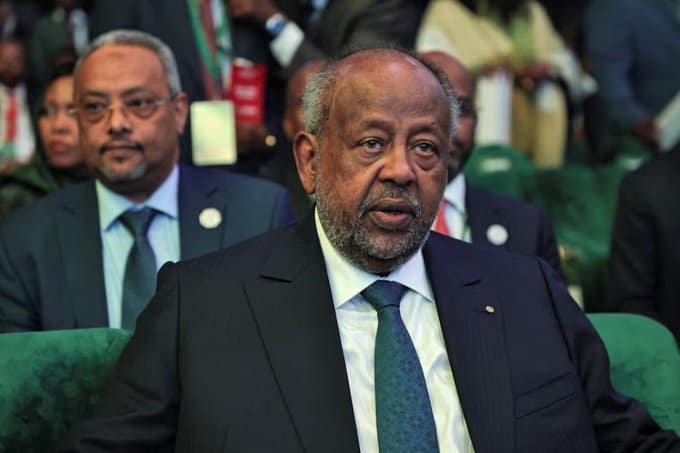
Incumbent President Ismael Omar Guelleh, who has ruled this small but strategically vital nation for 27 years, is widely expected to secure another term in office—a feat made possible only after parliament removed the age limits that would have otherwise barred him from standing again. The move, which critics have condemned as a brazen power grab and supporters have defended as a reflection of the people’s will, has set the stage for what is likely to be another lopsided victory for the man who has become, in many ways, synonymous with modern Djibouti.
“An election without suspense is not really an election,” said Ahmed Ismail, a political science professor at the University of Djibouti, speaking carefully to avoid running afoul of the country’s strict laws against criticizing the president. “But the forms are observed. The ballots will be printed. The people will vote. And the president will win. That is the Djiboutian way.”
The Man Who Would Not Leave
Ismael Omar Guelleh came to power in 1999, succeeding his uncle, Hassan Gouled Aptidon, who had ruled Djibouti since independence from France in 1977. The transition was peaceful by regional standards—a rarity in the Horn of Africa, where civil wars, famines, and state collapses have been the norm.
For much of his early tenure, Guelleh was viewed as a reformer. He opened up the economy, attracted foreign investment, and positioned Djibouti as a crucial ally to Western powers in the fight against terrorism. The country’s deep-water port, its strategic location at the mouth of the Red Sea, and its willingness to host foreign military bases transformed this tiny nation of fewer than one million people into a linchpin of global security.
The United States, China, France, Japan, Italy, and Saudi Arabia all maintain military installations in Djibouti—a concentration of foreign firepower unmatched anywhere else in the world. The rent from these bases accounts for a significant portion of the national budget, and Guelleh has skillfully played the great powers against one another, extracting concessions while avoiding entanglement in their rivalries.
But as the years have passed, the reformer has given way to the autocrat. Opposition leaders have been arrested, jailed, or driven into exile. Independent media has been squeezed out of existence. Elections have become predictable rituals, with Guelleh routinely securing 80% or more of the vote against weak, fragmented opposition.
The turning point came in 2010, when parliament amended the constitution to remove presidential term limits, allowing Guelleh to run for a third term. He won. Then a fourth. Then a fifth. Now, with the removal of age limits, a sixth term is within reach.
“The constitution has become a document of convenience,” said opposition figure Abdourahman Moussa, speaking from exile in neighboring Ethiopia. “When it serves the president, it is sacred. When it stands in his way, it is amended. There is no rule of law in Djibouti. There is only the rule of Guelleh.”
The Age Limit Amendment: A Bridge Too Far?
The most recent constitutional amendment, passed by parliament in late 2025, removed the upper age limit of 75 for presidential candidates. Guelleh is currently 78 years old. Without the amendment, he would have been constitutionally barred from seeking another term.
The government’s justification for the change was characteristically pragmatic. “President Guelleh remains in good health, both physically and mentally,” said a spokesperson for the presidency. “His experience, his international connections, and his steady hand are needed at a time of regional instability. The people have demanded that he continue. Parliament merely responded to that demand.”
Opposition leaders and international observers have dismissed this reasoning. “This is not about the people’s will,” said a Western diplomat stationed in Djibouti, speaking on condition of anonymity. “This is about one man’s unwillingness to let go of power. He has been in office for nearly three decades. There is no succession plan. There is no democratic process. There is only Guelleh.”
The amendment passed with overwhelming support in the 65-seat parliament, where Guelleh’s Union for the Presidential Majority (UMP) holds all but one seat. The sole opposition MP voted against the change, but her voice was a whisper in a hurricane.
The Election Itself: A Scripted Affair
Friday’s election will feature Guelleh facing off against a handful of opposition candidates, none of whom have the resources, the name recognition, or the state backing to mount a serious challenge. The main opposition coalition, the Union for Democracy and Justice, has called for a boycott, arguing that participating would legitimize a foregone conclusion.
“We will not be props in this theater,” said a spokesman for the coalition. “The president will claim a mandate. But a mandate requires a real choice. There is no choice here. There is only submission.”
Independent observers have documented a familiar pattern of pre-election maneuvering: opposition rallies broken up by police, critical journalists detained, civil society organizations threatened with closure if they attempt to monitor the vote independently. The state-run media has devoted wall-to-wall coverage to Guelleh’s campaign, while opposition candidates are mentioned only in passing, if at all.
Despite these concerns, the government has invited international observers from the African Union and the Arab League, both of which have historically given Djibouti’s elections a clean bill of health. Critics say those observers have turned a blind eye to irregularities in exchange for continued access and diplomatic favor.
“The AU observers will arrive, they will tour a few polling stations, they will issue a statement praising the ‘peaceful and orderly’ conduct of the vote, and they will leave,” said Moussa, the exiled opposition figure. “It is a dance we have seen many times before. The steps are familiar. The music never changes.”
Why the World Looks Away
For all the domestic criticism of Guelleh’s grip on power, the international community has largely looked the other way. The reason is simple: Djibouti is too important to pressure.
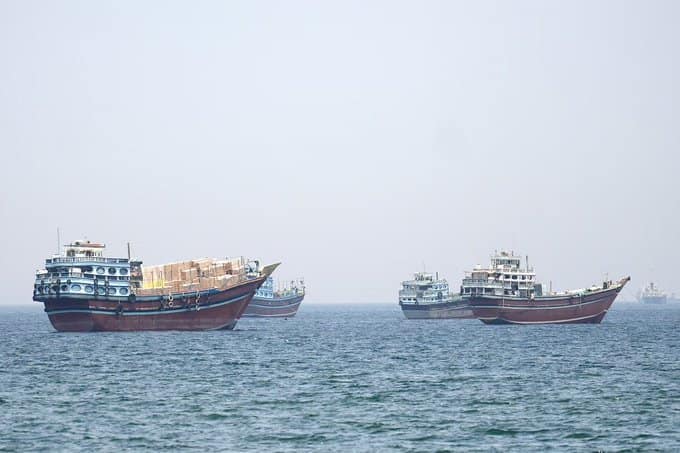
The country’s location at the Bab el-Mandeb strait, through which approximately 10% of global maritime trade passes, makes it a critical chokepoint for the world economy. Its ports serve as the primary gateway for landlocked Ethiopia, Africa’s second-most populous nation, which depends on Djibouti for 95% of its imports. And its military bases provide the United States, China, France, and other powers with a foothold in one of the world’s most volatile regions.
“Guelleh has mastered the art of strategic indispensability,” said Rashid Abdi, a Horn of Africa analyst at the International Crisis Group. “He has made sure that every major power has a stake in his survival. The Americans need him for counterterrorism. The Chinese need him for the Belt and Road Initiative. The French need him for historical and strategic reasons. The Ethiopians need him for their economy. He has built a web of dependencies that makes him untouchable.”
As a result, diplomatic criticism of Djibouti’s democratic backsliding has been muted. The United States State Department issues an annual human rights report that notes the “restrictions on political participation and media freedom,” but the language is measured, and there are no consequences. The European Union has expressed “concern” about the age limit amendment but has taken no punitive action.
“Nobody wants to be the one to destabilize Djibouti,” the Western diplomat said. “We all know that the alternative to Guelleh is not a vibrant democracy. The alternative is chaos. And chaos in Djibouti would have ripple effects across the entire region. So we hold our noses and we work with him. It is not ideal. But it is the reality.”
The Economy: Growth Amidst Authoritarianism
One of Guelleh’s enduring defenses is economic. By regional standards, Djibouti has prospered under his rule. The country has invested heavily in infrastructure: new ports, a railway to Ethiopia, a free trade zone, and a burgeoning logistics hub. GDP per capita has more than tripled since 2000, albeit from a very low base.
The government points to these achievements as evidence that Guelleh’s leadership works. “Look at our neighbors,” said a senior government official. “Somalia is a failed state. Eritrea is a hermit kingdom. Ethiopia has been torn apart by civil war. Djibouti is stable. Djibouti is growing. Djibouti is safe. That is not an accident. That is the president’s vision.”
Critics counter that the economic gains have been unevenly distributed, with most of the wealth concentrated in the hands of a small elite connected to the president and his family. Unemployment remains high, particularly among the young. Corruption is endemic, with Djibouti regularly scoring poorly on Transparency International’s Corruption Perceptions Index.
“The ports are busy. The cranes are moving. But the average Djiboutian does not feel the benefit,” said Ismail, the political science professor. “Food prices are high. Jobs are scarce. The young people who are not connected to the ruling family see no future for themselves here. They try to leave. Some make it to Europe. Some drown in the Mediterranean. That is the other side of the Guelleh story.”
The Opposition: Fragmented, Suppressed, and Exiled
The opposition in Djibouti has never been able to mount a credible challenge to Guelleh. Part of the reason is suppression: opposition leaders have been arrested, their parties have been denied registration, their rallies have been broken up. But part of the reason is also self-inflicted: the opposition is fragmented along ethnic, regional, and personal lines, unable to unite behind a single candidate or a coherent platform.
The main opposition figure, former Energy Minister Mohamed Daoud Chehem, was arrested in 2024 and sentenced to five years in prison on charges widely seen as politically motivated. Other opposition leaders have gone into exile in Ethiopia, France, or Canada, from where they issue statements that are largely ignored inside Djibouti.
“We have no real opposition because we have no space for opposition,” said a Djiboutian human rights activist who asked not to be named for fear of reprisal. “If you speak out, you are watched. If you organize, you are arrested. If you run for office, the election is rigged against you. After a while, people stop trying. They focus on survival. They focus on leaving. That is what the president has achieved: not loyalty, but exhaustion.”
What Happens After Friday?
Barring a seismic shock—and no serious observer expects one—Guelleh will be declared the winner of Friday’s election. He will be sworn in for another term, his sixth. The international community will issue congratulations. The African Union will praise the “peaceful” conduct of the vote. And Djibouti will continue its peculiar existence as an authoritarian state that the world has decided is too useful to criticize.
But the long-term questions remain. Guelleh is 78 years old. He is reportedly in good health, but no one lives forever. What happens when he is no longer there? Who succeeds him? Will there be a peaceful transition, or will the factions that Guelleh has held together for three decades tear each other apart?
“There is no succession plan,” said Abdi, the analyst. “That is the great unspoken fear. Guelleh has concentrated so much power in his own hands that no institution, no individual, no faction has been allowed to emerge as a credible successor. When he goes, there will be a scramble. And in a country with so many foreign military bases, so many competing interests, that scramble could turn violent very quickly.”
For now, though, the scramble is in the future. Friday belongs to Guelleh. The posters will be taken down. The ballots will be counted. The victory speech will be delivered. And the president will settle back into his routine, the routine he has known for 27 years, the routine he shows no sign of wanting to leave.
The Voter’s Dilemma
At a small tea shop in Djibouti City, a group of young men sat discussing the election in low voices. None of them would give their names. None of them would say whether they planned to vote. But they all had opinions.
“He has been president since before I was born,” said one, a university student. “I do not know what it is like to have a different leader. My father does not know. His father does not know. We have only known Guelleh. That is not democracy. That is a dynasty.”
Another young man, older, perhaps 30, shrugged. “He keeps the country stable. He keeps the foreigners happy. We have electricity, mostly. We have water, sometimes. Could it be better? Yes. Could it be worse? Also yes. I will vote for him. Not because I love him. Because I am afraid of what comes after.”
That fear—the fear of the unknown, the fear of chaos, the fear of a Somalia-style collapse—is perhaps Guelleh’s greatest political asset. He has convinced his people, and the world, that he is the only thing standing between order and anarchy. Whether that is true will only be tested when he is finally gone.
But that test, it seems, will not come on Friday. Friday is for continuity. Friday is for the familiar. Friday is for Guelleh.
The Last Word
As the sun sets over the Gulf of Aden on the eve of the election, the campaign posters flutter in the evening breeze. Guelleh’s face, repeated a thousand times, watches over the capital. The military is on standby. The ballot boxes are distributed. The international observers have arrived.
Tomorrow, Djibouti will vote. And tomorrow night, Guelleh will claim his victory. Another term. Another mandate. Another chapter in the longest-running story in the Horn of Africa.
The question that no one dares ask—not aloud, not in public, not where the security services might hear—is simple: how many chapters are left?
For now, the answer remains unwritten. And the president, as always, holds the pen.
About The Author