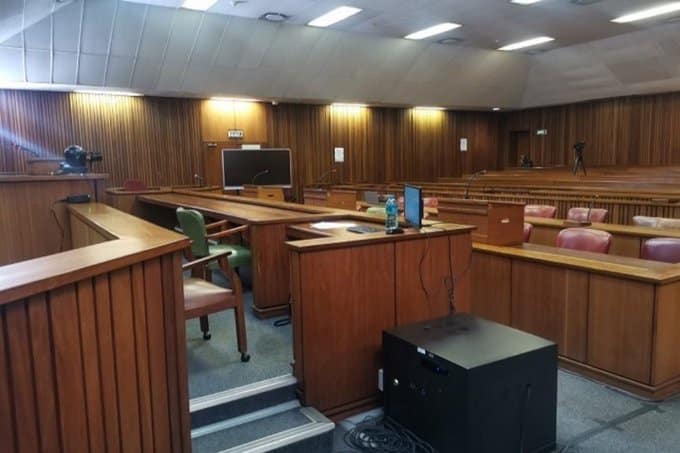
The high-profile trial of Duduzile Zuma-Sambudla, the outspoken daughter of former president Jacob Zuma and a sitting Member of Parliament for the uMkhonto weSizwe (MK) Party, is set to resume on Monday morning in the Durban High Court. The case, which has drawn intense public and political scrutiny, centers on allegations that Zuma-Sambudla played a direct role in inciting the deadly July 2021 civil unrest that claimed over 350 lives and caused an estimated R50 billion in economic damage across KwaZulu-Natal and Gauteng.
Zuma-Sambudla, 43, faces three charges under the Protection of Constitutional Democracy Against Terrorist and Related Activities Act (POCDATARA), as well as charges of incitement to commit violence, arson, and looting. She has pleaded not guilty to all counts, maintaining that her social media activity during the unrest constituted legitimate political commentary protected by the right to freedom of expression.
The trial, which first opened in November 2025, was adjourned after two weeks of preliminary arguments to allow the defense additional time to prepare its response to forensic social media evidence presented by the State. When proceedings resume on Monday at 10:00 AM before Judge Nomalanga Mkhize, the court is expected to hear testimony from key State witnesses, including former intelligence officials, social media analysts, and victims of the unrest.
The Charges: What Zuma-Sambudla Is Accused Of
The State alleges that between 9 July and 17 July 2021, Zuma-Sambudla used her Twitter (now X) account, which had approximately 450,000 followers at the time, to post a series of messages that incited her followers to engage in violent protests, block roads, burn trucks, and loot shopping malls. The unrest was triggered by the imprisonment of her father, former president Jacob Zuma, who was sentenced to 15 months for contempt of court after refusing to testify before the State Capture Inquiry.
According to the indictment, Zuma-Sambudla posted messages including:
- “They want a war? They will get a war.”
- “Close the borders. No food must go in or out of KZN until our father is freed.”
- “Burn it all down. They will learn that you do not touch a Zuma.”
- “Amandla! The people have risen. Do not stop. Do not surrender.”
The State further alleges that Zuma-Sambudla coordinated with other individuals—some of whom have already been convicted—to organize blockades and target specific infrastructure, including the M4 highway, the N3 toll route, and the Gateway Theatre of Shopping in Umhlanga, which was extensively looted and damaged.
Forensic analysts for the prosecution have compiled a timeline of Zuma-Sambudla’s posts alongside real-time events, arguing that her messages directly preceded and escalated violence in specific locations. In one instance, the State claims, a post calling for the burning of a specific trucking depot was followed within two hours by the depot being set alight.
The POCDATARA charges are the most serious. If convicted under Section 15 of the Act (incitement to commit a terrorist act), Zuma-Sambudla could face a minimum sentence of 15 years in prison, with a maximum of life imprisonment. The State has argued that the scale and coordination of the July 2021 unrest—which saw entire suburbs without food or fuel for days, and the deployment of 25,000 South African National Defence Force soldiers—meets the legal definition of a “terrorist act” as it was intended to “intimidate the public, destabilize the economy, and undermine the constitutional order.”
The Defense: Freedom of Expression or Incitement?
Zuma-Sambudla’s legal team, led by veteran advocate Dali Mpofu SC, has consistently argued that her social media activity fell squarely within the bounds of protected political speech. In his opening statement in November, Mpofu told the court: “My client was the daughter of a man she believed was being unjustly imprisoned by a politically captured judiciary. She expressed her anger, her frustration, and her solidarity with protesters. She did not tell anyone to loot. She did not tell anyone to kill. She used hyperbolic language common to political activism. To criminalize such speech is to criminalize dissent itself.”
The defense has also challenged the admissibility of the State’s forensic evidence, arguing that tweets cannot be reliably attributed to Zuma-Sambudla because her account may have been hacked or because she had allowed others to post on her behalf. The court previously ordered X (the platform) to provide metadata on the disputed posts, which the State says confirms they originated from devices linked to Zuma-Sambudla’s known IP addresses. The defense has indicated it will call its own digital forensics expert to challenge this finding.
Additionally, Mpofu has signaled that he will call Jacob Zuma himself as a character witness—a move that legal analysts say carries significant political and procedural risks.
The July 2021 Unrest: A Nation Scarred
To understand the gravity of the trial, one must revisit the eight days in July 2021 that brought South Africa to the brink of state failure. What began as peaceful protests in support of Jacob Zuma quickly metastasized into coordinated looting, arson, and infrastructure destruction. The death toll of 354 made it the deadliest civil unrest since the end of apartheid. Over 2,000 people were arrested. More than 200 shopping malls were damaged or destroyed. Thousands of businesses, many of them small and black-owned, never reopened.
The economic cost of R50 billion—equivalent to nearly 1% of South Africa’s GDP—plunged KwaZulu-Natal into a deep recession from which it has only partially recovered. Unemployment in the province, already the highest in the country, spiked to over 50% in the months following the unrest.
For many South Africans, particularly those in the working-class townships of Durban, Pietermaritzburg, and Johannesburg, the July unrest remains an open wound. Families lost loved ones to stampedes, crossfire, or fires set by looters. Shop owners who spent a lifetime building businesses watched them burn in minutes.
The trial of Zuma-Sambudla is seen by many as a test of whether South Africa’s justice system can hold powerful political figures accountable—even those with direct ties to former heads of state.
The Political Context: MK Party, Zuma, and the 2026 Landscape
Zuma-Sambudla’s trial unfolds against a volatile political backdrop. In 2024, she was elected to Parliament as a candidate for the uMkhonto weSizwe (MK) Party, a breakaway party founded by her father after he fell out with the African National Congress (ANC) leadership. The MK Party has positioned itself as a radical, populist alternative to both the ANC and the Economic Freedom Fighters (EFF), drawing much of its support from Zuma’s traditional base in KwaZulu-Natal.
The party has consistently characterized the charges against Zuma-Sambudla as politically motivated—a “selective prosecution” designed to silence a prominent critic of the current ANC leadership. Jacob Zuma himself has publicly defended his daughter, calling the trial “a continuation of the vendetta against my family” and urging his supporters to “remain peaceful but vigilant.”
Legal observers note that the timing of the trial—just months before the 2026 local government elections—adds another layer of complexity. A conviction could galvanize Zuma loyalists, potentially increasing voter turnout for the MK Party. An acquittal would be framed as a victory over an “abusive state.” Either outcome, analysts say, will deepen the political polarization that has characterized South African politics since Zuma’s presidency.
“The trial of Duduzile Zuma-Sambudla is not just a legal proceeding,” said political analyst Dr. Ralph Mathekga. “It is a proxy battle for the soul of the post-Zuma ANC. The State is trying to draw a line under the July unrest and say: no one is above the law. The Zuma faction is trying to say: the law is a weapon used against us. How this trial is perceived by the public matters as much as the verdict itself.”
The Resumption: What to Expect This Week
When court convenes on Monday morning, Judge Nomalanga Mkhize is expected to first address a series of outstanding pre-trial motions. The defense has filed an application for the recusal of the lead prosecutor, Advocate Thabo Ntuli, alleging bias based on comments Ntuli allegedly made in a private WhatsApp group. The State has dismissed the application as “frivolous and dilatory.”
If the recusal application is denied—as most legal analysts expect—the trial will proceed to the testimony of the State’s first witness: a former senior analyst at the National Intelligence Agency (NIA) who will testify about intelligence reports compiled during the unrest that allegedly identified Zuma-Sambudla as a “key influencer” in coordinating the violence.
The State has also indicated it will call three victims of the unrest to testify about the personal impact of the violence—a move that is likely to be emotionally charged. Among them is a 62-year-old shopkeeper from Phoenix, a town north of Durban, whose grocery store was burned to the ground. She lost her life savings and has since been living in a shelter.
The defense is expected to cross-examine these witnesses vigorously, arguing that their losses, while tragic, cannot be directly attributed to Zuma-Sambudla’s tweets.
The trial is scheduled to sit for four weeks, though legal analysts anticipate it could extend to six weeks given the complexity of the evidence and the likely appeals that will follow any conviction.
The Atmosphere Outside Court
On Sunday evening, a heavy police presence was already visible outside the Durban High Court on Anton Lembede Street. Barriers had been erected to separate potential protesters from court entrances. The MK Party has called for a “peaceful show of support” on Monday morning, with party spokesperson Nhlamulo Ndhlela urging supporters to “stand with Comrade Duduzile against state repression.”
A counter-protest organized by victims’ families and community groups from Phoenix, Inanda, and Umlazi is also expected. Tensions are high. Police have warned that any acts of violence or intimidation will be met with immediate arrest.
Inside the courtroom, seating will be strictly limited. A handful of journalists have been accredited, along with family members and legal teams. The proceedings will not be televised, but a live audio feed will be provided to media houses, and updates will be posted on the judiciary’s official X account.
Zuma-Sambudla’s Public Persona: Firebrand or Follower?
Regardless of the trial’s outcome, Duduzile Zuma-Sambudla has already cemented her place as one of South Africa’s most controversial political figures. Unlike her older siblings, who have largely stayed out of the political spotlight, Zuma-Sambudla has embraced confrontation. Her Twitter feed—still active, with over 600,000 followers—is a daily torrent of attacks on the ANC, the judiciary, the media, and anyone she perceives as disloyal to her father.
Supporters see her as a fearless truth-teller, a woman willing to risk prison to defend her family’s honor. Critics see her as a reckless provocateur whose words have real-world consequences—consequences measured in burned buildings and dead bodies.
In a 2025 interview before her arrest, Zuma-Sambudla told a local podcast: “I am not afraid of their courts. I am not afraid of their prisons. My father taught me that sometimes you must suffer for what you believe. If they want to make me a martyr, let them try.”
Whether those words were bravado or prophecy will be tested in the weeks ahead.
What Comes Next
If convicted, Zuma-Sambudla would face a mandatory minimum sentence that would almost certainly include immediate imprisonment. As a sitting Member of Parliament, her conviction would also trigger provisions of the Constitution that disqualify anyone sentenced to more than 12 months in prison without the option of a fine from holding parliamentary office. The MK Party would be forced to fill her seat.
An acquittal would be a major political victory for the MK Party and a significant embarrassment for the National Prosecuting Authority (NPA), which has invested substantial resources in building the case. It would also raise difficult questions about the limits of free speech in the context of mass civil unrest.
Whatever the outcome, the trial is likely to end up in the Supreme Court of Appeal and possibly the Constitutional Court. Legal analysts expect appeals to delay any final resolution for at least two to three years.
But for now, all eyes are on Durban. On Monday morning, the gavel will fall, the first witness will take the stand, and a deeply divided nation will once again confront the legacy of the July unrest—and the family at the center of it.
About The Author