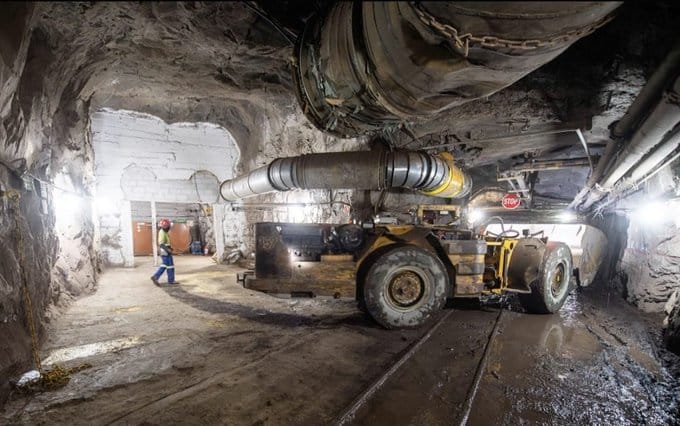
In the city that was built on diamonds—and then abandoned when the big stones ran out—history is repeating itself with brutal efficiency. More than 1,200 mine workers from Ekapa Minerals in Kimberley are facing severe hardship after the diamond mining operation was placed under provisional liquidation, leaving entire families without salaries for months and casting hundreds of skilled and semi-skilled workers into the abyss of joblessness in an economy that has precious little to offer them.
The provisional liquidation, granted by the Northern Cape High Court in late February 2026, has sent shockwaves through the Sol Plaatje Municipality and beyond. For the workers of Ekapa—many of whom had dedicated a decade or more of their lives to the mine—the news did not come as a complete surprise. There had been warning signs: delayed salary payments, rumbling rumours of debt, the gradual sale of mining equipment. But when the court order finally came, the reality of destitution landed like a rockslide.
The Mine: From Joint Venture to Ruin
Ekapa Minerals, which operated the combined Ekapa and Kimberley Mines complex on the outskirts of the city, was formed as a joint venture between Ekapa Mining (a South African entity) and Petra Diamonds, one of the world’s largest diamond producers. At its peak in the mid-2010s, the operation employed nearly 2,500 people and processed millions of tonnes of tailings—the waste dumps left behind by De Beers during Kimberley’s 19th-century diamond rush.
But the diamond market has been unforgiving. A global glut of lab-grown diamonds, declining demand for smaller natural stones, and rising operational costs squeezed margins to breaking point. By late 2024, Ekapa was bleeding cash. By early 2025, salary payments began slipping from monthly to “whenever possible.” By December 2025, workers were told there would be no December bonus—a traditional lifeline for mineworkers’ families during the festive season.
The final blow came in February 2026, when a group of creditors—including the South African Revenue Service (SARS), Eskom, and several mining equipment suppliers—filed for liquidation, citing unpaid debts exceeding R180 million. The court appointed a provisional liquidator, and the mine’s gates were locked on 28 February 2026.
The Workers: ‘We Have Nothing Left’
Standing outside the locked gates of the Ekapa complex on a biting winter morning, the faces of the workers tell a story that numbers alone cannot capture. There is Samuel Jantjies, 49, a rock drill operator who started at the mine in 2008. He has four children. His youngest, a daughter of seven, asked him last week why there was no food in the cupboard.
“I told her the mine is sleeping,” Jantjies said, his voice cracking. “But the mine is not sleeping. The mine is dead. And we are dying with it.”
There is Nomsa Kwinana, 38, a process controller who operated the dense medium separation plant that sorted diamonds from gravel. She is the sole breadwinner for her elderly mother and two younger siblings. She has not been paid since December 2025. Her savings ran out in February. She has sold her television, her kitchen table, and most of her children’s winter clothes.
“I worked for ten years. Ten years of night shifts, of dust in my lungs, of missing my children’s school plays,” she said. “And now I have nothing. Not even a letter of retrenchment. Just a padlock on a gate.”
The 1,200 affected workers include not only miners but also artisans, security personnel, cleaners, administrative staff, and drivers. Many have worked for Ekapa or its predecessor companies for over 15 years. Their skills—hard-won in the dangerous, demanding environment of diamond recovery—are not easily transferable to other industries. Kimberley is not Johannesburg. There are no factories hiring in bulk. There are no new mines opening.
The Local Economy: A City Already Bleeding
Kimberley has never fully recovered from the decline of traditional diamond mining. De Beers ceased all large-scale operations in the city decades ago, leaving behind a landscape of gaping pits (including the famous Big Hole), crumbling hostels, and a workforce trained for an industry that no longer exists in its old form. Ekapa represented a rare second chance—a modern, lower-cost operation that processed tailings and extended the life of the diamond fields.
Now, with Ekapa’s collapse, the ripple effects are devastating. Local businesses that relied on the mine’s workforce are shutting down. Spaza shops, taverns, taxi operators, and clothing retailers in the townships of Galeshewe, Greenpoint, and Roodepan are reporting 50% to 70% drops in revenue. Landlords who rented rooms to mineworkers are facing mass evictions of their own as tenants flee unpaid.
“We are staring at a humanitarian crisis,” said Sol Plaatje Municipality Mayor Pula Maseko in an emergency council meeting last week. “1,200 direct jobs lost. Multiply that by five or six dependents per worker—you are looking at 6,000 to 7,000 people suddenly without income. Our social relief systems are not designed for this scale of shock.”
The Liquidator’s Process: Glimmers of False Hope
The provisional liquidator, appointed by the court, is currently assessing Ekapa’s assets—mining equipment, vehicles, stockpiled diamonds, and the tailings rights themselves. There is a remote possibility that a buyer could be found to restart operations, but industry analysts are not optimistic.
“The tailings at Ekapa are low-grade,” said independent mining analyst Thabo Mofokeng. “In a strong diamond market, they are viable. In the current market, with lab-grown diamonds undercutting prices and consumers shifting away from natural stones for non-luxury purchases, the margins are razor-thin. Any potential buyer would have to negotiate a much lower labour cost base, which would mean re-employing only a fraction of the current workforce—likely under 300 workers.”
For the 1,200 workers, even a partial restart would be too late for many. Debts have already accumulated. Homes have already been lost. Children have already been pulled from schools because uniform and fee payments could not be met.
Union Action: ‘The Company Abandoned Us’
The National Union of Mineworkers (NUM) and the Association of Mineworkers and Construction Union (AMCU) have both been active in Kimberley, organizing protests outside the Ekapa gates and demanding government intervention. To date, however, the Department of Mineral Resources and Energy has offered little beyond expressions of concern.
“This is not just a business failure,” said NUM regional secretary David Mankuroane. “This is a systemic failure of oversight. Ekapa was in trouble for two years. Did anyone from the department visit? Did anyone audit their financial health? Did anyone demand a plan for worker protection? No. The workers were left to drown.”
AMCU has called for the establishment of a provincial task team that would include the department, the municipality, the liquidator, and labor representatives to secure outstanding salaries using the UIF’s Termination of Benefits system. Under the Labour Relations Act, workers whose employers have been liquidated can claim from the UIF’s insolvency fund—but the process is slow, bureaucratic, and typically pays out only a fraction of what is owed.
Desperate Measures: The Shadow Economy of Survival
As the weeks have passed with no salary payments and no clarity on liquidation outcomes, some workers have turned to desperate measures. Several former Ekapa employees have been arrested in recent weeks for illegal diamond digging on the mine’s old tailings dumps—a dangerous and futile activity that yields tiny, low-quality stones but carries the risk of heavy fines or imprisonment.
“I know it’s illegal,” said one former worker who spoke on condition of anonymity. He was arrested two weeks ago and released on warning. “But my child has not eaten meat in three weeks. What would you do? Would you watch them starve?”
Others have left Kimberley entirely, migrating to Gauteng or the Western Cape in search of any work—construction, security, domestic labour, car guarding. Many have left families behind, sending remittances when they can, but the separation is taking a psychological toll.
Government Response: Too Little, Too Late?
The Northern Cape provincial government has announced a “special intervention” that includes the deployment of social workers to affected families, a mobile SASSA office to assist with grant applications, and a skills audit of the displaced workers to identify potential employment in other sectors, such as agriculture or renewable energy.
But critics have dismissed the response as window dressing.
“What jobs?” asked Sol Plaatje, the councillor and opposition leader, Palesa Dlamini. “The Northern Cape has the highest unemployment rate in the country—over 40% before Ekapa collapsed. Now you want to put 1,200 more people into that queue? There are no jobs. The government should be talking about a basic income grant for these workers, not a skills audit.”
The national Department of Employment and Labour has confirmed that it is “monitoring the situation” but has not committed to any direct financial relief for the workers.
Human Stories: The Faces Behind the Numbers
Behind the statistics are lives in freefall.
David Mokwena, 54, worked at Ekapa for 17 years as a bulldozer operator. He has high blood pressure and early-stage silicosis—a lung disease caused by years of dust exposure. His medication costs R850 per month. He has not bought it in two months. “I wake up coughing blood some mornings,” he said. “But what is the point of medicine if I cannot afford food?”
Maria van Wyk, 42, was a cleaner at the mine’s admin block. She is HIV-positive and relies on antiretroviral therapy. She has not missed a dose yet, but she has had to choose between taxi fare to the clinic and bread for her three grandchildren, who live with her. “The clinic is a two-hour walk,” she said. “I make the walk now. The grandchildren eat first.”
Thabo Nhlapo, 29, was one of the youngest miners at Ekapa. He started as a general worker and was studying part-time for a blasting certificate, hoping to become a shift supervisor. With the mine closed, he has abandoned his studies. He now sleeps on a cousin’s floor in Bloemfontein, looking for construction work. “I had a plan,” he said. “Now I have nothing. No plan. No job. No home.”
What Comes Next
The provisional liquidation process is expected to continue for at least six months. Creditors will be paid first—SARS, Eskom, equipment suppliers. Workers are near the bottom of the priority list, entitled only to outstanding salaries (capped at a certain amount) and severance pay from the UIF’s insolvency fund.
The liquidator has indicated that a first round of asset auctions will take place in late May 2026, with proceeds distributed in July or August. For the workers, that is a lifetime away.
In the meantime, community organisations and churches in Kimberley have stepped into the breach. The Kimberley Food Bank, run by a coalition of local congregations, has distributed over 3,000 food parcels to Ekapa workers and their families since March. The Diocesan Care Centre has opened a temporary shelter for workers who have been evicted from their homes.
“We are doing what we can,” said Reverend Kenneth Molefe, who coordinates the food bank. “But a food parcel is not a salary. A blanket is not a home. These people need justice. They need the government to act. They need the diamond industry to take responsibility for the human cost of its boom-and-bust cycles.”
A City’s Prayer
On Sunday mornings in Galeshewe, in the dusty church halls and under the corrugated iron roofs of informal Zionist congregations, the prayers now include a new petition: Lord, open the gates of Ekapa. Or open another door. But do not leave your children to die in the dust.
In Kimberley—the city of diamonds, the city of broken dreams—the gates remain locked. The wind blows red dust across the empty parking lots. And 1,200 families wait for a miracle that may never come.
About The Author