In a stark demonstration of the city’s escalating battle against property hijackings, Johannesburg Public Safety MMC Dr. Mgcini Tshwaku led a major inter-departmental raid on a hijacked luxury home in Bryanston on Thursday, arresting more than 40 people and exposing a sophisticated extortion racket that had drained over R164,000 from desperate tenants.
The operation, which involved officers from the Johannesburg Metropolitan Police Department (JMPD), SAPS, the Department of Home Affairs, and City Power, targeted a multi-million rand property that had been under illegal occupation since 2020. The legitimate owner, a woman who had left for a brief holiday five years ago, returned to find the locks changed and armed individuals claiming control of her home.
“This is not merely an eviction; it is a reclamation of justice and the rule of law,” declared a determined Dr. Tshwaku on the scene, as officials processed suspects. “We are sending an unambiguous message to syndicates that prey on the vulnerable and steal from property owners: your time in our city is over.”
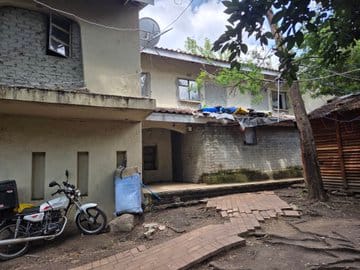
The raid revealed a scene of stark contrast between the home’s original opulence and its current state of decay. Inside, officials discovered a web of illegal electricity connections spliced directly from the main grid, tampered water meters, and severe interior vandalism. The swimming pool, once a centrepiece of the garden, was found filled with stagnant water and rubbish, symbolising the broader neglect.
Most critically, investigators uncovered a detailed ledger showing that the hijackers had been systematically collecting rent from occupants, charging approximately R2,000 per room. Preliminary calculations suggest the illicit operation generated over R164,000 in revenue, funds entirely lost to the legal owner and the city’s fiscus.
“This was a business,” explained a senior JMPD officer involved in the operation. “It was an organised criminal enterprise. They identified a vulnerable property, seized it by force and intimidation, and then monetised it by renting out space, primarily to undocumented migrants and others in precarious living situations.”
The raid resulted in the arrest of 43 individuals. Home Affairs officials confirmed that a significant number were found to be in the country illegally and face deportation following legal proceedings. Others are charged with trespassing, vandalism, and contravening municipal by-laws. Police are pursuing leads to identify and apprehend the ringleaders of the hijacking scheme.
The case highlights the growing phenomenon of “hijacked buildings” in Gauteng’s economic hubs, where criminal syndicates take over residential and commercial properties—often through coercion or exploiting absentee owners—to create dense, unsafe, and lucrative slum conditions. The City of Johannesburg has identified hundreds of such properties and has launched “Operation Reclaim,” with the Bryanston case serving as a high-profile flagship action.
For the rightful owner, who has waged a five-year legal and emotional battle, the operation brought a flood of tears and relief. “I have fought in courts, I have lived in fear, and I have watched my family’s asset be destroyed,” she said, choosing to remain anonymous for security reasons. “Today, I see a glimmer of hope. I want to thank the officials who finally took action.”
MMC Tshwaku warned that similar operations would continue across the city’s suburbs. “We are methodically working through our list. To the syndicates, we say: we are coming for you. To the legitimate owners, we say: report to us, and we will act.”
The restored property has been handed back to its owner, though the path to full repair will be long. The city has urged any residents living under similar conditions of extortion in hijacked buildings to come forward, promising confidentiality and robust state action.
About The Author