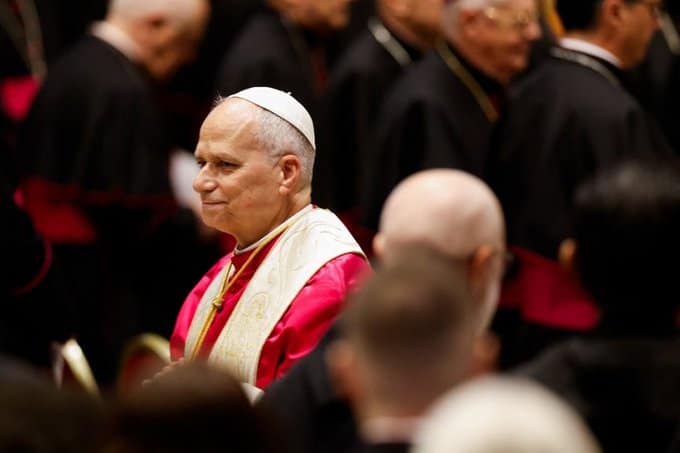
In a dramatic and emotionally charged address delivered from the central balcony of St. Peter’s Basilica, Pope Leo XIV has issued an impassioned, urgent global plea for world leaders to stop what he called the “madness of war” that has engulfed the Middle East for the past six weeks. Speaking before a crowd of over 50,000 faithful who had gathered under a cold April rain for a specially convened prayer vigil, the Pontiff implored combatants and diplomats alike to choose dialogue over destruction, mercy over vengeance, and life over the abyss of endless conflict.
The Pope’s intervention came at a critical diplomatic juncture: even as his voice echoed through the floodlit piazza, senior officials from the United States and the Islamic Republic of Iran were seated across from each other at a heavily guarded hotel in Islamabad, Pakistan, engaged in what diplomats have described as the “most substantive direct talks” since the outbreak of the six-week war that has already claimed an estimated 18,000 lives and displaced nearly two million people across Israel, Lebanon, Syria, and Iran.
“The world is holding its breath,” the Pope said, his voice steady but his eyes betraying the weight of the moment. “And while the world holds its breath, children stop breathing entirely. While we deliberate, mothers bury sons. While we arm ourselves for the next strike, the next martyr is already walking toward his death. This madness must end. Not tomorrow. Not after one more victory. Now.”
The Vigil: A Sea of Candles and Tears
The prayer vigil, titled “Pax in Terris” (Peace on Earth), was announced only 48 hours in advance—an unusual break from Vatican protocol that underscored the urgency of the moment. Yet word spread rapidly through social media, Catholic news networks, and grassroots parish networks across the globe. By nightfall on Saturday, pilgrims had poured into Rome from as far as South Korea, Brazil, Nigeria, and the Philippines.
As the Pope processed from the Apostolic Palace to the basilica, the crowd fell silent. Many held flickering candles protected from the rain by umbrellas or makeshift plastic covers. Some carried photographs of loved ones caught in the conflict zone—Lebanese grandmothers, Israeli hostages, Iranian conscripts, Syrian refugees. The atmosphere was less that of a traditional Vatican ceremony and more akin to a funeral wake for a world still living.
During the vigil, the Pope knelt for 12 minutes in silent prayer before the ancient icon of the Salus Populi Romani (Health of the Roman People), a devotional image that has been invoked for centuries in times of plague, invasion, and catastrophe. When he rose, there were tears on his cheeks—an image that will dominate front pages worldwide on Sunday morning.
“I do not come before you today with doctrine or decree,” Pope Leo said in his homily, departing from his prepared text for extended periods of extemporaneous speech. “I come before you as a servant of the Servants of God. I come before you as a man who has seen photographs that should never have been taken. A child in Gaza pulling his own brother’s shoe from rubble. A young soldier in Tehran crying for his mother before a firing squad—not of enemies, but of his own commanders for refusing to advance. A hospital in Haifa with no power, no medicine, no hope. This is not war. This is slaughter. And it must stop.”
The Geopolitical Backdrop: Six Weeks of Bloodshed
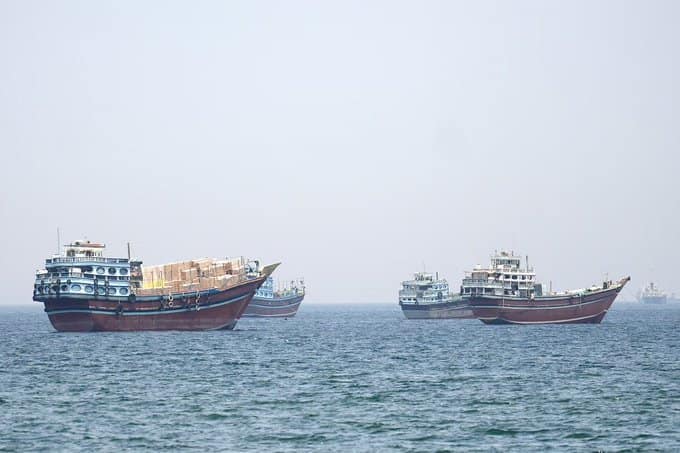
The conflict, which began in early March 2026 after a series of tit-for-tat strikes on nuclear facilities and naval assets, has escalated into the most devastating conventional war in the Middle East since the 2003 invasion of Iraq. What started as an Israeli preemptive strike on an Iranian uranium enrichment site near Natanz spiraled into a multi-front war involving Hezbollah in Lebanon, Houthi forces in Yemen launching missiles at southern Israel, and the United States deploying two aircraft carrier groups to the Eastern Mediterranean and the Arabian Gulf.
Iran has fired over 800 ballistic missiles at Israeli targets, most intercepted by Israel’s multi-layered air defense system, but enough have gotten through to cause significant damage and casualties. Israel, in turn, has conducted hundreds of airstrikes inside Iran, targeting military installations, command centers, and—according to intelligence sources—senior commanders of the Islamic Revolutionary Guard Corps (IRGC).
The human toll has been catastrophic. According to the latest figures from the UN Office for the Coordination of Humanitarian Affairs (OCHA), as of Saturday morning:
- Total confirmed deaths: 18,423 (including 4,112 children)
- Total injured: Over 62,000
- Internally displaced persons: 1.92 million (primarily in Lebanon and Syria)
- Refugees crossing into neighboring countries: 412,000
- Health facilities damaged or destroyed: 137
- Schools damaged or destroyed: 211
The conflict has also drawn in regional powers indirectly. Turkey has closed its border with Syria, fearing an influx of refugees. Egypt has mediated multiple failed ceasefires. Saudi Arabia has remained publicly neutral but privately warned Washington that it will not allow its airspace to be used for strikes against Iran.
The Islamabad Talks: A Fragile Window
The parallel talks in Islamabad—brokered by Pakistan’s Prime Minister Shehbaz Sharif and facilitated by back-channel communications through Oman and Qatar—represent the first direct diplomatic engagement between the United States and Iran since the conflict began. The American delegation is led by Special Envoy for Middle East Peace, Ambassador Barbara Leeds, a veteran diplomat who previously helped negotiate the 2023 Saudi-Iranian rapprochement. The Iranian delegation is headed by Foreign Minister Hossein Amir-Abdollahian, a seasoned diplomat known for his bluntness but also his willingness to engage in backroom compromise.
According to sources familiar with the negotiations, the two sides have been discussing a three-phase framework:
- Immediate ceasefire with a 72-hour humanitarian pause to allow medical evacuations and aid deliveries.
- Prisoner exchange involving captured military personnel and dual nationals held in Iranian prisons.
- Nuclear program transparency – Iran would agree to limited International Atomic Energy Agency (IAEA) inspections in exchange for a phased lifting of oil and banking sanctions.
However, significant obstacles remain. Israel, which has not sent a delegation to Islamabad, has publicly stated that it will not accept any deal that does not include the complete dismantlement of Iran’s nuclear enrichment program and the withdrawal of IRGC forces from Syria and Lebanon. Iran, in turn, has demanded a permanent end to US sanctions and the removal of the IRGC from Washington’s Foreign Terrorist Organizations list—a non-starter for the Biden administration’s successor government.
Pope Leo’s plea, timed to coincide with the second day of the Islamabad talks, appears carefully calibrated to exert moral pressure on both sides without endorsing a specific political outcome.
The Pope’s Words: A Direct Appeal to Leaders
In his address from the balcony—the same balcony from which popes have announced conclaves, canonizations, and, in the case of John Paul II, historic apologies—Pope Leo departed from tradition by directly naming the nations involved.
“To the President of the United States: The world does not need another display of military might. The world needs a display of moral courage. Lay down the ultimatums. Pick up the olive branch. You are not the world’s policeman. You are the world’s partner—or you are nothing.”
“To the Supreme Leader of Iran and the President of Iran: Your people are suffering. The young conscript who kneels in the mud does not dream of destroying Israel. He dreams of returning to his village, to his mother’s cooking, to the girl he hopes to marry. Do not sacrifice your children on the altar of regional hegemony. It is an altar that consumes, not consecrates.”
“To the Prime Minister of Israel: The security of the Jewish people—for whom this Vatican has prayed for reconciliation for decades—cannot be built upon the insecurity of others. A wall that keeps out rockets also keeps out hope. A bomb that destroys an enrichment centrifuge also destroys the future of a child sleeping nearby. You are strong. Now show the world that you are also wise.”
“To the leaders of Lebanon, Syria, Iraq, Yemen, and every nation caught in this inferno: Do not wait for outsiders to save you. You have agency. You have voice. You have the power to refuse to be battlefields for other people’s wars.”
The crowd responded with sustained applause—unusual for a papal address, which traditionally receives silent, reverent attention. But this was not a traditional moment. Young people waved white flags improvised from T-shirts and handkerchiefs. An elderly woman collapsed and was carried to a medical tent, overcome by emotion.
Global Reactions: Hope and Skepticism
Reactions to the Pope’s plea have poured in from world capitals and conflict zones alike.
United Nations Secretary-General António Guterres issued a statement within two hours of the Pope’s address: “The Holy Father has given voice to the voiceless. The Security Council must now act with one purpose: to end the killing and begin the healing.”
The White House released a carefully worded response: “We share the Pope’s deep desire for an end to hostilities. The United States entered the Islamabad talks in good faith, and we will continue to pursue a diplomatic solution that protects our allies and upholds international law.”
Iran’s mission to the United Nations tweeted: “The Iranian people are a people of peace. We did not start this war. But we welcome any sincere call for justice, including the esteemed Pope’s words.”
Israel’s Prime Minister’s Office was more guarded: “Israel seeks peace but will not apologize for defending its citizens. We will study the Pope’s remarks carefully, but our security red lines are non-negotiable.”
On the ground in the conflict zone, reactions were raw and immediate. In a bomb shelter in Tel Aviv, a mother of three told a Vatican News correspondent: “I don’t care about politics anymore. I just want my children to sleep through the night without sirens. If the Pope can stop the rockets, then God bless him.” In a makeshift hospital in the Bekaa Valley in Lebanon, a wounded Hezbollah fighter, his leg in a cast, said: “The Pope speaks beautiful words. But words do not stop drones. Words do not bring back my brother.”
The Vatican’s Diplomatic Role: A Delicate Balancing Act
Pope Leo’s intervention is the most significant papal diplomatic initiative since John Paul II’s opposition to the 2003 Iraq War and Francis’s mediation in the Cuba-US thaw. Since his election to the papacy in late 2025, Pope Leo—formerly Cardinal Matteo Colombo of Milan—has positioned himself as a “bridge builder” between the Global North and the Global South, with a particular focus on the Middle East.
Unlike his predecessor Pope Francis, who often spoke in generalities about peace and decried “piecemeal World War III,” Pope Leo has shown a willingness to name names and confront specific geopolitical actors. His Easter 2026 homily explicitly criticized the arms trade, naming the top five weapons-exporting nations—a move that drew sharp rebukes from diplomatic missions but widespread praise from anti-war activists.
Yet the Vatican walks a tightrope. The Holy See maintains diplomatic relations with both Israel and the State of Palestine, as well as with Iran (through a bilateral commission established in 2022). Pope Leo cannot afford to alienate any party if he hopes to serve as an honest broker.
Vatican observers note that the timing of the prayer vigil—just as the Islamabad talks entered their second day—was almost certainly coordinated with Pakistani intermediaries. “The Vatican has back channels to Tehran that Washington does not,” said Vatican analyst Dr. Elena Rossini. “The Pope is not just speaking to the crowd. He is speaking directly to the Supreme Leader’s office. This is diplomacy disguised as prayer.”
What Comes Next: The Road from Islamabad
The Islamabad talks are scheduled to continue through Sunday evening local time. Diplomatic sources have indicated that a joint statement may be issued as early as Monday morning—though whether it will announce a ceasefire, a framework for further talks, or simply an acknowledgment of disagreements remains unclear.
Pope Leo, for his part, has ordered that the prayer vigil continue for three consecutive nights, with the Vatican’s Pontifical Council for Interreligious Dialogue reaching out to Muslim, Jewish, and Druze religious leaders to hold parallel vigils in their own communities.
“Peace is not a treaty signed in a hotel ballroom,” the Pope said at the conclusion of his address. “Peace is a decision made in the heart of every mother who chooses to raise a child who does not hate. Peace is a father who tells his son that courage is not killing but refusing to kill. Peace is a world that finally, irrevocably, unlearns war.”
As the rain intensified over St. Peter’s Square, the crowd did not disperse. They stood, candles still burning under umbrellas, and began to sing—not in Latin, but in a dozen languages: “Dona nobis pacem” — Grant us peace.
Whether the leaders in Islamabad, Washington, Tehran, and Jerusalem are listening remains to be seen. But for one night in Rome, the madness of war felt, perhaps, just a little less inevitable.
About The Author