The boardrooms of London’s St. James’s Square are a long way from the windswept Atlantic coastline of Namibia. But on Thursday, the distance between the two shrank considerably. BP, one of the world’s largest oil and gas supermajors, announced a major bet on Namibia’s energy future, acquiring a 60% operating stake in three offshore blocks in the country’s Walvis Basin — a move that expands its footprint in what analysts are calling Africa’s most exciting new oil frontier.
The assets were purchased from Eco Atlantic Oil & Gas, a Toronto and London-listed exploration company that has held the licenses since 2015. Under the terms of the deal, Eco Atlantic retains a 20% minority stake, while Namibia’s state-owned oil company, NAMCOR, holds the remaining 20%. BP will act as the operator, giving it control over exploration timelines, drilling decisions, and future development plans.
The financial details of the transaction were not disclosed, but industry sources familiar with the negotiations placed the value in the range of $70 million to $100 million upfront, with additional contingent payments tied to exploration success. For BP, a company that has pledged to transition toward renewables while simultaneously defending its oil and gas portfolio, the deal represents a carefully calculated hedge: high risk, but potentially astronomical reward.
“This acquisition aligns with our strategy of investing in high-potential basins that can deliver resilient hydrocarbons well into the future,” said BP’s head of Africa exploration, speaking on condition of anonymity due to company policy. “Namibia is the last great deepwater frontier on the continent. We intend to be at the front of that queue.”
The Walvis Basin: Next door to the Orange Basin’s bonanza
The three blocks — known as PEL 93, PEL 94, and PEL 95 (Petroleum Exploration Licenses) — cover a combined area of approximately 18,000 square kilometers in water depths ranging from 500 to 3,500 meters. They are located in the Walvis Basin, which sits directly north of the now-famous Orange Basin — a stretch of Namibian waters that has delivered some of the most significant deepwater discoveries of the past five years.
Since 2022, a string of major finds by TotalEnergies, Shell, and Galp has transformed the Orange Basin into a global hotspot. TotalEnergies’ Venus discovery, estimated to hold between 3 and 4 billion barrels of recoverable oil equivalent, is among the largest deepwater finds of the past decade. Shell’s Graff and Jonker discoveries have added billions more. Together, they have positioned Namibia to become a major oil producer by the end of the decade — a prospect that seemed unimaginable just a decade ago when exploration wells repeatedly came up dry.
BP’s new blocks are located in the Walvis Basin, which shares many of the same geological characteristics as the Orange Basin: thick Cretaceous-aged source rocks, favorable reservoir sands, and trapping structures that have proven capable of holding hydrocarbons in commercial quantities. Seismic data acquired by Eco Atlantic over the past several years has identified multiple large prospects, including the “Marula” and “Kudu” leads, which BP’s technical team will now re-evaluate with fresh eyes and deeper pockets.
“Geologically, the Walvis Basin is the northern extension of the same petroleum system that has delivered billions of barrels in the Orange Basin,” said Dr. Liesel Fischer, a Cape Town-based exploration geologist who has worked on Namibian licenses for over a decade. “BP is not gambling here. They have seen the seismic. They have modeled the source rock maturity. They believe there is oil — and a lot of it — waiting to be drilled.”
Why Namibia? Why now?
Namibia has long been considered a challenging place to explore for oil. Harsh Atlantic swells, water depths that exceed 3,000 meters in some areas, and a history of disappointing wells — including BP’s own unsuccessful efforts in the 1990s — kept all but the most adventurous companies at bay. But advances in deepwater drilling technology, combined with the spectacular success of neighbors to the south, have changed the calculus.
Today, Namibia offers something increasingly rare in the oil industry: frontier exploration with proven analogies. The Orange Basin discoveries have de-risked the entire margin, demonstrating that the geological conditions for giant fields exist. And because Namibia is a politically stable, transparent, and investor-friendly jurisdiction — unlike some of its more turbulent neighbors — international oil companies can invest with confidence that contracts will be honored and revenues will not be expropriated.
“This is not a fly-by-night operation,” said Namibian Minister of Mines and Energy, Tom Alweendo, in a statement welcoming the BP deal. “BP is a world-class operator. Their entry into the Walvis Basin validates what we have been saying for years: Namibia is open for business, and our offshore holds world-class potential. We look forward to a partnership that benefits both the company and the Namibian people.”
NAMCOR, the state-owned oil company, has been a quiet but persistent champion of exploration, using its carried interest in multiple licenses to build technical expertise and secure a share of future production. Under Namibian law, NAMCOR is entitled to a 10% to 20% carried interest in all exploration licenses, meaning it does not pay for drilling costs but receives equity in any successful discoveries.
“This deal is a vote of confidence not just in the rocks, but in the regulator,” said Namibian energy analyst Immanuel !Naruseb. “NAMCOR has done an excellent job of marketing the basin and negotiating terms that protect national interests while attracting investment. That balance is very difficult to strike. They have struck it.”
The road to production
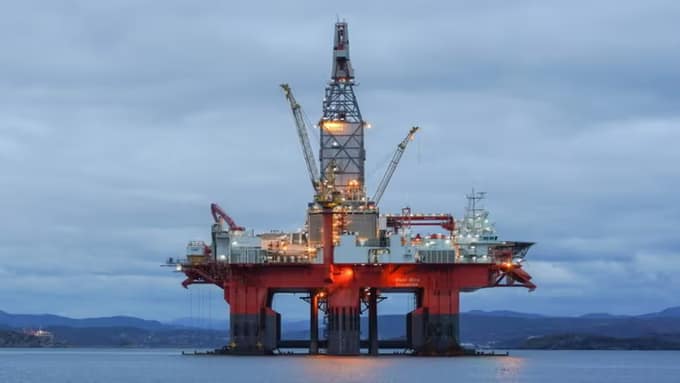
BP’s entry into the Walvis Basin is not an overnight ticket to production. The company has committed to an initial exploration program that includes acquiring new 3D seismic data over the blocks — a process that will take 12 to 18 months — followed by the drilling of at least one exploration well. That well, if it goes ahead as planned, is not expected to spud until late 2027 or early 2028.
If hydrocarbons are discovered, the timeline to first production is measured in years, not months. Appraisal drilling, development planning, environmental impact assessments, and final investment decisions typically take three to five years. The earliest that oil could flow from BP’s Walvis Basin blocks is likely 2031 or 2032 — a timeline that aligns with Namibia’s broader ambition of becoming a significant producer by the end of the decade.
“Patience is required,” said BP’s Africa exploration head. “Deepwater exploration is a long game. But when you hit, you hit big. We are playing for giant fields. That is the only way this makes sense.”
The Eco Atlantic story: Small explorer, big exit
For Eco Atlantic, the deal with BP represents the culmination of nearly a decade of patient, capital-intensive work. The junior explorer, led by CEO Gil Holzman, acquired the Walvis Basin licenses when they were considered high-risk and unfashionable. It shot seismic, reprocessed data, and kept the licenses alive through multiple renewal cycles, all while larger companies looked elsewhere.
“Eco took the early risk, and now they are being rewarded,” said oil and gas analyst Peter Fraser of Johannesburg-based Novare Capital. “This is exactly how the exploration business is supposed to work: juniors take the frontier risk, make a discovery or de-risk the basin, and then farm down to a major who has the capital to develop. BP brings balance sheet, technical capability, and operational scale. Eco brings ten years of local knowledge. It is a perfect marriage.”
Eco Atlantic’s 20% retained stake means it will not be entirely passive. The company will have a seat at the table as the blocks move into exploration and, potentially, development. If BP drills a successful well, Eco’s share of the value will multiply many times over.
“This transaction validates our technical work and our belief in the Walvis Basin,” Holzman said in a statement. “BP is the ideal partner to take these blocks forward. We look forward to working alongside them and NAMCOR to unlock what we believe is significant value for all stakeholders.”
Implications for Namibia: Beyond oil revenues
For Namibia, a country of just 2.5 million people, the emergence of a world-class oil industry promises to transform the economy in ways that are still being understood. The Orange Basin discoveries are already driving a boom in support services, logistics, and infrastructure. Walvis Bay, the country’s main port, is undergoing a major expansion to accommodate oil and gas supply vessels. Local content requirements are being drafted. Training programs for Namibian technicians and engineers are being scaled up.
But oil wealth is a double-edged sword. Across the continent, from Nigeria to Angola to Equatorial Guinea, hydrocarbon riches have too often fueled corruption, environmental degradation, and the “resource curse” — a phenomenon in which natural resource wealth leads to slower growth, weaker institutions, and greater inequality. Namibia’s leaders have promised to avoid that fate.
“We have seen what oil has done to other African countries,” said Minister Alweendo in a recent interview. “We have studied the mistakes. We have designed our legal framework to prioritize transparency, local content, and environmental protection. We will not be a petro-state. We will be a diversified economy that happens to have oil.”
The BP deal is a test of that ambition. If the Walvis Basin delivers commercial quantities of oil, Namibia will face the kind of sudden wealth that has broken other nations. Whether it bends or breaks will depend on choices made today: how revenues are managed, how contracts are negotiated, how communities are consulted, and how environmental risks are mitigated.
For now, those questions remain theoretical. The oil is still underground. The wells are not yet drilled. The first revenues are years away. But with BP’s entry, the clock has started ticking.
What comes next
Over the coming months, BP will mobilize a team of geoscientists, engineers, and project managers to Windhoek. The company will establish a local office, hire Namibian staff, and begin engaging with regulators, suppliers, and communities. The 3D seismic acquisition campaign will be tendered, likely to a contractor such as PGS or Shearwater. And the long, meticulous work of turning rock physics into barrels of oil will begin.
For Eco Atlantic, the deal frees up capital to pursue other opportunities — possibly elsewhere in Namibia or in neighboring Botswana and South Africa. For NAMCOR, it deepens the state’s portfolio of high-quality assets. And for BP, it adds a high-upside frontier position to a global portfolio that is increasingly focused on deepwater, gas, and low-carbon energy.
But for Namibia, the deal is something else entirely: proof that the world’s largest energy companies see a future in this dry, beautiful, mineral-rich country — a future built not just on diamonds, uranium, and tourism, but on oil.
The Walvis Basin has waited for hundreds of millions of years. Now, with BP’s arrival, it may finally be ready to give up its treasure. And a small nation on the edge of the African continent stands poised to join the ranks of the world’s oil producers.
The bet is placed. The table is set. Now, all that remains is to drill.
About The Author