It began, as so many modern controversies do, with a photograph. Two photographs, actually. Gayton McKenzie, the flamboyant Minister of Sports, Arts, and Culture, had done what any proud South African might do: he had gone to a shop, bought the new Bafana Bafana kits, and posted pictures of himself wearing them on social media. The post was meant to be celebratory—a show of support for the national team ahead of crucial World Cup qualifiers.
Instead, it ignited a firestorm.
Within hours of McKenzie’s post, accusations began flying. The kits, critics claimed, were counterfeit. The stitching was wrong. The colors were off. The badges looked suspicious. The most vocal accuser was SbuMasang, a well-known jersey collector and reseller who has built a substantial online following by authenticating football merchandise. His verdict was damning: Studio 88, the retailer where McKenzie had made his purchase, was selling fakes.
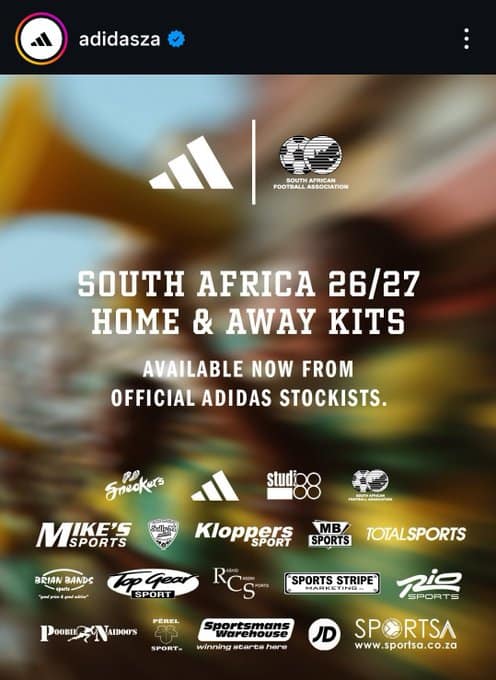
But on Thursday, Adidas South Africa lowered the boom on the controversy with a single, definitive statement. Studio 88 is an authorized stockist. The kits are authentic. The products are sourced directly from Adidas. And the nation’s football fans can breathe a collective sigh of relief.
“The drama was unnecessary. The accusations were unfounded. And the truth is finally out,” McKenzie said in a triumphant video message posted to his social media channels, holding up his now-vindicated jersey. “I told you it was real. Adidas has confirmed it. Now, let’s talk about the football.”
The Post That Started It All
The timeline of the controversy is a case study in how quickly misinformation can spread in the age of social media, and how slowly the truth can catch up.
On Monday evening, McKenzie visited the Studio 88 store in Sandton Square—one of Johannesburg’s most upscale shopping destinations. He was there, he later explained, to buy the new 2026/27 home and away Bafana Bafana kits ahead of the national team’s upcoming World Cup qualifying matches. As a public figure with a large social media following, he did what came naturally: he posed for photos and shared them online.
“Fresh gear for our boys,” he captioned the images. “Proudly South African. Proudly Bafana.”
The photos showed McKenzie in the new home kit—a bold yellow jersey with green and white accents, featuring the familiar Bafana Bafana badge and the Adidas three stripes. A second photo showed him holding the away kit, a striking white jersey with yellow and green detailing.
The response was immediate and, for McKenzie, unexpectedly hostile.
The Accusations: “Fake. Fake. Fake.”
Leading the charge was SbuMasang, an influential voice in South Africa’s niche but passionate community of football jersey collectors. SbuMasang has built a reputation for authenticating merchandise, identifying fakes, and warning fans away from unscrupulous sellers. His verdict on McKenzie’s jerseys was unequivocal.
“Those are not real,” he posted, along with a series of zoomed-in screenshots highlighting perceived flaws. “Look at the badge. Look at the stitching on the three stripes. Look at the material. Studio 88 is selling fakes. I have seen it before. This is not the first time.”
Other voices joined the chorus. Anonymous accounts, rival jersey sellers, and even some genuine fans added their own critiques. The stitching on the collar looked uneven. The color of the yellow seemed off compared to official Adidas promotional images. The tags didn’t look right. The packaging was suspicious.
Within 24 hours, the hashtag #FakeKits was trending in South Africa’s football community. Studio 88’s reputation, built over decades as one of the country’s leading sportswear retailers, was suddenly under fire. And McKenzie, who had only wanted to show his support for the national team, found himself at the center of a very public and very embarrassing controversy.
“I was shocked,” McKenzie later said in an interview. “I walked into a reputable store, in a reputable mall, and bought a product that I assumed was genuine. Then suddenly I am being accused of wearing fakes? Of promoting counterfeit goods? It was absurd. But I understood the concern. Fans have been burned before. They are protective. They are skeptical. I don’t blame them for asking questions. I blame the people who answered those questions with certainty when they had no evidence.”
The Receipt: McKenzie Fights Back
Rather than retreat or delete his posts, McKenzie did something that surprised his critics: he fought back. He posted a photograph of his original receipt from Studio 88, showing the date, time, store location, and the specific products purchased. He challenged SbuMasang and other accusers to provide evidence for their claims.
“Here is my proof,” McKenzie wrote. “Now show me yours. You are accusing a major retailer of selling fakes. That is a serious accusation. You should have serious evidence. I am waiting.”
SbuMasang, for his part, doubled down. He posted side-by-side comparisons of McKenzie’s jersey and what he claimed was an authentic jersey from a different retailer. The differences, he argued, were obvious. He called on Adidas South Africa to clarify which retailers were authorized stockists.
The standoff continued for two days. Social media buzzed with speculation. Some fans sided with McKenzie, arguing that Studio 88 was too large and too established to risk selling counterfeits. Others sided with SbuMasang, pointing to past incidents where even major retailers had been caught selling fake merchandise, often unknowingly.
The uncertainty was bad for everyone. Fans who wanted to buy the new kits hesitated. Studio 88’s sales suffered. And Adidas, the brand at the center of the storm, found its own reputation caught in the crossfire.
The Confirmation: Adidas Speaks
On Thursday morning, the silence from Adidas South Africa was broken. In a carefully worded statement issued to media outlets and posted on the company’s official social media channels, the sportswear giant put the controversy to rest.
“Adidas South Africa confirms that Studio 88 is an authorized and trusted stockist of Adidas products, including the new 2026/27 Bafana Bafana home and away kits,” the statement read. “All products sold by Studio 88 are genuine and sourced directly from Adidas. We have verified the specific products purchased by Minister McKenzie and confirm their authenticity.”
The statement went on to list other authorized retailers, including Totalsports, Sportscene, The Cross Trainer, and selected independent stores. It also included a warning about counterfeit merchandise sold through unofficial channels, particularly online marketplaces and social media vendors.
“We understand the passion of South African football fans,” the statement continued. “We share that passion. The Bafana Bafana kit is a symbol of national pride. We would never allow counterfeit versions of that symbol to be sold through our authorized partners. Fans can purchase with confidence from any retailer on our authorized list.”
The statement was accompanied by a photograph of the official Studio 88 authorization letter, dated January 2026, confirming the retailer’s status as a direct account holder with Adidas.
For McKenzie, the confirmation was vindication. He posted the Adidas statement within minutes, along with a triumphant caption: “I told you. Now apologize.”
For SbuMasang, the confirmation was more complicated. He did not delete his original posts, but he did post a follow-up acknowledging the Adidas statement. “I called it as I saw it,” he wrote. “The differences I saw were real. But if Adidas says they are authentic, then they are authentic. I accept that. My intention was never to harm Studio 88. My intention was to protect fans from fakes. I may have been wrong in this case. But the problem of counterfeit jerseys is still real. Fans should still be careful.”
The Problem of Counterfeit Kits: A Persistent Plague
SbuMasang’s final point is worth taking seriously. The controversy over McKenzie’s jerseys may have been a false alarm, but the threat of counterfeit football merchandise in South Africa is very real.
According to the South African Revenue Service (SARS), counterfeit goods—including sports apparel—cost the South African economy billions of rands annually in lost tax revenue, not to mention the damage to legitimate businesses and brands. In 2025 alone, SARS seized over R450 million worth of counterfeit goods at ports of entry, with football jerseys making up a significant portion.
The problem is particularly acute for the Bafana Bafana kit, which is a popular target for counterfeiters due to its high demand and relatively high price point. An authentic Adidas Bafana Bafana jersey retails for between R1,200 and R1,600, depending on the version (stadium, replica, or authentic player version). A counterfeit can be produced for a fraction of that cost and sold for R300 to R500—a tempting bargain for cash-strapped fans.
“Counterfeiters are getting better,” said brand protection expert Michael van der Merwe. “They used to be easy to spot—bad stitching, wrong colors, cheap materials. Now they use better machines, better fabrics, better techniques. Some counterfeits are almost indistinguishable from the real thing unless you know exactly what to look for. That is why even reputable retailers can sometimes be fooled, though that was not the case here.”
Van der Merwe advises fans to purchase only from authorized retailers, to check for proper tags and holograms, and to be skeptical of deals that seem too good to be true. “If it’s half the price of the official retail price, it’s almost certainly fake,” he said. “The margins on authentic merchandise are not that high. No legitimate retailer can afford to sell at 50% off.”
Fans React: Relief and Frustration
Among South Africa’s football fans, the Adidas confirmation brought a mixture of relief and frustration.
“I am relieved because I bought my kit from Studio 88 two weeks ago,” said Thabo Nkosi, a 34-year-old Bafana fan from Soweto. “I was starting to worry that I had wasted my money. Now I know it’s real. But I am also frustrated. This whole controversy was unnecessary. One person made an accusation without evidence, and suddenly everyone is panicking. That is not fair to Studio 88. That is not fair to Adidas. That is not fair to fans.”
Others were more forgiving of SbuMasang. “He was trying to help,” said Bafana supporter club organizer Refiloe Mokoena. “He has caught real fakes before. He has saved fans from wasting their money. This time he got it wrong. That happens. He acknowledged it. We should move on.”
Some fans, however, directed their frustration at McKenzie. “He is the Minister of Sports,” said one commenter on social media. “He should not be posting photos of himself buying jerseys like a fan. He should be focused on fixing South African sport. This whole drama was a distraction.”
McKenzie, characteristically, brushed off the criticism. “I am allowed to be a fan,” he said. “I am allowed to buy a jersey and post a photo. The fact that this became a national controversy says more about South Africa’s obsession with drama than it does about me. The important thing is that fans now know where to buy authentic kits. That is a good outcome.”
The Bigger Picture: Bafana Bafana’s World Cup Qualifiers
Behind the jersey controversy lies a more important story: Bafana Bafana’s campaign to qualify for the 2026 FIFA World Cup. The team, under the guidance of coach Hugo Broos, has shown steady improvement over the past two years. A strong performance in the 2025 Africa Cup of Nations (reaching the quarter-finals) has raised expectations.
The World Cup qualifiers resume later this month, with Bafana facing Zimbabwe and Rwanda in back-to-back matches. The new kits, which Adidas unveiled to much fanfare in February, are intended to symbolize a new era for South African football—an era of hope, ambition, and national pride.
“The jersey is not just a piece of clothing,” said former Bafana captain and current television analyst Aaron Mokoena (no relation to Refiloe). “It is a symbol. When you put on that jersey, you represent 60 million South Africans. You carry their hopes, their dreams, their struggles. That is why fans care so much about authenticity. They want to wear a symbol that is real. Not a fake. Not a copy. The real thing.”
With the Adidas confirmation, fans can now wear their new kits with confidence. The controversy is over. The jerseys are real. And the focus can finally return to where it belongs: the pitch.
McKenzie’s Final Word
In a final video message posted late Thursday evening, McKenzie addressed the controversy one last time. He stood in front of a wall of Bafana Bafana memorabilia—old jerseys, scarves, photographs—wearing the now-vindicated home kit.
“I want to thank Adidas for speaking clearly and quickly,” he said. “I want to thank Studio 88 for being an honest retailer. I want to thank the fans for caring so much about our national team. And I want to say to SbuMasang: no hard feelings. You made a mistake. You acknowledged it. That takes character. Now, let’s all wear our jerseys—real jerseys, from real stores—and get behind Bafana Bafana.”
He paused, looked directly into the camera, and smiled.
“World Cup qualifiers are coming. We need every fan, every voice, every bit of energy. Wear your jersey proudly. Wear it loudly. Wear it knowing it’s real. And let’s go Bafana! Let’s go!”
The video has since been viewed over two million times. The comments, once filled with accusations and arguments, are now filled with flags, emojis, and chants of support. The jersey wars are over. The real battle—on the pitch, for a place at the World Cup—is about to begin.
The Last Word
In the end, the controversy over McKenzie’s jerseys was a tempest in a teacup—a brief, noisy storm that distracted from the more important business of football. But it was also a reminder of something valuable: the passion of South African fans. They care deeply. They pay attention. They ask questions. And when they are wrong, they are willing to admit it.
That passion, channeled positively, is a superpower. It is what fills stadiums. It is what drives players to run that extra kilometer. It is what makes the Bafana Bafana jersey more than just a piece of fabric.
The jersey is real. The passion is real. And the dream—of a South African team competing on the world’s biggest stage—is more real than ever.
Now, if only the team can give fans something to cheer about. The qualifiers start soon. The kits are ready. The fans are ready. The only question is whether the players are ready to match that passion with performance.
For now, though, there is relief. Relief that the jerseys are authentic. Relief that the controversy is over. And relief that the conversation can finally return to football.
One fan put it best, in a comment on McKenzie’s final video: “I don’t care who was right or wrong. I just want to wear my yellow jersey and watch my team win. Is that too much to ask?”
No. No, it is not. And with the authenticity question settled, that is exactly what South African fans intend to do.
About The Author