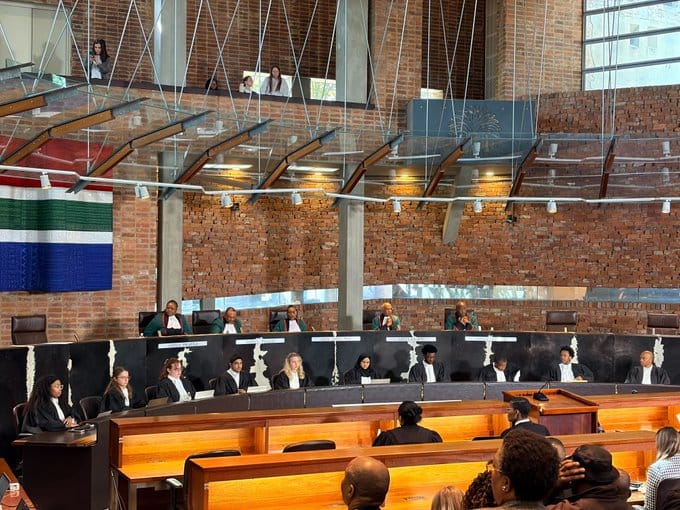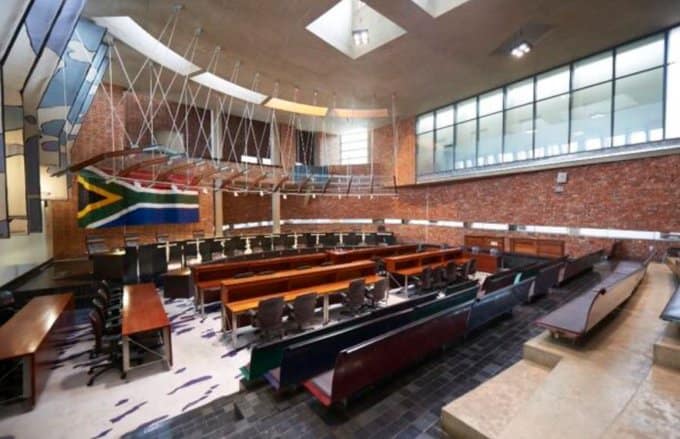
In the quiet, marbled corridors of the Constitutional Court in Braamfontein, where the highest legal minds in the land deliberate on matters that shape the soul of the nation, a significant shift has just occurred. The court, already renowned as one of the most progressive and intellectually formidable apex courts in the world, has grown stronger, more diverse, and more reflective of the South African Constitution’s promise of equality.
President Cyril Ramaphosa has appointed two highly respected women—Justice Nambitha Dambuza-Mayosi and Advocate Katharine Savage—as justices of the Constitutional Court. The appointments, announced by the Presidency on Thursday morning, fill vacancies created by the recent retirements of Justices Leona Theron and Chris Jafta, and bring the number of women on the eleven-member bench to six—a historic first for the court.
“These appointments reflect the President’s commitment to a judiciary that is not only competent and independent but also representative of the South African people,” said Presidential spokesperson Vincent Magwenya at a media briefing in Pretoria. “Justices Dambuza-Mayosi and Savage bring decades of experience, impeccable legal reasoning, and a deep commitment to the values of the Constitution. They will serve the nation with distinction.”
Justice Nambitha Dambuza-Mayosi: A Trailblazer’s Journey
For those who have followed her career, Justice Nambitha Dambuza-Mayosi’s elevation to the Constitutional Court feels less like a surprise and more like the inevitable next chapter in a life defined by firsts and barriers broken.
Born in the Eastern Cape during the darkest years of apartheid, Dambuza-Mayosi grew up in a household where education was not merely encouraged but demanded. Her father, a teacher, and her mother, a nurse, sacrificed endlessly to ensure that their children had opportunities they themselves had been denied. Young Nambitha repaid that sacrifice with academic excellence, earning a scholarship to the University of Fort Hare—the alma mater of Nelson Mandela, Oliver Tambo, and so many other liberation giants.
After completing her LLB, she cut her teeth as a prosecutor in the Eastern Cape, where she earned a reputation for meticulous preparation and an unyielding commitment to justice—even when the system around her was still shaking off the last vestiges of apartheid-era dysfunction. She moved into private practice, joined the bar, and eventually took silk as a senior counsel in 2012—one of a small but growing number of Black women to achieve that distinction.
Her judicial career began with her appointment to the Eastern Cape High Court in 2015, followed by elevation to the Supreme Court of Appeal (SCA) in 2019. At the SCA, she authored several landmark judgments that have already shaped South African jurisprudence.
In a 2021 judgment on land restitution, Dambuza-Mayosi wrote powerfully about the intersection of property rights and historical injustice. “The Constitution does not ask us to forget the past,” she wrote. “It asks us to build a future that repairs it. Land restitution is not a gift. It is a right, delayed but not denied.” The judgment, which upheld the rights of a community dispossessed during apartheid, has been cited in multiple subsequent cases.
In a 2023 labor law case, she ruled against an employer who had attempted to dismiss a worker for exercising her right to strike. “The right to strike is not a loophole to be closed by clever legal drafting,” she wrote. “It is a constitutional right, fundamental to the collective bargaining framework. Any attempt to undermine it must be met with judicial vigilance.”
Colleagues describe her as a judge who is both fiercely intellectual and deeply humane. “She reads the law closely, but she never loses sight of the people behind the case numbers,” said a fellow SCA judge who spoke on condition of anonymity. “She will ask the tough questions during argument, but she will also ensure that the most vulnerable party in the room feels seen and heard. That is a rare combination.”
Her appointment to the Constitutional Court makes her the fourth woman from the Eastern Cape to serve on the apex court, following in the footsteps of Justices Bess Nkabinde, Leona Theron, and Nonkosi Mhlantla. For Dambuza-Mayosi, the moment is both personal and political.
“I stand on the shoulders of women who fought for this country’s freedom and for its transformation,” she said in a brief statement following the announcement. “I accept this appointment with humility, with gratitude, and with an unwavering commitment to the Constitution. The work of justice is never finished. I am ready to continue it.”
Justice Katharine Savage: A Different Kind of Trailblazer
If Dambuza-Mayosi’s path to the Constitutional Court has been a steady, linear ascent through the judicial ranks, Katharine Savage’s journey has been more unconventional—and no less impressive.
Savage, who will be sworn in as Justice Savage, comes to the apex court directly from the Western Cape Bar, where she has practiced as a senior counsel for nearly two decades. She is one of a small number of advocates who have been appointed to the Constitutional Court without first serving as a judge on a lower court—a testament to the exceptional regard in which she is held by the legal community.
Born in Cape Town, Savage studied law at the University of Cape Town and then at Cambridge University, where she earned a master’s degree in human rights law. Returning to South Africa in the early 2000s, she joined the legal team at the Women’s Legal Centre, where she fought landmark cases on gender equality, reproductive rights, and domestic violence.
Her work at the Women’s Legal Centre brought her into conflict with powerful interests, including the state itself. In a landmark 2005 case, she successfully argued that the state’s failure to provide antiretroviral drugs to pregnant women living with HIV was a violation of their constitutional rights to life and healthcare. The case, which the government eventually lost, saved countless lives and changed the trajectory of South Africa’s HIV/AIDS policy.
“I remember watching her in that case,” said a senior advocate who worked alongside Savage. “She was up against the full might of the state. The government had brought in senior counsel, the best they could buy. But Katharine was fearless. She knew the law, she knew the facts, and she knew that the lives of real people depended on her arguments. She did not blink. She never blinks.”
Savage took silk in 2014 and has since appeared in some of the country’s most consequential constitutional cases. She represented the South African Human Rights Commission in the landmark 2018 case on the legality of the state capture inquiry. She appeared for the Helen Suzman Foundation in the 2020 case on the independence of the National Prosecuting Authority. She has argued before the Constitutional Court more than 30 times—a record for any advocate who has not served as a judge.
Her jurisprudence, if it can be called that, is grounded in a fierce commitment to the Bill of Rights. She has written extensively on the right to dignity, the right to equality, and the state’s positive obligations to realize socio-economic rights. Unlike some legal scholars who see these rights as aspirational, Savage has argued that they are justiciable—that courts can and should order the state to take concrete steps to fulfill them.
“The Constitution is not a wish list,” she wrote in a 2022 law review article. “It is a binding legal document. When the state fails to provide housing, healthcare, or education, that failure is not merely a policy disappointment. It is a violation of a legal right. Courts have the power—and the duty—to enforce that right.”
Her appointment has been welcomed by civil society organizations, many of whom have worked with her on litigation. “Katharine Savage is one of the most principled and effective public interest lawyers of her generation,” said a statement from the Legal Resources Centre. “Her elevation to the Constitutional Court is a victory for justice, for equality, and for the idea that the law can be a tool of liberation, not oppression.”
A Court Transformed: Six Women on the Bench
With the appointments of Dambuza-Mayosi and Savage, the Constitutional Court now has six women among its eleven justices—a historic first. The current bench comprises:
- Chief Justice Mandisa Maya (first woman to hold the position)
- Deputy Chief Justice Nonkosi Mhlantla
- Justice Nambitha Dambuza-Mayosi (newly appointed)
- Justice Katharine Savage (newly appointed)
- Justice Rammaka Mathopo
- Justice Steven Majiedt
- Justice Owen Rogers
- Justice Fayeeza Kathree-Setiloane
- Justice Tati Makgoka
- Justice Nolwazi Mabindla
- Justice Mbuyiseli Madlanga
The six women represent a dramatic shift from the early days of the Constitutional Court, when the bench was dominated by men—many of them distinguished, but few of them reflective of the country’s demographics. The first woman to serve on the court, Justice Kate O’Regan, was appointed in 1994. It took another 15 years for the second woman, Justice Bess Nkabinde, to join her. Now, nearly a third of a century into democracy, women hold a majority of the seats on the highest court.
“This is what transformation looks like,” said legal analyst and University of Pretoria law professor Cathi Albertyn. “It is not about tokenism. It is not about lowering standards. It is about recognizing that excellence comes in all forms, and that a court that reflects the diversity of the nation is a court that can more fully understand the nation’s problems and craft more just solutions.”
The President, in his announcement, explicitly linked the appointments to his broader agenda of judicial transformation. “Our judiciary must be independent, it must be competent, and it must be representative,” Ramaphosa said. “These appointments advance all three goals. Justice Dambuza-Mayosi and Justice Savage are among the finest legal minds in the country. Their presence on the Constitutional Court will strengthen its work and enhance its legitimacy.”
The Reaction: Praise, with Some Cautions
The legal community has responded to the appointments with widespread praise, though some voices have offered measured cautions.
The General Council of the Bar, which represents advocates across the country, welcomed Savage’s elevation. “Advocate Savage has been a credit to the profession for decades,” said GCB chairperson Nthabiseng Dubazana. “Her appointment to the Constitutional Court is a recognition of her exceptional skill and her unwavering commitment to the rule of law.”
The Black Lawyers Association praised Dambuza-Mayosi’s appointment as “a victory for substantive representation.” “Justice Dambuza-Mayosi has spent her career fighting for the rights of the marginalized,” said BLA president Thabo Mokoena. “Her voice on the Constitutional Court will ensure that the experiences of Black women—so often erased or ignored—are heard and respected.”
However, some legal commentators noted that both appointees come from backgrounds that are, in certain respects, privileged. Dambuza-Mayosi, despite her humble origins, has spent her career in elite legal institutions. Savage, a white woman from an affluent Cape Town family, has never faced the barriers that Black lawyers still confront daily.
“These are excellent appointments, full stop,” said legal sociologist Dr. Nomsa Mkhize. “But let us not pretend that the Constitutional Court has achieved full transformation. There are still no justices from the Khoisan community. There are no justices who are openly working class. There are no justices who did not have access to elite legal education. The court is more diverse than it was, but it is not yet fully representative. There is work still to do.”
The Judicial Service Commission (JSC), which vetted both candidates before recommending them to the President, conducted public interviews in February. The interviews, broadcast live on television, were notable for their collegiality—a stark contrast to the contentious hearings that have sometimes characterized JSC proceedings.
Dambuza-Mayosi was asked about her approach to constitutional interpretation. “I am a textualist, but not a literalist,” she told the commissioners. “The text of the Constitution is our starting point. But the text must be read in light of its history, its purpose, and the values it enshrines. A judge who ignores context is not a faithful interpreter. They are a technician, not a jurist.”
Savage was asked about her lack of judicial experience. “I have spent my career in courtrooms,” she replied. “I have examined and cross-examined witnesses. I have made submissions to judges. I have seen what works and what does not. The skills of an advocate are different from the skills of a judge, but they are not lesser. I am confident I can make the transition.”
Both responses drew nods from the commissioners, and both candidates were recommended unanimously.
What Comes Next: The Court’s Agenda
The Constitutional Court enters the 2026 term with a full bench and a full docket. Among the high-profile cases awaiting judgment are:
- The Expropriation Without Compensation Challenge: A consolidated set of cases challenging the constitutionality of the government’s new expropriation framework. The court is expected to rule on whether the state may expropriate land without paying compensation in certain circumstances, and if so, what those circumstances are.
- The NHI Implementation Case: A challenge to the government’s National Health Insurance (NHI) scheme, brought by private healthcare providers who argue that the scheme violates property rights and is fiscally unworkable.
- The Digital Privacy Case: A challenge to the state’s surveillance powers under the Regulation of Interception of Communications Act, brought by civil liberties organizations who argue that the law permits unconstitutional invasions of privacy.
Each of these cases will test the court’s jurisprudence in new ways. And each will be shaped by the voices of the newly appointed justices.
“Constitutional law is not static,” said Albertyn. “It evolves as society evolves. The new justices will bring their own perspectives, their own experiences, their own legal philosophies. They will not always agree with each other. They will not always agree with the older justices. That is how a healthy court functions—through vigorous debate, through dissents, through the clash of ideas. The Constitution is stronger for that clash.”
The Personal: Two Women, Two Journeys
Beyond the legal analysis and the political commentary, the appointments of Dambuza-Mayosi and Savage are personal stories—stories of perseverance, of excellence, of women who refused to be told that they did not belong.
Dambuza-Mayosi, now 58, is the mother of two adult children. Her husband, a retired professor of law, has been her partner and supporter throughout her career. In interviews, she has spoken about the challenge of balancing the demands of a judicial career with the demands of motherhood—a balancing act that her male colleagues were rarely asked to navigate.
“There were days when I left the bench at 4pm, rushed home to make dinner, helped with homework, put the children to bed, and then went back to my chambers to write judgments until midnight,” she once told a legal publication. “I do not say this for sympathy. I say it because I want young women to know that it is possible. It is hard. It is exhausting. But it is possible.”
Savage, 56, is the mother of three children, two of them adopted. She has been open about her decision to adopt as a single mother, a choice that she says taught her more about love and resilience than any law book ever could.
“The law is about rules,” she said in a rare personal interview. “But parenting is about grace. You learn that not every wrong needs to be punished. Not every argument needs to be won. Sometimes the just outcome is the compassionate outcome. I try to bring that lesson to my work, though I do not always succeed.”
The Last Word: A Court for the People
As the sun set over Braamfontein on Thursday evening, the news of the appointments spread through the legal community. Text messages buzzed. Emails were sent. Calls were made. There was celebration, yes, but there was also a sense of solemn responsibility.
The Constitutional Court is not just any court. It is the guardian of the Constitution. It is the final arbiter of the rights that define South African democracy. The nine justices who sit on that bench—now eleven, including the new appointees—carry a weight that few others can understand.
Dambuza-Mayosi and Savage will be sworn in at a ceremony in early May. Their families will attend. Their colleagues will applaud. The Chief Justice will administer the oath. And then they will take their seats, the newest members of the highest court in the land.
The cases will come. The judgments will be written. The Constitution will be interpreted, applied, and protected. And two women, from very different backgrounds but united by a shared commitment to justice, will do their part to ensure that the promise of 1994 is not forgotten.
“This is a proud day for South Africa,” Ramaphosa said. “Not because of the individuals appointed, though they are exceptional. But because of what their appointments represent: a judiciary that is becoming more just, more representative, and more ready to meet the challenges of the 21st century. The work of transformation continues. Today, we took another step forward.”
The court is transformed. The Constitution is in good hands. And the people of South Africa, whether they know it or not, are better served than they were yesterday. That, in the end, is the only measure that matters.
About The Author