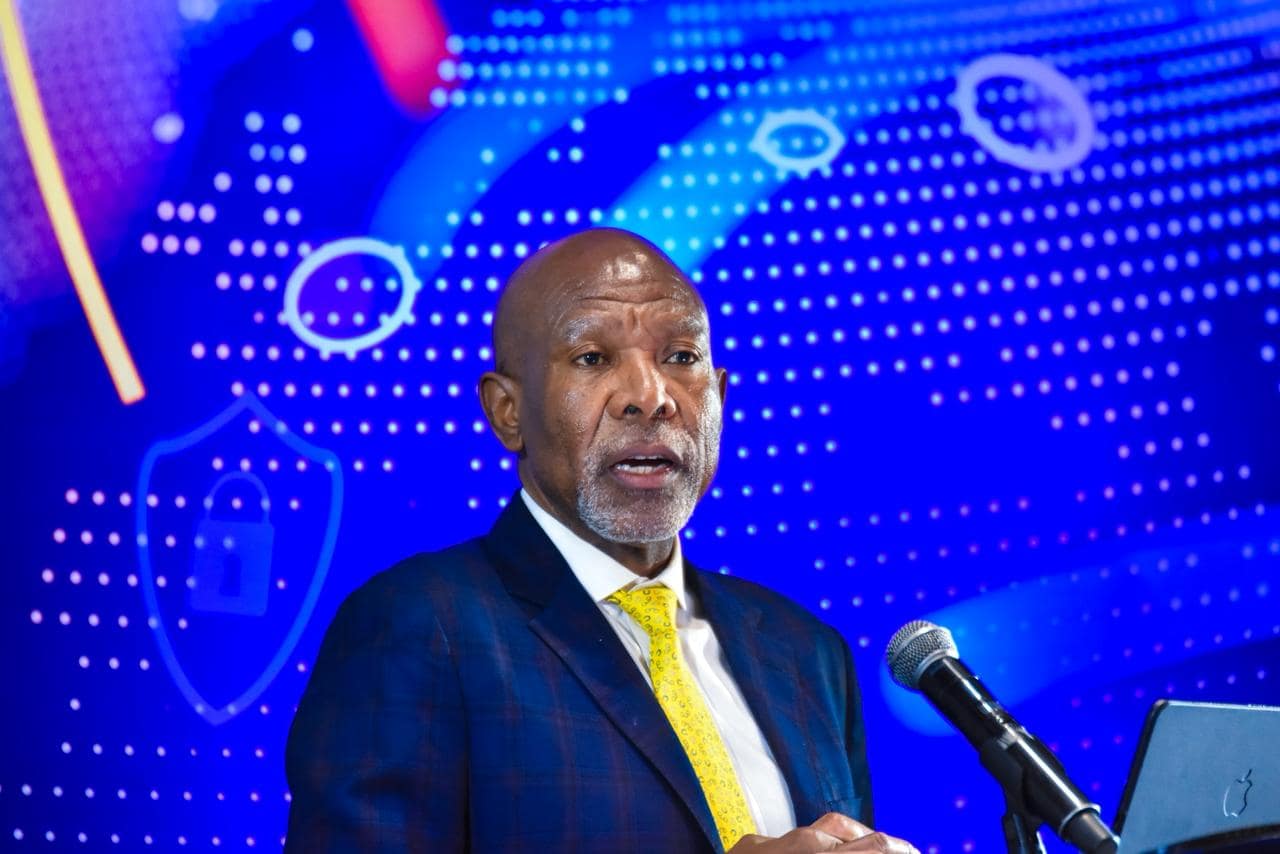
In a speech that sent shockwaves through financial and political circles, South African Reserve Bank (SARB) Governor Lesetja Kganyago delivered a stark assessment of the nation’s currency, revealing that fundamental economic metrics suggest the rand is profoundly undervalued, trading at less than half its theoretical fair value.
The revelation came during an address to business leaders on October 15, 2025, where Governor Kganyago, known for his measured and technical rhetoric, laid out a compelling case using the framework of Purchasing Power Parity (PPP). He explained that PPP, which compares the prices of a standard basket of goods and services across countries, indicates the rand should be trading at approximately R7.40 to the US dollar.
This figure stands in jarring contrast to the currency’s current reality, where it has been mired around R17.40/USD, implying a staggering 57% undervaluation.
The “Why”: A Decade of Economic Pressures
Governor Kganyago did not leave the massive gap to speculation. He meticulously outlined the factors that have driven this wedge between the rand’s potential and its market price, tracing the roots back over a decade.
“Since 2014, the South African economy has faced a perfect storm of structural constraints,” Kganyago stated. “Persistently low economic growth, which has failed to keep pace with our population expansion, has been a primary anchor.” He pointed to the well-documented issues of crippling load-shedding, inefficient logistics at the nation’s ports and rails, and a fragile fiscal environment as key drivers scaring off international investment.
He further identified “political risks and policy uncertainty” as significant contributors, creating an environment where long-term capital is hesitant to commit. This has resulted in consistent capital outflows, where more money leaves the country than enters, creating a natural downward pressure on the currency.
The “Shock Absorber” and the Silver Linings
In a nuanced take, the Governor framed the rand’s weakness not merely as a symptom of sickness, but as a critical “shock absorber” for the economy. “A weaker currency makes our exports more competitive on the global stage,” he explained. “It provides a cushion for our mining and agricultural sectors, and it forces a necessary adjustment in a context where our domestic fundamentals have weakened.”
However, he was quick to highlight the tools at the nation’s disposal to facilitate a future recovery. He underscored that the SARB’s successful battle against inflation, bringing it firmly back within the target range of 3-6%, provided crucial policy space. Furthermore, he pointed with pride to the country’s gross reserves, which now exceed $70 billion, as a formidable “war chest.”
“This buffer enhances our ability to weather external shocks and instills confidence in our macroeconomic management,” Kganyago asserted. “It is a foundational element from which a stronger, more stable currency can eventually be built.”
Public Fury and the Ghost of Currency Manipulation
The technical explanation, however, was swiftly overshadowed by a surge of public outrage on social media. The revelation of the 57% undervaluation acted as a catalyst, instantly fueling connection to an ongoing and highly sensitive legal case.
For years, a landmark competition lawsuit has been proceeding, accusing 28 local and international banks of colluding to manipulate the rand/US dollar exchange rate between 2007 and 2013. The case, which alleges a cartel of traders known as the “ZAR Mafia” used online chat rooms to coordinate trades and fix prices, is seeking billions of rands in damages from the implicated institutions.
Online, the two narratives collided with explosive force. The hashtag #RandManipulation began trending, with users expressing fury and a sense of vindication.
“This isn’t just economics, it’s theft,” read one viral post. “Kganyago just confirmed what we suspected all along—the banks didn’t just nudge the rand, they broke it. Our pensions, our salaries, our cost of living have all been plundered.”
Another user wrote, “R7.40 vs R17.40? That difference is the price of corruption, state capture, and bank collusion. We are living with the consequences every time we buy fuel or food.”
A Nation at a Crossroads
Governor Kganyago’s speech has inadvertently held up a mirror to South Africa, reflecting a deep-seated economic malaise and a simmering public distrust of financial and political institutions. While his intent was to provide a sober, technical analysis, the public heard a confirmation of systemic exploitation.
The ball now lies in the court of policymakers and the judiciary. The government faces intensified pressure to accelerate structural reforms that address the root causes of the undervaluation. Simultaneously, the eyes of the nation will be fixed even more intently on the outcome of the rand manipulation case, where the staggering 57% figure is likely to be cited as Exhibit A for the profound and lasting damage allegedly inflicted upon the South African economy and its people.
About The Author