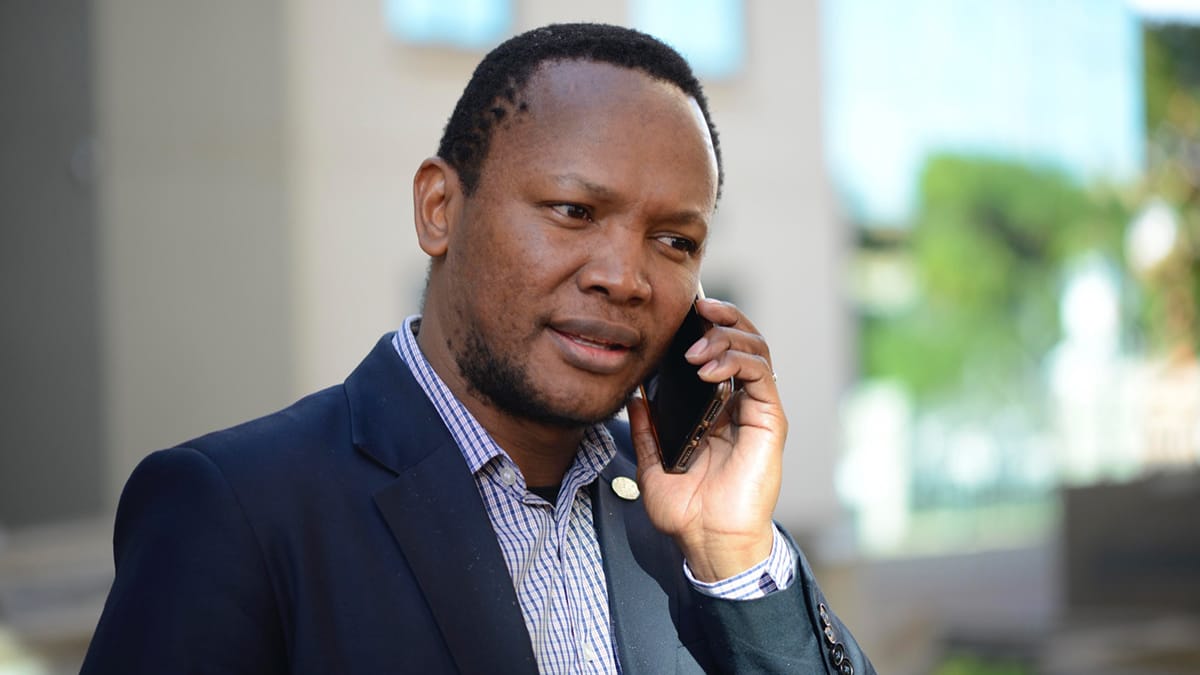
In a quiet boardroom, far from the public glare of the courtrooms that had defined their relationship for nearly two decades, a long and arduous journey finally reached its end. Vodacom and Nkosana Makate, the inventor of the revolutionary “Please Call Me” service, have reached a confidential, out-of-court settlement, drawing a final curtain on a 17-year legal battle that became a symbol of corporate accountability and an individual’s relentless pursuit of recognition.
The agreement, which was formally approved by Vodacom’s board of directors, prompted the immediate and mutual withdrawal of all pending legal actions. This move pre-empted a high-stakes rehearing scheduled for November 18 at the Supreme Court of Appeal, a hearing that was poised to revisit a case that had already woven its way through every level of South Africa’s judicial system, including the Constitutional Court.
The Genesis of a Billion-Dollar Idea
The story begins not in a courtroom, but in the year 2000. Nkosana Makate was a young, bright trainee accountant at Vodacom, navigating the early stages of his career. Like millions of South Africans, he understood the frustration of being unable to afford airtime, a barrier that severed communication with loved ones and business contacts. Driven by this simple, yet universal, problem, he conceived the “Please Call Me” service—a mechanism for a user with no airtime to send a free text message requesting a call back.
He presented the idea to his managers, who recognised its immense potential. The service was launched by Vodacom later that year and became an instant, unprecedented phenomenon. It fundamentally altered communication patterns across the continent, amassing millions of users daily and generating staggering revenue for the telecoms giant through returned calls and increased network traffic. Yet, for Makate, the promise of compensation for his billion-rand idea remained unfulfilled, leading him to initiate legal action in 2008.
A Legal Marathon Dominates a Life
What followed was a legal marathon that would consume a significant portion of Makate’s adult life. The case became a tortuous saga of claims and counterclaims, court victories and bitter setbacks. For years, Makate was the public face of a David-versus-Goliath struggle, his name synonymous with a fight for the rights of inventors against powerful corporations.
“The ‘Please Call Me’ dispute has been a shadow over my life for 17 years,” Makate shared in a statement following the settlement. “It was more than a case; it was a chapter of struggle, hope, and immense personal sacrifice. It dominated conversations at family dinners, dictated career choices, and was a constant weight on my shoulders. To finally have a resolution is not just a legal victory; it is a profound personal relief and a chance to reclaim my story.”
The legal battle reached its zenith in 2016 when the Constitutional Court ruled in Makate’s favour, ordering Vodacom to enter into good-faith negotiations to determine “reasonable compensation.” However, the subsequent years saw further disputes over what constituted “reasonable,” leading to multiple return trips to the Supreme Court of Appeal and keeping the conflict alive.
Closing the Chapter
The confidential nature of the settlement means the precise financial terms will remain undisclosed. However, the mere fact of its existence, approved at the highest level of Vodacom, signals a definitive desire from both parties to close a contentious and damaging chapter.
A Vodacom spokesperson stated, “Vodacom is pleased to have reached a final and mutually agreeable settlement with Mr. Makate. We acknowledge the duration of this process and believe this resolution is in the best interest of all parties involved. We can now look forward, focusing on our commitment to innovation and serving our customers.”
For industry observers and the South African public, the settlement brings closure to one of the country’s most protracted corporate-legal disputes. It stands as a stark reminder of the value of intellectual property and the importance of fair compensation. For Nkosana Makate, the man whose simple idea connected a continent, the settlement finally allows him to hang up the phone on this long and draining fight, his legacy now secure and his future, at last, his own.
About The Author