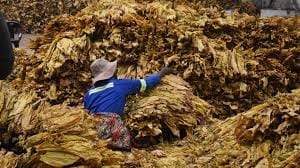
In a landmark move aimed at reshaping the landscape of one of Zimbabwe’s most vital economic sectors, the government has officially launched the Ethical Sales Floor in Harare—a state-of-the-art tobacco auction facility designed to inject transparency, competition, and fairness into the marketing of the country’s golden leaf. The 9,000-square-meter facility represents a bold step toward empowering smallholder farmers, leveraging cutting-edge technology, and positioning Zimbabwe as a key player in the global tobacco value chain rather than merely a supplier of raw materials.
The launch, presided over by Deputy Minister of Lands, Agriculture, Fisheries, Water and Rural Development, comes at a critical juncture for the tobacco industry. As the 2026 marketing season gets underway, the new facility is expected to address long-standing grievances from farmers about opaque pricing, delayed payments, and the dominance of a handful of powerful buyers. By introducing high-tech grading systems and ensuring rapid payments, the government aims to create an environment where farmers receive fair value for their crop and where competition among buyers drives prices upward.
The Ethical Sales Floor, which spans an impressive 9,000 square meters, is a purpose-built facility that incorporates modern auction technologies designed to streamline the selling process. At its heart is a computerized grading and weighing system that reduces human error and minimizes opportunities for manipulation. The system captures detailed data on each bale of tobacco, including grade, weight, and moisture content, creating a transparent record that farmers can use to verify that they are receiving fair prices.
Perhaps most significantly for the thousands of smallholder farmers who form the backbone of Zimbabwe’s tobacco industry, the facility promises rapid payments. In previous seasons, farmers often faced long delays between delivering their crop and receiving payment—a gap that left them vulnerable to exploitation by cash buyers and informal lenders. The new system is designed to ensure that farmers are paid promptly, allowing them to reinvest in their operations and support their families without the crushing burden of debt.
“This facility represents a new dawn for our tobacco farmers,” the Deputy Minister said during the opening ceremony. “For too long, our farmers have been price-takers rather than price-makers. They have worked tirelessly on their land, only to be at the mercy of a system that did not always serve their interests. The Ethical Sales Floor changes that. It gives our farmers the tools they need to demand fair prices. It gives them transparency. It gives them dignity.”
The launch comes amid early drama in the 2026 marketing season, with reports that some buyers have been testing the waters with low opening bids. Farmers have expressed frustration at the initial offers, which some say do not reflect the quality of this year’s crop or the rising costs of inputs such as fertilizers, fuel, and labor. The government has cautioned buyers against exploiting the early weeks of the season and has signaled that it will closely monitor pricing trends to ensure that farmers are not shortchanged.
“We are watching,” the Deputy Minister warned. “We have not created this facility simply to allow buyers to continue business as usual. The Ethical Sales Floor is about competition. It is about fairness. We expect buyers to bid competitively, and we expect farmers to benefit from that competition. If we see patterns of collusion or unfair practices, we will not hesitate to act.”
Despite the early-season pricing tensions, the government remains optimistic about the overall trajectory of the industry. Official figures released at the launch indicate that tobacco exports have already generated nearly $400 million in revenue this year—a strong start that underscores the continued global demand for Zimbabwean tobacco. The country’s flue-cured Virginia tobacco, prized for its quality and flavor profile, remains a staple in international markets, with China, the Middle East, and Europe among the top destinations.
But the government’s ambitions extend far beyond raw tobacco exports. In a strategic shift that officials describe as a “value chain transformation,” Zimbabwe is moving aggressively to capture more of the economic value generated by its tobacco industry. The centerpiece of this strategy is the introduction of a homegrown cigarette brand—a development that signals the country’s intention to move from being a supplier of raw materials to a producer of finished goods.
The decision to launch a domestic cigarette brand is rooted in a simple economic calculation: raw tobacco exports generate revenue, but finished products generate significantly more. By processing tobacco locally—turning raw leaf into cigarettes, packaging them, and branding them for domestic and regional markets—Zimbabwe stands to capture a far greater share of the value created along the supply chain. The move is also expected to create thousands of jobs in manufacturing, packaging, logistics, and marketing, providing a much-needed boost to the country’s formal employment sector.
The government has set its sights on the global tobacco market, which is projected to reach $7 billion by 2030. With its established reputation for quality leaf, its growing processing capacity, and its strategic location within the African continent, Zimbabwe believes it is well-positioned to claim a significant share of this expanding market. The launch of the Ethical Sales Floor is seen as the first step in a broader strategy that includes expanding local processing capacity, developing new export markets, and building a recognizable Zimbabwean brand that can compete with established players.
Industry analysts have welcomed the government’s focus on value addition but caution that success will depend on execution. Building a cigarette brand from scratch requires significant investment in manufacturing technology, quality control, marketing, and distribution. It also requires navigating a complex regulatory landscape, both domestically and in export markets, where tobacco products are subject to stringent health regulations, labeling requirements, and taxation policies.
“The ambition is commendable,” said a Harare-based trade economist who spoke on condition of anonymity. “For decades, we have been exporting raw tobacco and importing the finished products that our own leaf is used to make. That makes no economic sense. The shift toward local processing and value addition is exactly what we need to do. But the government must ensure that the enabling environment is in place—reliable energy supply, efficient logistics, access to finance for manufacturers, and a regulatory framework that supports investment. Without those, the vision will remain just a vision.”
The Ethical Sales Floor also represents a response to growing international scrutiny of tobacco supply chains. Global buyers, particularly in Europe and North America, have increasingly demanded assurances that the tobacco they purchase is grown and traded under ethical conditions—free from child labor, with fair wages for workers, and with transparent environmental practices. The new facility, with its high-tech grading and traceability systems, is designed to provide exactly that kind of assurance, potentially opening new markets and commanding premium prices for Zimbabwean tobacco that meets international ethical standards.
For the smallholder farmers who produce the bulk of Zimbabwe’s tobacco, the stakes could not be higher. Tobacco is a labor-intensive and input-heavy crop, requiring significant upfront investment in seedlings, fertilizers, chemicals, and curing fuel. Farmers often take loans to finance their operations, betting on a successful harvest and fair prices at auction to repay their debts and earn a livelihood. A poor season or unfavorable pricing can push families into a cycle of debt from which it is difficult to recover.
The launch of the Ethical Sales Floor has therefore been met with cautious optimism by farmer representative bodies. While welcoming the new facility and the promise of transparency and rapid payments, farmer organizations have emphasized that the true test will come in the auction halls. Will buyers genuinely compete against one another? Will the high-tech systems be consistently maintained and accurately calibrated? Will payments truly be rapid? These are the questions that will determine whether the facility delivers on its promise.
“The infrastructure is impressive,” said the president of a national farmers’ union. “But we have seen impressive buildings before. What farmers need is a fair price for their crop. We need buyers to come to the floor ready to pay what the tobacco is worth. We need a system that works for the farmer, not just for the buyers. We are hopeful, but we will be watching very closely.”
As the 2026 marketing season unfolds, all eyes will be on the new facility in Harare. For the farmers queuing at its gates with their carefully cured bales of tobacco, the Ethical Sales Floor represents the promise of a better deal—a chance to be treated fairly, to be paid promptly, and to see their hard work rewarded. For the government, it represents a critical piece of a larger vision: a transformed tobacco industry that creates jobs, generates value, and positions Zimbabwe as a leader in the global market.
With nearly $400 million in exports already recorded this year and a projected $7 billion global market on the horizon, the foundation has been laid. Whether the Ethical Sales Floor and the broader value-addition strategy will deliver the promised transformation remains to be seen. But for the first time in years, there is a sense that Zimbabwe’s tobacco industry is not just selling a crop—it is building a future.
The Deputy Minister struck a confident note in his closing remarks at the launch: “We have the land. We have the farmers. We have the expertise. And now, we have the infrastructure to ensure that our farmers get what they deserve. The Ethical Sales Floor is not just a building. It is a statement. Zimbabwe is open for business, and we are playing to win.”
About The Author