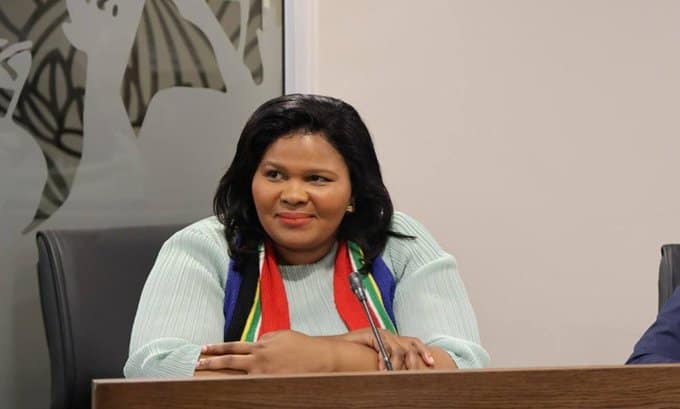
Against the backdrop of recently swollen dams and sodden ground left by weeks of intense rainfall, Nelson Mandela Bay Executive Mayor Babalwa Lobishe has issued a measured but urgent plea: do not let the sight of full reservoirs fool you. In a public address delivered from the mayor’s office on Friday morning, Lobishe urged residents, businesses, and institutions across the metro to continue using water sparingly, warning that without sustained conservation, the city could slide back into crippling drought levels within months.
The call comes just as the metro breathes a collective sigh of relief. Heavy rains and localized flooding that swept through parts of the Eastern Cape in early May 2026 have brought a welcome, if temporary, reprieve to the region’s strained water system. Dams that hovered perilously close to empty during the darkest days of the so-called “Day Zero” crisis have now risen significantly. Yet Lobishe, a practical administrator who has made water security a cornerstone of her tenure, is already looking past the current wet spell and fixing her gaze on the dry winter months ahead.
“Water falling from the sky does not mean the crisis is over,” Lobishe told reporters. “We have learned hard lessons in this metro. We have stood on the edge of taps running dry. We cannot afford to forget that simply because it has rained for a few weeks. High consumption now will undo all the gains we have fought so hard to achieve. We are asking everyone – households, factories, farms, schools, hospitals – to continue using water as if the next drought has already begun.”
The mayor’s warning is not hypothetical. Nelson Mandela Bay has endured some of the most severe water shortages of any major South African municipality in the past decade. In 2022, the metro came within weeks of a complete shutdown of domestic supply – a scenario that would have required military-managed water collection points and the closure of schools, businesses, and many public services. Infrastructure challenges, including aging pipes, high leakage rates, and occasional pump failures in the Nooitgedacht Water Treatment Works, have compounded the problem.
According to the latest figures from the municipality’s water and sanitation directorate, overall dam storage levels have climbed to approximately 68% as of 10 May 2026 – a dramatic improvement from the lows of under 15% seen during the peak of the crisis. However, Lobishe’s office notes that consumption patterns have already begun creeping upward as residents perceive the danger to have passed. Daily usage is currently hovering around 275 million litres, dangerously close to the metro’s sustainable yield of 260 million litres per day.
“If we cross that line and stay there, depletion accelerates rapidly,” explained water engineer and metro advisor Dr. Thandiwe Mahlangu. “People do not realize that even full dams can drain in weeks if demand spikes. And with winter on the horizon – which traditionally brings little to no rain – we could be back in emergency mode by August or September. That is not alarmism. That is hydrology.”
The mayor’s conservation appeal comes with concrete recommendations. Residential users are being asked to keep showers under two minutes, repair leaking taps immediately, use buckets instead of hoses for car washing, and limit garden watering to before 9 a.m. or after 6 p.m. Businesses are being encouraged to conduct water audits and install flow-reducing devices. Institutional users, including schools and hospitals, are being reminded that their bulk consumption contracts impose strict penalties for exceeding thresholds.
Lobishe has also revived a public awareness campaign originally launched during the height of the drought, complete with municipal billboards, radio spots in English, isiXhosa, and Afrikaans, and a dedicated WhatsApp hotline for reporting leaks and illegal connections. “We are not going back to Day Zero,” the campaign’s slogan reads. “But only if we keep our discipline.”
Reaction from residents has been mixed. Some welcomed the mayor’s realism. “I remember standing in queues at 4 a.m. with a water tank,” said Lynette Abrahams, a mother of three from Bethelsdorp. “I will never take water for granted again. If the mayor says save, I save.” Others expressed fatigue with what they called “perpetual austerity.” A small business owner in Central Gqeberha, who asked not to be named, said: “How long must we live like we are in a desert? The rain came. The dams are fine. Let people wash their cars.”
Environmental groups, however, have backed Lobishe unreservedly. The Nelson Mandela Bay branch of the Wildlife and Environment Society of South Africa (WESSA) released a statement calling the mayor’s approach “responsible leadership” and noting that climate change is making rainfall patterns increasingly unpredictable. “A single wet season does not represent climate recovery,” WESSA warned.
Meanwhile, opposition parties in the metro council have criticized Lobishe’s administration for what they describe as slow progress on long-term infrastructure fixes. “We can conserve all we want,” said a Democratic Alliance councilor, “but if the pipes continue leaking 30% of our water before it even reaches homes, we are fighting a losing battle.” The municipality has acknowledged the problem and secured a R450 million grant from the national Department of Water and Sanitation for pipeline replacement and leak detection systems – a project expected to take two years.
As Lobishe wrapped up her address, she returned to a theme she has used before: collective responsibility. “Water does not come from a tap,” she said. “It comes from a river, a dam, a treatment plant, a pipe that someone paid for and someone maintains. Every drop wasted is a drop stolen from your neighbor, from a child, from a factory worker whose job depends on that water. The rain gave us a gift. Let us not throw it away.”
For now, the warning has been issued. The choice, as the mayor put it, lies with every person who turns on a tap in Gqeberha, Kariega, Despatch, and the surrounding towns. The dams are watching. Winter is coming. And the memory of Day Zero has not faded – even if the floodwaters have.
About The Author