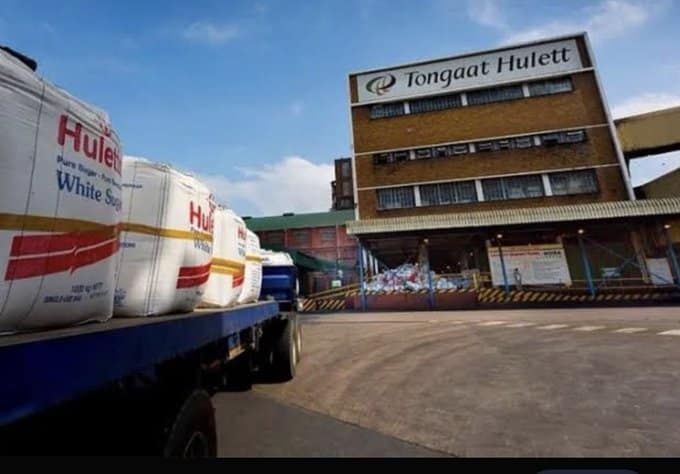
The heavy wooden doors of the KwaZulu-Natal High Court in Durban have witnessed many corporate dramas over the decades. But few have carried the weight of the case that began on Thursday morning. Inside Courtroom 6, lawyers in dark suits shuffled papers, journalists filled the public benches, and a small crowd of Tongaat Hulett workers — some in their company overalls — gathered outside, clutching handmade placards and praying for a miracle.
The future of one of South Africa’s oldest and most important sugar companies hangs in the balance as the court hears an application for the provisional liquidation of Tongaat Hulett. The company, which has been a pillar of the KwaZulu-Natal economy for 130 years, is fighting for its life. If the liquidation application succeeds, the dominoes could fall quickly: thousands of jobs lost, tens of thousands of small-scale sugarcane farmers left unpaid, and a gaping hole torn in the rural economy of the province.
“It is not just a company,” said Sibusiso Mkhize, a third-generation sugarcane farmer from the North Coast, who traveled three hours to stand outside the court. “It is our livelihood. My father grew cane for Tongaat. I grew cane for Tongaat. My son was going to do the same. If they fall, we fall with them.”
The road to ruin: How a giant stumbled
Tongaat Hulett’s story is, in many ways, the story of South African industry itself. Founded in 1892 as the Tongaat Sugar Company, it grew over more than a century into a diversified agri-processing giant, with operations in sugar, starch, animal feed, and land conversion. At its peak, the company employed over 20,000 people directly and supported an estimated 50,000 sugarcane farmers — many of them small-scale growers in rural KwaZulu-Natal.
But the fall, when it came, was spectacular and sudden.
In 2019, Tongaat Hulett shocked the market when it announced that it had discovered “material irregularities” in its financial accounts. An independent investigation later revealed that senior executives had deliberately overstated profits, manipulated asset values, and misled auditors for years. The company’s share price, which had traded above R100 a decade earlier, collapsed to near zero. The CEO and CFO were arrested, and the company was delisted from the Johannesburg Stock Exchange in 2020.
The scandal wiped out billions of rands in shareholder value and left Tongaat Hulett drowning in debt — approximately R9 billion, by some estimates. A series of business rescue practitioners were appointed, and for the past five years, the company has been operating under a precarious “living dead” status, kept afloat by bridge financing, asset sales, and the desperate hope of a restructuring.
But hope, it seems, has run out.
The liquidation application: Who is suing and why
The liquidation application before the High Court was brought by a consortium of creditors led by Wilmar Sugar, a Singapore-based agribusiness giant that was once seen as Tongaat Hulett’s potential savior. Wilmar, which had provided emergency funding to the company during its business rescue process, has now turned on its debtor, arguing that Tongaat Hulett has failed to meet repayment obligations and that continued operation is no longer viable.
“The respondent has no reasonable prospect of being rescued,” Wilmar’s legal counsel, advocate Jeremy Gauntlett SC, told the court. “It is insolvent. It is unable to pay its debts as they fall due. The only honest course is liquidation. Any further delay will only deepen the losses for creditors.”
The application is opposed by Tongaat Hulett’s business rescue practitioners, who argue that a restructuring plan is close to completion and that liquidation would be a catastrophic own goal.
“We have secured a potential investor,” said one of the practitioners, speaking outside court on condition of anonymity due to the ongoing proceedings. “A credible, well-capitalized consortium is ready to inject fresh funding. But they will not do so if the company is liquidated. We are asking the court for time. Just a little more time.”
The court has not yet named the potential investor. Sources familiar with the negotiations have told local media that it is a consortium comprising a Middle Eastern sovereign wealth fund and a South African black-owned investment house. Neither party has confirmed or denied the reports.
The human cost: ‘My children will go hungry’
While lawyers argue over balance sheets and legal technicalities, the human cost of liquidation is already being felt — and feared.
Tongaat Hulett directly employs approximately 4,500 workers in South Africa, the majority of them in KwaZulu-Natal. But the indirect employment footprint is far larger. The company purchases sugarcane from an estimated 30,000 small-scale growers — many of whom are subsistence farmers for whom the sugar harvest is the only source of cash income.
“I deliver my cane to the Tongaat mill in Gledhow,” said Thandiwe Zuma, 52, a grower from Stanger. “If that mill closes, where do I go? There is no other buyer. The cane will rot in the fields. My children will go hungry. I will lose everything.”
The South African Sugar Association has warned that a Tongaat Hulett liquidation would destabilize the entire sugar value chain in the province, potentially triggering a cascade of closures among smaller mills and suppliers.
“Sugar is not just a commodity in KwaZulu-Natal. It is a way of life,” said SASA executive director Trix Trikam. “Entire towns — Gledhow, Amatikulu, Darnall — were built around Tongaat’s mills. If those mills close, those towns will die. This is not an exaggeration. This is economic reality.”
The political dimension: A government caught between rescue and reform
The Tongaat Hulett crisis has landed on the desk of the South African government at an awkward time. The Department of Trade, Industry and Competition (DTIC) has been pushing for a restructuring of the sugar industry for years, arguing that it is inefficient, protected by high tariffs, and in need of consolidation. But the government has also been desperate to avoid mass job losses in an election year.
President Cyril Ramaphosa’s administration has been accused of dragging its feet on Tongaat Hulett, offering vague assurances but no concrete financial support. In December 2025, the government approved a R500 million loan guarantee facility for the sugar industry — but Tongaat Hulett’s business rescue practitioners say the funds have not materialized.
“We have been told to be patient,” said one practitioner. “But patience has a price. Our creditors are not patient. Our workers are not patient. The court is not patient. We need action, not promises.”
The ANC’s alliance partner, the South African Communist Party (SACP), has called for the nationalization of Tongaat Hulett’s assets. “This is a strategic industry,” SACP general secretary Blade Nzimande said in a statement. “It cannot be allowed to fail because of the greed of a few corrupt executives. The state must step in. It must take control. It must protect the workers.”
The Democratic Alliance (DA) has rejected that approach, arguing that nationalization would be “disastrous” and that the market should be allowed to take its course. “Tongaat Hulett failed because of fraud and mismanagement,” said DA shadow minister of trade Dean Macpherson. “The answer is not more state intervention. The answer is accountability for the criminals who destroyed the company — and a restructuring that attracts private capital.”
The courtroom drama: Arguments and counterarguments
Inside Courtroom 6, the legal battle has been fierce and technical. Wilmar’s legal team has presented a mountain of evidence — audited financial statements, creditor claims, and expert reports — to argue that Tongaat Hulett is hopelessly insolvent.
“The company has negative equity of over R4 billion,” Gauntlett told the court. “It has no realistic prospect of generating sufficient cash flow to service its debt. The business rescue plan, which has been promised for three years, does not exist. It is a phantom. A fiction. A delaying tactic.”
Tongaat Hulett’s legal team, led by advocate Isabel Goodman SC, has pushed back forcefully, arguing that the business rescue process is complex and that the company has made significant progress in reducing its debt burden through asset sales, including the disposal of its starch division and parts of its land portfolio.
“The applicant asks this court to pull the plug on a patient that is showing signs of recovery,” Goodman argued. “That is not justice. That is not commercial sense. That is sabotage. We ask for three months. Three months to finalize the restructuring. Three months to secure the investment. Three months to save 4,500 direct jobs and tens of thousands of indirect livelihoods.”
Judge Phillip Nkosi, who is presiding over the application, listened intently, occasionally taking notes. He has not yet indicated when he will deliver a ruling. Legal observers expect a decision within two weeks, though the complexity of the matter could see it extended.
“The judge is in a very difficult position,” said legal analyst Nthabiseng Mokoena, who was in court for the proceedings. “If he grants liquidation, he will be blamed for the destruction of a historic company and the loss of tens of thousands of jobs. If he refuses, and the company collapses later with even greater losses, he will be blamed for that too. There is no easy path here.”
The view from the ground: ‘We are praying’
Outside the court, the mood has been a mixture of anxiety and desperate hope. Workers from Tongaat Hulett’s mills have organized a rotating prayer vigil, with different groups coming and going throughout the day.
“We are not here to protest,” said Nhlanhla Cele, a shop steward from the Gledhow mill. “We are here to pray. We are here to show the judge that we exist. That we are real people. That our lives depend on this decision. He must look out of his window and see us. He must remember who he is deciding for.”
Cele has worked at the Gledhow mill for 18 years. He has three children. His wife is a domestic worker. His family’s entire financial future rests on the mill remaining open.
“I don’t understand all the legal talk,” he admitted. “I don’t know what ‘provisional liquidation’ means. But I know what a closed gate looks like. I know what an empty pocket feels like. I am scared. We are all scared.”
A history of broken promises
The Tongaat Hulett saga is not just a story of corporate fraud and financial mismanagement. It is also a story of broken promises — to workers, to farmers, to communities.
When the company entered business rescue in 2019, the practitioners promised a swift restructuring that would preserve jobs and protect small-scale growers. Five years later, those promises have not been kept. The debt has been reduced, but not eliminated. The investor has been identified, but not confirmed. The restructuring plan has been drafted, but not finalized.
“There has been a lot of talk and very little action,” said Mkhize, the sugarcane farmer. “Every month, they say ‘next month.’ Every year, they say ‘next year.’ We are tired of waiting. We need a decision. Even a bad decision is better than no decision. At least then we can plan.”
What liquidation would mean: A grim picture
If the court grants the application for provisional liquidation, the immediate consequences would be severe:
- Mills would close – Tongaat Hulett’s four sugar mills (Maidstone, Gledhow, Amatikulu, and Darnall) would stop crushing. Sugar cane deliveries would cease.
- Workers would be laid off – Approximately 4,500 direct employees would lose their jobs immediately. Retrenchment packages, if any, would be paid from the proceeds of asset sales — a process that could take years.
- Farmers would not be paid – Tens of thousands of small-scale sugarcane growers would receive nothing for cane already delivered. Many would face bankruptcy.
- Assets would be sold – The liquidator would sell Tongaat Hulett’s land, mills, equipment, and other assets to pay creditors. The sugar industry in KwaZulu-Natal would be permanently reduced.
- Towns would suffer – Communities built around the mills would lose their economic anchors. Local businesses would close. Property values would collapse. Crime and social distress would likely rise.
“That is not a prediction,” said economist Dawie Roodt. “That is a description of what happens when a major employer collapses in a rural area. We have seen it in the mining industry. We have seen it in the textile industry. We will see it here if liquidation happens.”
A possible lifeline: The unknown investor
The only thing standing between liquidation and survival — according to Tongaat Hulett’s business rescue practitioners — is the unidentified investor. The consortium, which the practitioners say includes a major international food and beverage company, has reportedly conducted due diligence and is ready to inject R2.5 billion in exchange for a controlling stake in the restructured company.
But the investor has conditions. Among them: the completion of a debt restructuring agreement with creditors, the resolution of outstanding legal claims against former executives, and the approval of the competition authorities. None of these conditions has been fully met.
“The investor is real,” said a source close to the negotiations. “But they are not a charity. They will not throw good money after bad. They need certainty. The court case has created uncertainty. That is the paradox: the liquidation application is making the very rescue it would make impossible less likely.”
The clock ticks
As the sun set over Durban on Thursday evening, the workers outside the court began to disperse. Some headed to the taxi rank. Others walked toward the city center, their heads down. A few remained, lighting candles on the pavement.
“We will be back tomorrow,” said Cele, the shop steward. “And the day after. And every day until the judge speaks. We are not going anywhere. This is our fight. This is our future.”
Inside the courthouse, the lawyers packed their briefcases. Judge Nkosi retired to his chambers to reflect on the arguments. The decision — whatever it is — will shape the lives of hundreds of thousands of people.
Tongaat Hulett has survived world wars, droughts, apartheid sanctions, and economic crises. But it may not survive the next few weeks. The sugar giant is on the brink. And the only question now is whether it will be pulled back — or pushed over the edge.
For the farmers, the workers, and the communities of KwaZulu-Natal, the answer cannot come soon enough.
About The Author