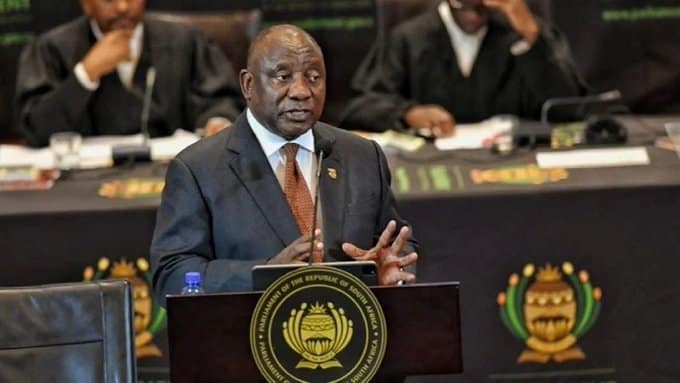
The stage is set for what political analysts are calling the most consequential State of the Nation Address (SONA) in a decade. As President Cyril Ramaphosa prepares to ascend the parliamentary podium, he does so not merely as the head of a ruling party, but as the principal navigator of an unprecedented, unwieldy, and internally fractious Government of National Unity (GNU). With the 2026 local government elections looming on the horizon, Thursday’s address is less a routine report and more a high-stakes political survival map that will test the very cohesion of the GNU and define the electoral battlefield.
“The SONA arrives at a moment of profound political inflection,” warns Lwazi Somya, Senior Researcher at the Southern African Liaison Office. “We are no longer in the realm of single-party dominance. The President must speak to a nation deeply skeptical of the GNU’s functionality, to a mosaic of coalition partners with diverging agendas, and to an electorate that will use the local elections to deliver a raw, street-level verdict on this entire experiment in shared power.”
The GNU’s Fraught Balancing Act
Forged in the aftermath of the ANC’s loss of its national majority, the GNU has been a tenuous marriage of convenience. While it has averted immediate governmental paralysis, its first months have been characterized by public spats over policy, fraught cabinet compromises, and a palpable tension between collaborative governance and pre-election posturing. Key partners like the Democratic Alliance (DA) and the Inkatha Freedom Party (IFP) are under intense pressure from their own bases to demonstrate tangible wins and maintain distinct identities ahead of the polls.
“President Ramaphosa’s core challenge is to deliver a speech that is both unifying and directional,” explains political analyst Rebaone Mothibe. “He must present a narrative of GNU success—a ‘proof of concept’—while somehow satisfying the ideological and practical demands of the DA on issues like the role of the state, and those of the EFF and others on accelerated social welfare. It is an almost impossible rhetorical tightrope.”
Local Elections: The Ultimate Stress Test
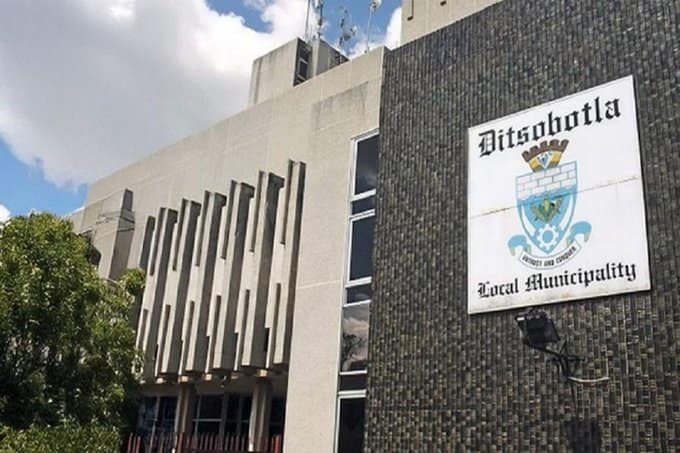
The 2026 local elections fundamentally alter the SONA’s calculus. Municipalities are where service delivery fails are most visceral—potholes, water cuts, crumbling infrastructure, and corruption. Opposition parties within the GNU are already crafting campaigns that distance themselves from national failures while claiming credit for any successes.
“SONA will be picked apart line by line for municipal ammunition,” says Somya. “If the President announces a major new infrastructure fund, mayors and councilors will scramble to claim it as their victory in coalition. If he is vague on load-shedding, opponents will frame it as a GNU failure. This address is the opening salvo of the local election campaign.”
Key Pressure Points on the Podium
Analysts identify several non-negotiable pressure points the President must address:
- The Energy End-Game: Concrete, believable timelines for ending rotational load-shedding and a clear plan for the future energy mix that reconciles the GNU partners’ differing views on renewables, gas, and nuclear.
- The Jobs Crisis: Beyond rhetoric, specific, measurable interventions for youth employment. Expect scrutiny on the continued viability of the Presidential Employment Stimulus and potential clashes over labour market reforms.
- Coalition Governance Mechanism: A firm proposal to institutionalize and depoliticize GNU functioning at all levels of government, a direct response to the chaotic coalitions seen in metros like Johannesburg and Ekurhuleni.
- Crime and Corruption: A hardline stance that goes beyond established units, offering a GNU-unified strategy to restore state authority and integrity, a key demand of partners like the DA.
The Risks and the Rewards
The risks for Ramaphosa are twofold. A speech deemed too conciliatory and vague will be painted as leadership weakness, emboldening both internal ANC critics and external opponents like the MK Party and EFF. A speech too partisan or dismissive of GNU partners could trigger immediate public fractures, jeopardizing the stability of his government months before an election.
Conversely, a successful SONA—one that projects command, announces concrete, mutually-agreed GNU programs, and frames the coalition as a strength rather than a compromise—could recalibrate the political narrative. It could provide a unified platform for GNU-aligned parties to contest the locals, presenting a front of stability versus the perceived chaos of alternative factions.
As the red carpet is rolled out and the guards of honour take their positions, the pomp and ceremony will belie the intense political warfare simmering beneath. President Ramaphosa’s task is not just to describe the state of the nation, but to defend the state of the union—his GNU—and convince a weary public that this complex, quarrelmy coalition is capable of governing, not just surviving. The 2026 local election campaign begins in earnest the moment he utters his first word.
About The Author