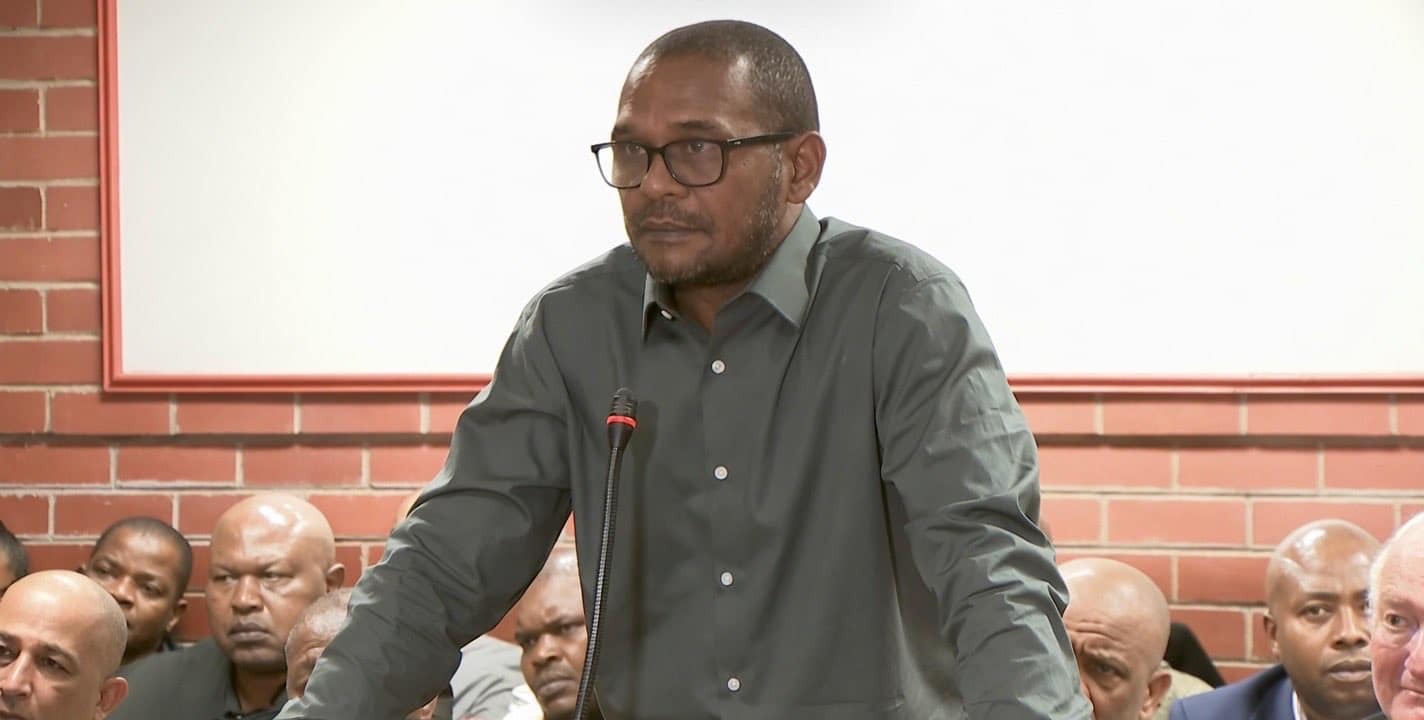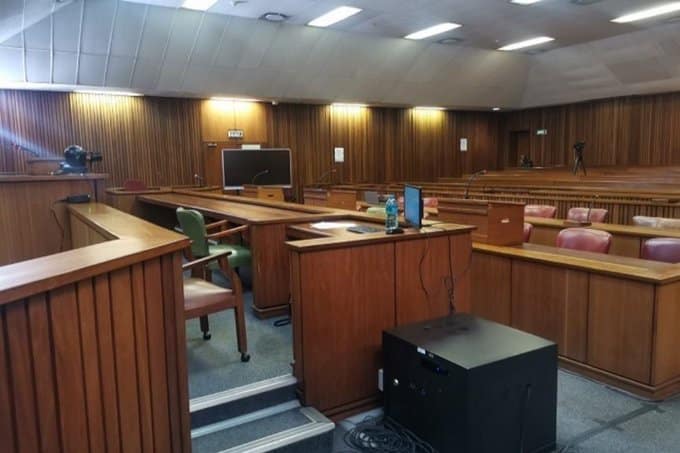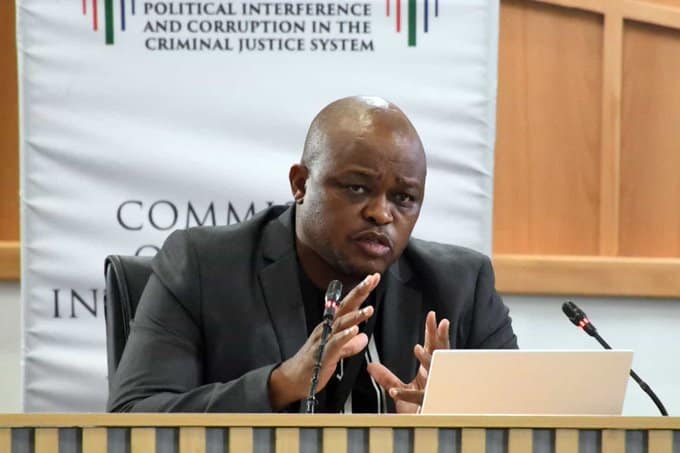
The Madlanga Commission of Inquiry, already a crucible of explosive testimony and political intrigue, is about to enter a new and potentially decisive phase. On one side stands the commission’s chief evidence leader, Advocate Matthew Chaskalson SC, a legal heavyweight with a lineage that traces back to South Africa’s constitutional founding. On the other side stands North West businessman Brown Mogotsi, a controversial figure whose name has surfaced repeatedly in allegations of corruption, tender manipulation, and political influence-peddling.
And at the center of the storm is a single question: Can Chaskalson be trusted to lead the evidence against Mogotsi impartially?
On 15 May 2026, the commission will hear Mogotsi’s formal application for the recusal of Advocate Chaskalson SC. The application, filed on Monday and confirmed by commission secretary Nthabiseng Mokoena, alleges that Chaskalson has demonstrated bias against Mogotsi, has prejudged the businessman’s guilt, and cannot be relied upon to present the evidence fairly.
It is a high-risk gambit. If successful, the application would force Chaskalson to step aside—potentially derailing months of work, delaying proceedings indefinitely, and casting a shadow over the commission’s credibility. If unsuccessful, Mogotsi will have exposed his legal strategy, revealed his vulnerabilities, and handed the commission a moral victory.
Either way, the hearing on 15 May promises to be one of the most dramatic moments in the commission’s already turbulent life.
“This is not a routine application,” said legal analyst and constitutional law expert Professor Mpho Mthembu. “This is a direct attack on the integrity of the commission’s legal leadership. And it comes at a critical juncture, just as the commission was preparing to hear potentially devastating evidence against Mogotsi. The timing is not accidental.”
The Commission: A Brief Refresher
The Madlanga Commission of Inquiry, chaired by retired Judge President Mogoeng Madlanga, was established in late 2025 to investigate allegations of widespread corruption, maladministration, and state capture in the North West province. Its mandate is sweeping: to examine the awarding of tenders, the management of public funds, and the conduct of provincial officials, politicians, and businesspeople connected to them.
The commission has become a lightning rod for controversy. Witnesses have testified to:
- The looting of millions from the North West’s health department through inflated contracts for personal protective equipment (PPE) during the COVID-19 pandemic.
- The manipulation of agricultural tenders to benefit companies linked to provincial politicians.
- The systematic hollowing out of the provincial roads agency, with funds diverted to shell companies.
- The intimidation and silencing of whistleblowers who tried to expose the rot.
Several high-profile figures have been called to testify, including former Premier Supra Mahumapelo, current MECs, and a network of businesspeople alleged to have acted as conduits for corrupt payments.
At the center of that network, according to testimony already heard, is Brown Mogotsi.
The Man at the Center: Who Is Brown Mogotsi?
Brown Mogotsi is not a household name in the way that Mahumapelo or other politicians are. But within the corridors of power in Mahikeng, his name carries weight—and controversy.
Mogotsi is a businessman with interests in construction, logistics, and agriculture. He has been described by witnesses as a “fixer”—someone who could connect private capital to public contracts, for a fee. His companies have won tenders worth hundreds of millions of rand from the North West provincial government over the past decade.
He has also been accused, in testimony and in media reports, of:
- Undue influence over senior provincial officials, including the awarding of tenders to his companies without competitive bidding.
- Money laundering through a web of shell companies and front entities.
- Intimidation of witnesses, including threats against former employees who agreed to cooperate with the commission.
Mogotsi has consistently denied all allegations. Through his lawyers, he has described the commission’s proceedings as a “witch hunt” and a “political vendetta” orchestrated by rivals within the provincial government.
“I have done nothing wrong,” Mogotsi said in a brief statement outside the commission’s Pretoria hearing venue last month. “I am a legitimate businessman. I have been dragged through the mud by people who want to destroy me. The truth will come out.”
That truth, Mogotsi now argues, cannot come out while Advocate Chaskalson remains in charge of the evidence.
The Target: Who Is Advocate Matthew Chaskalson SC?
To understand why Mogotsi is targeting Chaskalson, one must understand who Chaskalson is—and what he represents.
Matthew Chaskalson SC is not an ordinary advocate. He is the son of Arthur Chaskalson, the first Chief Justice of South Africa’s Constitutional Court and a towering figure in the anti-apartheid legal movement. The Chaskalson name is synonymous with the struggle for constitutional democracy, human rights, and the rule of law.
Matthew Chaskalson has carved his own distinguished career. He took silk (became a Senior Counsel) in 2010 and has appeared in some of South Africa’s most significant cases, including matters involving state capture, environmental justice, and corporate accountability. He is known for his rigorous preparation, his sharp cross-examination, and his unwavering commitment to the principle that no one is above the law.
His appointment as chief evidence leader at the Madlanga Commission was widely praised by legal observers as a signal that the commission intended to take its work seriously.
“Matthew Chaskalson is not a man who can be pushed around,” said legal commentator Rebecca Masemola. “He is thorough. He is fearless. And he has no political allegiance to anyone in the North West. That is precisely why he was chosen. And that is precisely why Mogotsi wants him gone.”
The Allegations: Why Mogotsi Wants Chaskalson Recused
Mogotsi’s recusal application, which runs to 47 pages, makes several interrelated arguments.
1. Prejudgment of Guilt
The application alleges that Chaskalson has already concluded that Mogotsi is guilty of corruption and has structured the commission’s investigation accordingly. As evidence, Mogotsi’s lawyers point to:
- Lines of questioning during hearings that Mogotsi’s team describes as “hostile” and “presumptive of guilt.”
- Media statements attributed to sources close to the commission (though not directly to Chaskalson) that refer to Mogotsi as a “central figure” in corruption networks.
- The sequencing of witnesses, which Mogotsi’s team argues was designed to build a narrative of guilt before Mogotsi had a chance to present his side.
“An evidence leader must be impartial,” the application reads. “Advocate Chaskalson has not been impartial. He has acted as an accuser, a prosecutor, and a judge. That is not his role. And it renders him unfit to continue.”
2. Personal Animosity
The application goes further, alleging that Chaskalson harbors personal animosity toward Mogotsi rooted in a previous legal matter. According to the application, Chaskalson represented a party in a commercial dispute against one of Mogotsi’s companies several years ago. While the matter was settled, Mogotsi’s team argues that Chaskalson “carried forward a grudge” that now infects his conduct at the commission.
Chaskalson has not responded publicly to this allegation. But sources close to him have dismissed it as “frivolous” and “unsubstantiated.”
“Matthew Chaskalson has acted against hundreds of clients over decades,” one source said. “He does not carry grudges. He does his job. This is a desperate attempt to derail the commission.”
3. Procedural Irregularities
Finally, the application alleges a range of procedural irregularities, including:
- Failure to disclose certain documents to Mogotsi’s legal team in a timely manner.
- Leading questions posed to hostile witnesses that Mogotsi’s team argues were designed to elicit inadmissible evidence.
- Ex parte communications (communications with the commissioner without the presence of other parties) that Mogotsi’s team argues prejudiced their client.
“The cumulative effect of these irregularities,” the application concludes, “is that Mr Mogotsi cannot receive a fair hearing while Advocate Chaskalson remains as chief evidence leader. His recusal is the only remedy.”
The Legal Standard: When Must an Evidence Leader Recuse Themselves?
Recusal applications are relatively common in judicial proceedings but less common in commissions of inquiry, where the rules are more flexible and the stakes are different.
The legal test for recusal was established in a series of Constitutional Court cases, most notably President of the Republic of South Africa v South African Rugby Football Union (1999). The test is whether a reasonable, objective, and informed person would, on the correct facts, conclude that there is a reasonable apprehension of bias.
Crucially, the test does not require proof of actual bias—only a reasonable apprehension that bias might exist.
“The threshold is not high,” said Professor Mthembu. “If Mogotsi’s legal team can show that a reasonable person, knowing all the facts, might doubt Chaskalson’s impartiality, then recusal is required. The commissioner does not have to find that Chaskalson is actually biased. Only that bias could reasonably be perceived.”
However, Mogotsi faces a significant hurdle: evidence leaders at commissions are not judges. Their role is inherently adversarial. They are expected to test evidence, challenge witnesses, and build a case. That does not, by itself, constitute bias.
“An evidence leader is not a neutral arbiter,” said Advocate Nthabiseng Khoza, a former commissioner at the Public Protector’s office. “They are an advocate for the evidence. They are supposed to be vigorous. Mogotsi’s team will have to show that Chaskalson crossed the line from vigorous advocacy to prejudgment. That is a much harder case to make.”
The Timing: A Strategic Delay?
The recusal application has been filed just as the commission was preparing to hear testimony from several witnesses expected to implicate Mogotsi directly. Those hearings, scheduled for late May, will now likely be postponed pending the outcome of the recusal application.
Critics have accused Mogotsi of using the application as a delaying tactic—a way to postpone the inevitable and perhaps run down the clock.
“This is a classic strategy,” said legal analyst Rebecca Masemola. “You cannot stop the evidence, but you can slow it down. You can file procedural applications. You can challenge the legal team. You can seek recusals. Each delay buys time. Time to negotiate. Time to intimidate witnesses. Time to hope that public attention wanders elsewhere.”
Mogotsi’s legal team has rejected this characterization. “Our client is entitled to a fair hearing,” said his lead attorney, who declined to be named. “Filing a recusal application is not a delay tactic. It is a fundamental right. If the commission had acted fairly from the beginning, we would not need to be here.”
Commissioner Madlanga will now have to balance two competing imperatives: the need for expeditious proceedings and the right of a subject to a fair hearing. How he navigates that balance will define his legacy.
The Political Fallout: Who Wins, Who Loses?
The recusal battle is not merely legal. It is deeply political.
If Mogotsi succeeds, and Chaskalson is recused, the commission will be thrown into chaos. A new chief evidence leader will need to be appointed, briefed, and brought up to speed—a process that could take months. Some witnesses may lose confidence in the commission. Others may see an opportunity to recant or revise their testimony.
For Mogotsi, a successful recusal would be a major victory—a sign that he can push back against the commission’s momentum. For the North West political establishment, which many believe Mogotsi represents, it would be a moment of vindication.
If Mogotsi fails, and Chaskalson remains, the commission will proceed with renewed authority. The recusal application will be dismissed as frivolous; Mogotsi will be seen as having overplayed his hand. The evidence will continue to unfold, likely with even greater public attention.
For the commission’s credibility, a dismissal is essential. Every day that Chaskalson’s impartiality is questioned, the commission’s findings are under a cloud. Commissioner Madlanga will want to resolve this quickly and decisively.
“The commissioner cannot afford to let this linger,” said Professor Mthembu. “He must rule firmly, with clear reasoning, and move on. Otherwise, the commission risks being seen as paralyzed by procedural battles while the substantive work stalls.”
The Witnesses: Watching from the Shadows
While the legal teams prepare their arguments, the witnesses who have already testified—and those who are yet to appear—are watching closely.
Some are fearful. If Mogotsi can successfully challenge the commission’s leadership, what does that mean for whistleblowers who have risked their careers and their safety to speak out?
“I am terrified,” said one witness who testified anonymously about Mogotsi’s alleged influence over provincial tenders. “I thought the commission would protect me. But if the people running the commission are pushed aside, what happens to us? We become targets.”
Others are defiant. “Let them try to recuse Chaskalson,” said another witness. “It won’t work. The truth is the truth. You cannot recuse the truth.”
The commission has a witness protection program, but its effectiveness has been questioned. Several witnesses have reported intimidation, including late-night phone calls and visits from unidentified individuals.
“There is a culture of fear in the North West,” said a provincial official who has followed the proceedings closely. “People are scared to talk. This recusal application will only make them more scared. If Mogotsi can get rid of Chaskalson, the message is clear: no one is safe.”
The Broader Context: Recusal in the Age of State Capture
The Madlanga Commission is not the first inquiry to face a recusal application. During the Zondo Commission into State Capture, several figures sought the recusal of then-Deputy Chief Justice Raymond Zondo. All were dismissed.
But the stakes were different then. The Zondo Commission was a national inquiry; the Madlanga Commission is provincial. The Zondo Commission had the weight of the entire judicial establishment behind it; the Madlanga Commission, while chaired by a respected former judge, operates with fewer resources and less institutional heft.
“The pattern is familiar,” said legal commentator Rebecca Masemola. “Those accused of corruption often attack the process rather than defend the substance. They claim bias. They claim procedural irregularities. They try to disqualify the legal team. It is a well-worn playbook.”
The question is whether Commissioner Madlanga will follow Judge Zondo’s example and resists the pressure.
“Zondo faced dozens of recusal applications and other procedural challenges,” Masemola noted. “He dismissed them all, kept the commission moving, and produced a report that has reshaped South African politics. Madlanga must do the same.”
What Happens on 15 May?
The recusal hearing on 15 May 2026 is expected to last two to three days. The format is likely to be as follows:
Day 1 (15 May): Mogotsi’s legal team presents its application, calling witnesses if necessary (though none are currently expected). The team will walk through the 47-page application, highlighting specific instances of alleged bias and procedural irregularity.
Day 2 (16 May, if needed): Advocate Chaskalson responds, either personally or through a representative. He is likely to argue that the application is without merit, that his conduct has been entirely proper, and that Mogotsi is attempting to derail the commission.
Day 3 (17 May, if needed): Mogotsi’s team replies. Commissioner Madlanga may ask questions of both sides. He is then expected to reserve judgment.
A ruling could come within days or weeks—though given the urgency, an expedited decision is likely.
If Madlanga rules against Mogotsi, the businessman may seek leave to appeal to the High Court. That would introduce further delays, potentially stretching for months.
If Madlanga rules in Mogotsi’s favor, the commission will need to find a new chief evidence leader—a process that could also take months.
Either way, the commission’s work will be interrupted. The only question is for how long.
The Reaction: Lawyers, Politicians, and the Public
Initial reaction to the recusal application has been sharply divided.
Legal professionals have been cautious, noting that while the application appears to be a long shot, they have not seen the full evidence. “We must wait for the hearing,” said Advocate Khoza. “The papers tell one story. The oral arguments and the evidence may tell another.”
Politicians have been more partisan. The North West ANC has praised Mogotsi’s “courage” in challenging the commission. The DA has condemned the application as “a desperate attempt to avoid accountability.” The EFF has called for the commission to be dissolved entirely and replaced with a judicial inquiry.
The public, to the extent that it is following the proceedings, appears skeptical. Social media commentary has largely dismissed the application as a delaying tactic. But there is also a current of fatigue—a sense that the commission has been dragging on for too long without visible results.
“The people of the North West are tired,” said community activist Tshepo Moloi. “We want answers. We want arrests. We want our money back. We do not care about legal squabbles between advocates and businessmen. Just get on with it.”
Epilogue: The Long Wait Until May
As the legal teams prepare their arguments and the witnesses wait in the wings, the Madlanga Commission has entered a kind of limbo. Hearings have been paused. Documents are being reviewed. And all eyes are on 15 May.
For Brown Mogotsi, the application is a gamble. If he wins, he buys time and potentially weakens the commission. If he loses, he emerges weakened, his credibility damaged, and his legal strategy exposed.
For Advocate Chaskalson, the application is an occupational hazard—a challenge that comes with the territory of leading evidence against powerful interests. He has been here before. He will likely be here again.
For Commissioner Madlanga, the application is a test of his leadership. He must rule fairly, firmly, and swiftly—without appearing to be either the ally of the accused or the puppet of the accuser.
And for the people of the North West, the application is yet another delay in a seemingly endless wait for justice.
“We have been waiting for years,” said Moloi. “What is a few more months? But at some point, the waiting must end. At some point, there must be answers. I hope 15 May brings us closer to that day.”
Until then, the commission sits. The lawyers prepare. And Brown Mogotsi waits to see whether his bold gambit will succeed—or backfire spectacularly.
About The Author