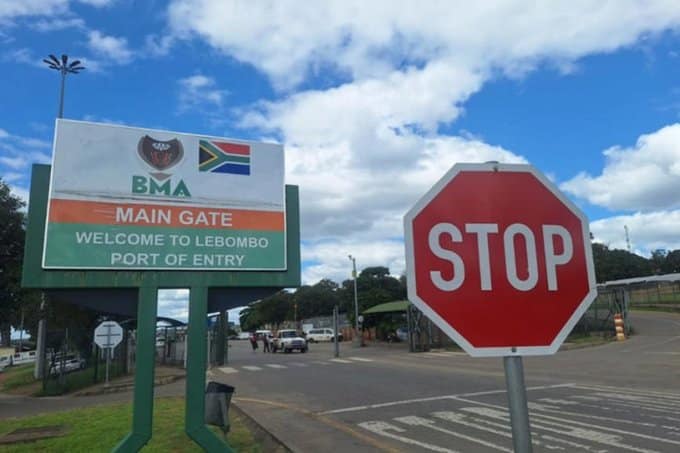
The queue at the Lebombo border post between South Africa and Mozambique is, on a bad day, a vision of purgatory. Trucks stretch for kilometers, their drivers asleep in their cabs, waiting—sometimes for 48 hours or more—to clear customs. Cars idle in the African sun, air conditioners struggling, children crying, tempers fraying. Passengers on foot weave between the stationary vehicles, hoping to reach the front before nightfall.
It is inefficient. It is undignified. And according to Home Affairs Minister Dr Leon Schreiber, it is about to become a relic of the past.
Standing before a bank of microphones at the Union Buildings in Pretoria on Wednesday, Schreiber unveiled a sweeping, ambitious, and expensive plan to transform South Africa’s border management system from a national embarrassment into a continental benchmark. The price tag? R12.5 billion. The timeline? Five years. The mechanism? Public-private partnerships (PPPs) on an unprecedented scale.
“This is the single biggest investment ever made in South Africa’s border management system,” Schreiber declared, his voice carrying the weight of a man who knows he is staking his political reputation on delivery. “We are not talking about small repairs or cosmetic upgrades. We are talking about a complete reimagining of how South Africa manages its borders—for security, for trade, and for human dignity.”
The announcement, made during a joint briefing with the Border Management Authority (BMA) and the Department of Public Works and Infrastructure, marks a dramatic escalation in the government’s efforts to modernize what many experts consider a critical but chronically neglected piece of national infrastructure.
The Six Ports: Where the Money Is Going
The R12.5 billion overhaul will focus on South Africa’s six busiest land ports of entry, which together handle more than 80% of the country’s cross-border road traffic and a significant portion of its regional trade:
| Port of Entry | Location | Border With | Current Annual Traffic |
|---|---|---|---|
| Lebombo | Mpumalanga | Mozambique | 4.5 million travelers, 500,000 trucks |
| Beitbridge | Limpopo | Zimbabwe | 5 million travelers, 600,000 trucks |
| Groblersbrug | Limpopo | Botswana | 1.8 million travelers, 150,000 trucks |
| Kopfontein | North West | Botswana | 1.5 million travelers, 120,000 trucks |
| Maseru Bridge | Free State | Lesotho | 3 million travelers, 200,000 trucks |
| Oshoek | Mpumalanga | Eswatini | 2 million travelers, 100,000 trucks |
Each of these ports will undergo a bespoke transformation, tailored to its specific traffic patterns, geographic constraints, and security challenges. But common elements across all six include:
- Expanded queuing areas for both passenger vehicles and heavy trucks, reducing the bottleneck that currently snarls traffic for kilometers.
- Modernized customs and immigration halls, with dedicated lanes for commercial traffic, passenger vehicles, buses, and pedestrians.
- Automated border control systems, including e-gates for low-risk travelers and biometric verification to combat identity fraud.
- Integrated cargo scanning facilities, using fixed and mobile X-ray units to screen freight without causing delays.
- Upgraded staff amenities, including decent ablution facilities, break rooms, and security accommodations—a recognition that border posts are workplaces for thousands of officials who currently labor in substandard conditions.
- Perimeter security enhancements, including fencing, lighting, and surveillance technology to prevent illegal crossings and smuggling.
“The current situation is unacceptable,” Schreiber said. “We have officials working in dilapidated buildings without running water. We have travelers waiting for days in conditions that are a health hazard. We have smugglers exploiting our porous borders because we lack the basic infrastructure to stop them. All of that ends now.”
The Mechanism: Public-Private Partnerships Explained
The most striking aspect of Schreiber’s announcement—beyond the sheer scale of the investment—is the funding mechanism. The government is not paying for this overhaul out of the fiscus. It cannot. There is no R12.5 billion sitting in a vault waiting to be spent.
Instead, the Department of Home Affairs will enter into long-term public-private partnerships (PPPs) with private consortiums. Under a typical PPP model, the private partner finances, designs, builds, and often operates the infrastructure, recovering its investment through user fees, availability payments, or a share of revenue generated at the border.
In the case of South Africa’s ports of entry, the revenue streams could include:
- Portion of customs duties collected at the border (subject to legal and policy changes).
- Concession fees from commercial operators, such as duty-free shops, restaurants, and currency exchange booths.
- Service charges for premium lanes or expedited clearance (voluntary, not mandatory).
- Availability payments from government, triggered when the private partner meets agreed-upon performance metrics.
Schreiber emphasized that no traveler will be forced to pay for access. “Basic border crossing will remain free,” he said. “But for those who choose premium services—faster clearance, dedicated lanes, additional conveniences—there will be options. That is how we generate revenue to maintain and operate these facilities over the long term.”
The PPP model is not without controversy. Critics have raised concerns about:
- Privatization of a sovereign function: Borders are inherently state responsibilities. Handing operational control to private entities raises questions about accountability and democratic oversight.
- Inequitable access: If premium services improve processing times for those who can pay, will the poor be left with even slower, underfunded facilities?
- Cost overruns and contract disputes: South Africa’s track record with major infrastructure PPPs has been mixed, with notable failures in the toll roads and energy sectors.
Schreiber acknowledged these concerns but argued that the risks of inaction are far greater. “Doing nothing costs us billions in lost trade, damaged goods, and frustrated travelers every single year. The status quo is not neutral. It is actively harmful to our economy and our security. We cannot afford to wait for a perfect solution that will never come.”
The Economic Case: Why Borders Matter
For many South Africans, border posts are distant irritants—something they might encounter once a year on a trip to Mozambique or Zimbabwe, or not at all. But for the national economy, efficient borders are essential infrastructure, as vital as ports, railways, or power lines.
South Africa is the economic engine of Southern Africa. Its land borders connect it to the eight other members of the Southern African Development Community (SADC), a market of nearly 350 million people. Goods manufactured in Gauteng—cars, machinery, chemicals, processed foods—flow north and east through these ports. Raw materials—minerals, agricultural products, timber—flow south into South Africa’s industrial heartland.
When borders function well, trade thrives. When they fail, the entire regional economy suffers.
A 2023 study by the World Bank and the South African Department of Trade, Industry and Competition estimated that inefficiencies at South Africa’s land borders cost the national economy approximately R9 billion annually in:
- Delayed goods (perishable produce rotting in stationary trucks).
- Excess fuel consumption (idling engines burning diesel for hours or days).
- Demurrage charges (penalties paid by shippers for delayed return of shipping containers).
- Lost tourism revenue (visitors who choose other destinations rather than face border chaos).
“In Africa, the cost of moving goods across borders is two to three times higher than in developed regions,” said trade economist Dr Thabo Mokoena. “South Africa is the gateway to the continent. When our borders are clogged, everyone loses. A R12.5 billion investment that cuts crossing times by half would pay for itself within a few years—just in reduced delays, let alone increased trade.”
The Security Imperative: Beyond Trade and Tourism
The overhaul is not only about economics. It is also about security—a concern that has become increasingly urgent as South Africa grapples with transnational crime, smuggling, illegal migration, and terrorist threats.
South Africa’s land borders are notoriously porous. The Border Management Authority (BMA), established in 2023, has made significant strides, but it is hamstrung by outdated infrastructure, understaffing, and corruption. Smugglers move drugs, stolen vehicles, counterfeit goods, and illegal firearms across the borders with impunity. Human traffickers move victims in the opposite direction—exploited workers bound for underground economies in Johannesburg and Cape Town.
“The same inefficiencies that delay legitimate trade also create opportunities for illicit trade,” said BMA Commissioner Dr Michael Masiapato. “When trucks queue for two days, the incentive to bribe an official to jump the queue is enormous. That corruption undermines our ability to screen for contraband. A modern, efficient, well-managed border is a secure border.”
The upgraded ports will include:
- Advanced cargo scanning to detect concealed contraband without manual inspection.
- Real-time data sharing between South African authorities and their counterparts in neighboring countries.
- Biometric traveler verification to identify individuals on watchlists (terrorists, known criminals, deportees).
- Secure holding facilities for individuals detained pending further investigation or deportation.
Schreiber was blunt about the stakes. “We have seen what happens when borders are weak. We have seen the drugs that flood our communities. We have seen the victims of trafficking. We have seen the illegal guns that fuel our murder rate. This investment is not just about convenience. It is about safety. It is about sovereignty.”
The Regional Dimension: Neighbors’ Reactions
South Africa’s land borders are shared with six neighboring countries: Namibia, Botswana, Zimbabwe, Mozambique, Eswatini, and Lesotho. The success of the overhaul depends not only on South African investment but on cooperation from these partners.
Initial reactions have been cautiously positive.
“We welcome any investment that reduces congestion and improves efficiency,” said an official from Zimbabwe’s Department of Immigration, speaking on condition of anonymity. “But we also expect to be consulted. It cannot be a South African solution imposed on the rest of us. We need integrated systems that work for everyone.”
Mozambique’s Ministry of Interior issued a brief statement expressing “support for regional infrastructure development” and noting that Mozambique is also investing in upgrades on its side of the Lebombo border.
The most sensitive relationship is with Eswatini, where the Oshoek border post is a critical artery for trade and commuter traffic. Eswatini officials have privately expressed concern that South African upgrades could lead to longer queues on their side if not matched by equivalent investment.
“The challenge is that South Africa is richer than its neighbors,” said regional affairs analyst Nomsa Dlamini. “They can afford R12.5 billion. Mozambique, Zimbabwe, and Eswatini cannot. So there is a risk of imbalance—a modern, efficient South African border leading to a chaotic, congested border on the other side. That helps no one. The PPP model should include provisions for upgrading facilities on both sides.”
Schreiber acknowledged the concern. “We are in dialogue with our neighbors. We understand that a border has two sides. We are committed to regional cooperation, not unilateralism.”
The Political Landscape: Praise, Skepticism, and Opposition
Reaction to Schreiber’s announcement has fallen largely along predictable political lines, though with some surprises.
The Democratic Alliance (DA), Schreiber’s own party, has been effusive in its praise. “This is what competent governance looks like,” said DA leader John Steenhuisen. “A clear problem, a credible plan, and a commitment to delivery. Leon Schreiber is showing that Home Affairs can be a department of solutions, not just excuses.”
The African National Congress (ANC) has been more restrained, with some officials questioning the PPP model and the potential for “hidden costs” to the fiscus. “We support border modernization, but we are concerned about privatization by stealth,” said ANC spokesperson Mahlengi Bhengu-Motsiri. “The state must retain full control over its sovereign borders. We will be watching closely.”
The Economic Freedom Fighters (EFF) have condemned the plan outright. “Schreiber is selling our borders to the highest bidder,” said EFF leader Julius Malema. “This is not development. This is dispossession. We will oppose it by every means necessary.”
ActionSA has called for greater transparency. “The devil is in the details,” said ActionSA’s Herman Mashaba. “We need to see the contracts. We need to see the terms. We need to know who is bidding. South Africans have been burned by PPPs before. We cannot afford another scandal.”
Civil society has been divided. Business Unity South Africa (BUSA) has welcomed the plan, calling it “long overdue and critically necessary.” The Congress of South African Trade Unions (COSATU) has expressed reservations, warning that “private profit should not come before public service.”
The Implementation Challenge: From Announcement to Opening
The gap between a grand announcement and a functioning border post is vast. Schreiber’s plan faces multiple hurdles:
1. Procurement and Contracting
The PPP process is notoriously slow and complex. The Department of Home Affairs must issue requests for qualifications, evaluate bids, negotiate contracts, and secure regulatory approvals—all before a single shovel touches the ground. Optimistic timelines suggest 12–18 months just for procurement.
2. Financing
Private capital is not charity. Consortiums will invest only if they see a reasonable return. Schreiber must convince investors that the revenue streams (customs duties, concession fees, premium service charges) are reliable and legally secure. Any political change that threatens those revenues could scare off bidders.
3. Land and Environmental Approvals
The six ports of entry are located on land owned by the state, but upgrades may require additional land acquisition, environmental impact assessments, and local community consultations. These processes can take years and are subject to legal challenges.
4. Labor Relations
Thousands of public sector workers—customs officers, immigration officials, police, BMA staff—work at these ports. Any change that affects their working conditions, job security, or roles will be subject to collective bargaining with unions. COSATU has already signaled its intent to “protect workers’ interests.”
5. Coordination with Neighbors
As noted, a one-sided upgrade is suboptimal. South Africa must negotiate agreements with six neighboring countries on issues ranging from data sharing to revenue allocation to operational coordination. These are diplomatic negotiations, not technical fixes.
6. Political Continuity
Schreiber is a minister in a coalition government. The next national election is in 2029. If the political landscape shifts, the plan could be delayed, defunded, or abandoned. Long-term infrastructure requires long-term political consensus.
“Announcing a plan is the easy part,” said infrastructure expert Dr Naledi Mofokeng. “Executing it—on time, on budget, and to specification—is the hard part. Schreiber has raised expectations very high. He now has to deliver. History is not on his side.”
The Human Element: Stories from the Border
Behind the statistics and the politics are real people—travelers, workers, and communities whose lives are shaped by the border every single day.
Sipho Dlamini, 41, truck driver: “I drive from Johannesburg to Maputo twice a week. Each trip, I lose at least one full day at Lebombo. That is time away from my family. That is money lost because I am not moving. If they fix this border, they fix my life.”
Maria Nkosi, 28, cross-border trader: “I buy clothes in Durban and sell them in Zimbabwe. Sometimes I am stuck at Beitbridge for two days. My goods get stolen. My profit disappears. I have thought about giving up. But what else can I do?”
Constable Thabo Molefe, BMA official: “I have worked at Kopfontein for six years. The building is falling apart. The toilets do not flush. The computers are from 2005. We do our best, but we are fighting with one hand tied. I want to be proud of my workplace. Right now, I am ashamed.”
Fatima Hussein, 34, traveler: “I visit my family in Lesotho three times a year. Every time, Maseru Bridge is chaos. No shade. No water. No organization. My elderly mother cannot stand for four hours. We need dignity. Is that too much to ask?”
These are the voices that Schreiber’s plan aims to answer. Whether it succeeds will be measured not in billions of rand but in hours saved, frustrations reduced, and lives improved.
The International Comparison: Learning from Others
South Africa is not the first country to overhaul its borders. Several international models offer lessons:
- Singapore: The world’s most efficient border system, combining advanced technology, strict enforcement, and seamless integration with neighboring Malaysia. Key lesson: investment must be sustained, not one-off.
- United Arab Emirates: The UAE has transformed its ports of entry into showcases of efficiency, using biometrics and AI to process travelers in seconds. Key lesson: private sector partnership can work, but the state must retain regulatory control.
- Chile: South America’s most efficient border system, built through long-term PPPs and regional coordination. Key lesson: neighbors must be brought along; unilateral upgrades create new problems.
- Rwanda: Africa’s leader in ease of cross-border trade, achieved through political will, not huge budgets. Key lesson: money helps, but policy and process matter more.
“South Africa can learn from all of these examples,” said trade facilitation expert Dr Andrew Mthembu. “But ultimately, we must design a solution that fits our unique context—our geography, our politics, our resources. There is no off-the-shelf solution.”
The Environmental Angle: Green Borders
The R12.5 billion overhaul also includes an environmental component—one that Schreiber highlighted as a demonstration of the government’s commitment to sustainability.
Upgraded ports will include:
- Solar-powered lighting and systems to reduce reliance on Eskom’s unreliable grid.
- Electric vehicle charging stations for BMA and customs fleets.
- Water recycling and rainwater harvesting to reduce pressure on local water sources.
- Low-emission truck queuing systems to reduce idling and air pollution in nearby communities.
“We cannot build 20th-century borders for a 21st-century world,” Schreiber said. “Climate change is real. Our borders must be part of the solution, not part of the problem.”
Environmental groups have welcomed the green commitments but called for greater ambition. “This is a start,” said Greenpeace Africa climate campaigner Melita Steele. “But we would like to see binding targets, not just aspirations. And we would like to see a commitment to phasing out fossil fuel infrastructure entirely over the life of the project.”
What Happens Next: The Road Ahead
Schreiber has released a detailed implementation timeline:
| Phase | Timeframe | Key Activities |
|---|---|---|
| Phase 1: Procurement | May 2026 – April 2027 | RFQ, RFP, bid evaluation, contract negotiation |
| Phase 2: Early Works | May 2027 – April 2028 | Land acquisition, environmental approvals, enabling works |
| Phase 3: Construction | May 2028 – April 2030 | Major construction at all six ports (staggered) |
| Phase 4: Commissioning | May 2030 – April 2031 | Phased opening, system testing, staff training |
| Phase 5: Full Operation | May 2031 onwards | All six ports fully upgraded and operational |
“These are ambitious timelines,” Schreiber acknowledged. “But the private sector moves faster than government. If we choose our partners well and empower them to deliver, we can meet these deadlines.”
He also announced the establishment of a Border Modernization Delivery Unit within the Department of Home Affairs, reporting directly to the Minister, with a mandate to “cut red tape, resolve disputes, and drive progress.”
“We will not allow bureaucracy to be an excuse for failure,” Schreiber said. “This is a priority. It will be treated as one.”
Epilogue: A Vision Worth Fighting For
As the press conference ended and the journalists filed out, Schreiber lingered for a moment at the podium, shuffling his notes. An aide approached to guide him to his next meeting, but he waved them away.
He looked out the window at the Union Buildings gardens, then back at the bank of microphones, now silent.
“This is not about me,” he said quietly, almost to himself. “This is about the truck driver who wants to get home to his family. The trader who wants to feed her children. The official who wants to do their job with dignity. We owe them this. We have owed them this for decades.”
He gathered his papers and walked toward the door. Outside, the Pretoria sun was setting, casting long shadows across the lawn.
The journey from announcement to opening will be long, hard, and uncertain. There will be delays. There will be cost overruns. There will be political attacks and bureaucratic obstacles. But for one afternoon, in one room in the Union Buildings, a vision was articulated—a vision of a South Africa that controls its borders, facilitates its trade, and treats its people with respect.
Now comes the hard part: making it real.
The Department of Home Affairs has launched a public consultation portal for the Border Modernization Program at www.dha.gov.za/borders. South Africans and stakeholders are invited to submit comments, concerns, and proposals by 30 June 2026. The first request for qualifications is expected to be published in July 2026.
About The Author