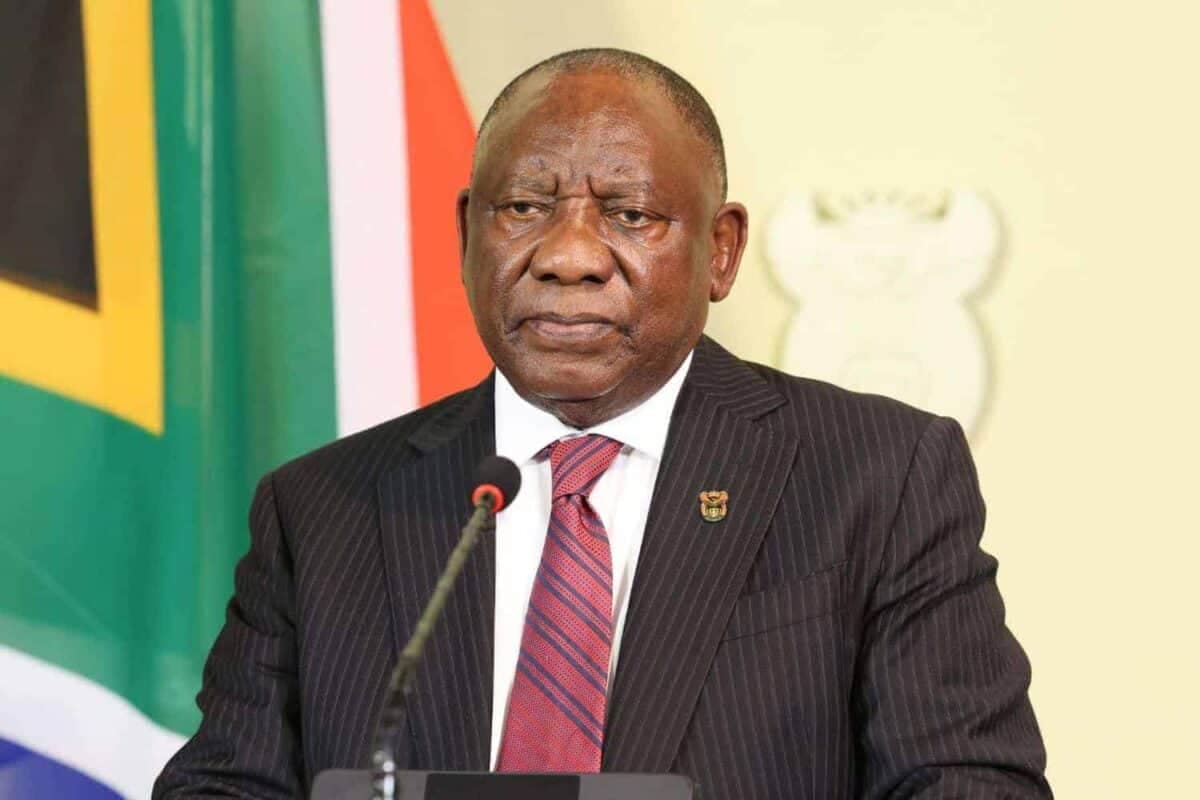
A political thunderclap has erupted within the corridors of Luthuli House, as President Cyril Ramaphosa, in a move that has stunned allies and opponents alike, has openly challenged the African National Congress’s National Executive Committee (NEC), daring them to specify a date for his resignation.
The confrontation, which took place during a tense and hastily convened NEC meeting, marks a dramatic escalation in the internal strife plaguing the ruling party. Sources close to the matter confirm that what was meant to be a routine discussion on the state of the nation and the upcoming elections quickly devolved into a high-stakes showdown.
The Gauntlet is Thrown
The meeting, described by one attendee as “the most electric and dangerous atmosphere since the recall of President Zuma,” began with veiled criticisms and murmurs about the party’s declining poll numbers and the persistent shadow of the Phala Phala farm scandal. As the discussion progressed, a faction of the NEC, emboldened by the party’s precarious position, began to openly question Ramaphosa’s viability as the party’s leader heading into the elections.
It was at this critical juncture that the President, who had been listening with a steely calm, reportedly interjected. According to three separate sources who spoke on condition of anonymity due to the sensitivity of the discussions, Ramaphosa leaned forward and addressed the room with a chilling directness.
“I am aware that there are discussions in corners, in corridors, and in the media about my position,” he is alleged to have stated. “This constant whispering, these anonymous briefings—they are a cancer to this organization. If you, the NEC, have collectively decided that I am the problem, then do not hide behind leaks and speculation. I am putting the question to you now. Tell me. Give me a date. Name the day on which you want Cyril Ramaphosa to resign.”
The room reportedly fell into a stunned silence. The challenge was not just a rejection of the pressure; it was a masterful political gambit, forcing his critics into the open.
A Calculated Risk or a Sign of Desperation?
Analysts are divided on the President’s bold strategy. Some see it as a sign of a leader at the end of his tether, frustrated by the endless internal battles and the “nine lives” of his opponents within the party. “This is not the language of a secure leader,” said political analyst Professor Steven Friedman. “This is the language of a man who feels cornered and is choosing to go on the offensive, calculating that his opponents do not have the numbers or the courage for a direct confrontation.”
Others, however, view it as a stroke of political genius. By calling the bluff of the so-called “premier league” and other anti-Ramaphosa factions, he has exposed their potential lack of a unified plan or a credible successor. “He has taken the spectre of his resignation out of the shadows and placed it on the table,” commented senior political journalist Karima Brown. “Now, his critics must either put up or shut up. Do they have the 50% plus one needed in the NEC to formally recall him? The silence that followed his challenge suggests they do not.”
The Stakes for the ANC and the Nation
The implications of this standoff are profound. For the ANC, a party already grappling with the very real possibility of losing its national majority for the first time since 1994, a public civil war at the highest level could be catastrophic. A forced resignation of Ramaphosa would trigger an immediate leadership crisis, destabilizing the government and sending shockwaves through financial markets that have viewed the President as a pillar of stability.
For Ramaphosa himself, this is the ultimate high-risk manoeuvre. If his dare is called and the NEC miraculously musters the consensus to set a date, his presidency would be effectively over, his legacy defined by an internal party coup. However, if his challenge succeeds in cowing his opponents and consolidating his support, he could emerge stronger, having demonstrated that he will not be pushed out by whispers and insinuations.
What Happens Next?
The ball is now firmly in the ANC NEC’s court. The coming days will be critical. Will a date be formally proposed, plunging the party into an unprecedented pre-election crisis? Or will the various factions, fearful of the consequences, retreat and attempt to project a facade of unity behind Ramaphosa?
One thing is certain: the President has dramatically rewritten the script. He is no longer passively waiting for the axe to fall. By daring his party to name the day, Cyril Ramaphosa has chosen to fight, and the future of South Africa’s political landscape now hangs in the balance of how the ANC responds to his audacious challenge.
About The Author