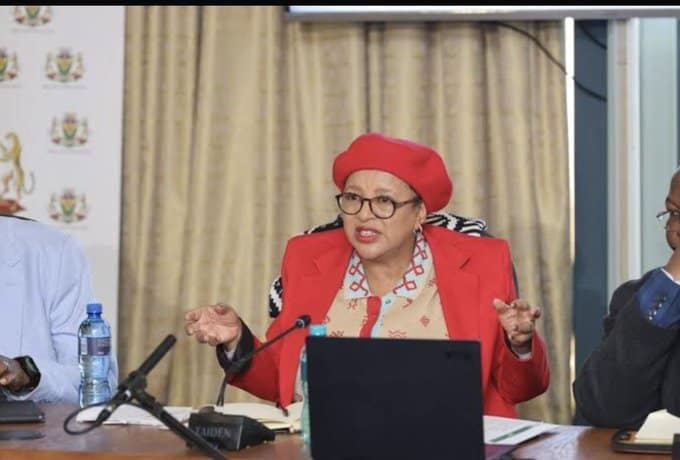
The Free State Provincial Government has successfully concluded a strategic international working mission to the Republic of Italy, led by Premier MaQueen Letsoha-Mathae, in a concerted effort to unlock new investment, expand tourism opportunities, deepen agricultural partnerships, and advance skills development for the province. The week-long mission, which concluded on Monday, 11 May 2026, has been hailed by the Premier’s office as a “transformative milestone” in positioning the Free State as a competitive destination for European trade and collaboration.
The delegation, which included MECs for Economic Development, Agriculture, and Education, along with a contingent of Free State-based business leaders and agricultural exporters, held a series of high-level meetings in Rome, Milan, and Turin. The itinerary included bilateral talks with Italian government officials, site visits to world-renowned agricultural cooperatives and manufacturing hubs, and investment roundtables with Italian business chambers.
“This mission was not a photo opportunity,” Premier Letsoha-Mathae said during a press briefing at the OR Tambo International Airport upon her return. “We went to Italy with a clear mandate: to bring tangible opportunities back to the people of the Free State. I am proud to say that we have signed preliminary agreements in agriculture, secured commitments for tourism development, opened doors for our students and workers, and laid the groundwork for Italian investment in our province. This is what proactive governance looks like.”
Agriculture: A Growing Partnership with a European Powerhouse
Agriculture emerged as the centerpiece of the mission. The Free State, often called South Africa’s breadbasket, produces over 30% of the country’s maize, along with significant volumes of wheat, sunflowers, sorghum, and livestock. Italy, meanwhile, is a global leader in value-added agri-processing, wine production, and sustainable farming technologies.
The delegation signed a Memorandum of Understanding (MoU) with Confagricoltura, Italy’s largest agricultural association, to explore joint ventures in precision farming, drought-resistant crop research, and shared supply chains for export to European markets. Italian firms have expressed particular interest in Free State’s organic grain production and potential for high-value exports such as olives, nuts, and dried fruits.
“We have soil that can feed nations, but we need technology and market access to reach our full potential,” said Free State MEC for Agriculture and Rural Development. “Italy brings both. This agreement means Free State farmers will have direct technical support from Italian agronomists and access to EU distribution networks that traditionally favored North African and Eastern European producers. That is a game-changer.”
In a separate development, an Italian consortium specializing in cheese production has committed to conducting a feasibility study for a dairy processing plant in the Thabo Mofutsanyane District Municipality, which could create hundreds of jobs and provide a stable market for local small-scale dairy farmers.
Tourism: Showcasing the Free State’s Hidden Gems
Tourism was another major focus. While Italy attracts millions of visitors annually to its historic cities and coastlines, the Free State delegation made the case that the province offers something uniquely different: wide-open spaces, adventure tourism, paleontological treasures, and authentic cultural experiences.
The Premier’s team met with representatives of the Italian Tour Operators Association and several boutique travel agencies specializing in “slow tourism” and eco-travel. The result was a commitment to include the Free State in upcoming Italian travel brochures targeting the 2027 European travel season, with specific emphasis on:
- The Vredefort Dome – the world’s largest and oldest meteorite impact site and a UNESCO World Heritage Site.
- The Golden Gate Highlands National Park, known for its striking sandstone formations and San rock art.
- The Battlefields Route, which includes sites from the Anglo-Boer War and Basotho history.
- The Maluti Route, offering hiking, horse-riding, and cultural village experiences.
“The average Italian tourist has heard of Cape Town and Kruger, but not the Free State,” said the MEC for Economic Development and Tourism. “We changed that. We showed them images of our landscapes, our star-filled skies, our dinosaur fossils in Clarens. By the end of our presentation, two tour operators were already sketching draft itineraries. That is success.”
Additionally, talks are underway for a direct code-share arrangement between an Italian carrier and South African Airways to offer package deals combining Italian vacations with Free State extensions – a first for the province.
Skills Development: Investing in the Next Generation
The Premier has long argued that investment without skills is unsustainable. Accordingly, the mission included a strong skills development component. The Free State delegation met with representatives of the Italian Ministry of Education and several vocational training institutes, including the prestigious ITS Academy for Agrifood in Turin.
The outcome was a preliminary agreement to establish an exchange program for Free State students and technical college lecturers in the fields of:
- Advanced agri-processing and food technology.
- Renewable energy installation and maintenance.
- Tourism and hospitality management.
- Precision manufacturing and engineering.
Under the proposed program, up to 50 Free State residents per year could receive three-to-six-month training placements in Italy, with Italian experts conducting return workshops in the Free State. The Italian government has signaled its willingness to co-fund the initiative through its Mattei Plan for African development.
“Our young people need more than textbooks. They need hands-on experience with world-class systems,” Premier Letsoha-Mathae explained. “Italy understands this. They have some of the best vocational training in Europe. We are not sending our children to Italy to leave them there. We are sending them to learn, to return, and to build the Free State.”
Investment Commitments: From Milan with Money
The mission also yielded concrete investment pledges. During a business roundtable in Milan, Italian investors committed to exploring opportunities in:
- A €15 million (approximately R300 million) solar energy farm in the Lejweleputswa District, proposed by an Italian renewables firm.
- A R120 million logistics hub near Harrismith, aimed at improving cold-chain storage for agricultural exports.
- Expansion of an existing Italian-owned footwear factory in Botshabelo, which could create an additional 200 jobs.
Premier Letsoha-Mathae emphasized that these are not signed checks but “serious expressions of interest with binding follow-up timelines.” The Free State government has established a dedicated investor aftercare unit to ensure that commitments are tracked and implemented.
Critics and Challenges: Not All Smooth Sailing
While the mission has been widely praised, it has also drawn some criticism. Opposition parties in the Free State legislature have questioned the cost of the trip, estimated at R4.5 million for the delegation of 18 people over seven days. The DA’s Shadow MEC for Finance called for a full breakdown of expenses, saying: “We support international investment missions, but taxpayers deserve value for money. Was there any duplication? Could some meetings have been held virtually?”
Premier Letsoha-Mathae dismissed such criticism as “cheap politicking.” She noted that the mission’s budget was approved by the provincial treasury and that similar missions have been undertaken by other provinces, including the Western Cape and KwaZulu-Natal. “You cannot build international relationships over Zoom,” she said. “You shake hands. You look people in the eye. You walk their factories. That is how trust is built. That is how deals are made.”
Another challenge lies ahead: converting memoranda into binding contracts. Italian bureaucracy, like South Africa’s, can move slowly. Some of the pledges remain contingent on feasibility studies, regulatory approvals, and financing arrangements that could take months or years to finalize.
Looking Ahead: Implementation and Follow-Up
The Premier has directed each relevant MEC to produce a 90-day implementation plan for every commitment made during the mission. A progress report will be tabled before the Free State Executive Council in August 2026, followed by a public briefing.
In addition, the Free State government has announced it will host an Italian trade delegation in Bloemfontein in October 2026 for follow-up negotiations. “We showed them our potential in Italy. Now we will show them our reality on the ground,” the Premier said.
As the sun set over Bloemfontein on Tuesday evening, Premier Letsoha-Mathae reflected on the mission’s broader significance. “For too long, the Free State was seen as a transit province – the place you drive through to get to the coast or Johannesburg. That narrative is over. We are a destination for investment, for partnership, for the future. Italy saw that. Now the world will too.”
Key Takeaways from the Free State–Italy Economic Mission
| Sector | Commitment | Estimated Value | Timeline |
|---|---|---|---|
| Agriculture | MoU with Confagricoltura for tech transfer & market access | R500 million+ potential | Q3 2026 |
| Agriculture | Feasibility study for dairy processing plant | R80 million | 12–18 months |
| Tourism | Inclusion in Italian tour operator brochures | Undisclosed | 2027 season |
| Skills | Student/lecturer exchange program | Co-funded by Italy | Pilot: Jan 2027 |
| Energy | Solar farm in Lejweleputswa | R300 million | Feasibility phase |
| Logistics | Cold-chain hub near Harrismith | R120 million | Awaiting land approval |
| Manufacturing | Expansion of footwear factory in Botshabelo | R40 million | 18 months |
For the Free State, the mission to Italy may prove to be a turning point – not in grand declarations, but in patient, persistent diplomacy. As one Italian business leader reportedly told the Premier at a closing dinner in Rome: “We have met many African delegations. Yours was different. You came with questions, not just requests. You listened. That is why we will do business with you.”
The Premier’s office has promised continued updates as each commitment moves from paper to pavement. For now, the Free State waits – and watches – with cautious optimism.
About The Author