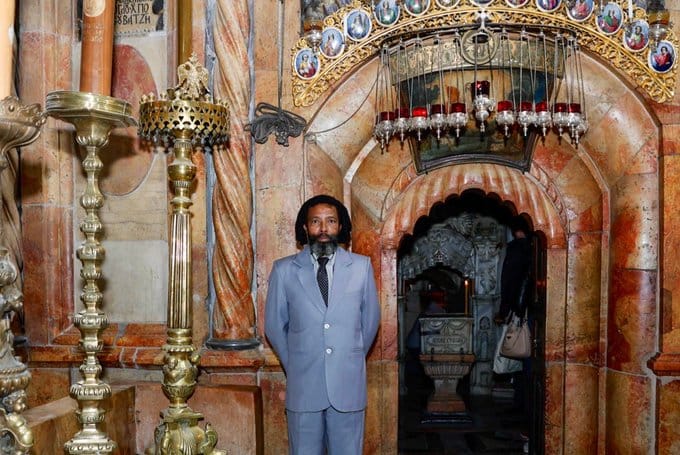
The simmering tension between traditional leadership and South Africa’s governing party over foreign policy erupted into open confrontation on Friday, as AbaThembu King Buyelekhaya Zwelibanzi Dalindyebo launched a blistering critique of the African National Congress’s (ANC) stance on Israel, immediately following his return from a personal visit to the country.
Speaking at a charged press conference in Mthatha, Eastern Cape, a visibly impassioned King Dalindyebo firmly reaffirmed his pro-Israel stance, a position that has long put him at odds with his own nation’s diplomatic posture. “In this world, and especially in South Africa, there must be someone who loves Israel,” the King declared, framing his visit as a moral and spiritual counterpoint to what he termed the country’s prevailing “anti-Israel” position.
A Journey Steeped in Controversy
The King’s trip itself, which occurred from late November into early December 2025, was a source of controversy before he even uttered a word on his return. It was undertaken against the backdrop of South Africa’s leading role in the International Court of Justice (ICJ) case accusing Israel of genocide in Gaza, and a government that has actively supported the Palestinian cause for decades. For a senior traditional leader to make a high-profile visit to Israel was seen by many within the ANC and allied groups as a profound breach of solidarity.
Details of the visit, reportedly facilitated by Christian Zionist organizations, suggest it included meetings with Israeli political figures, tours of holy sites, and engagements with communities near conflict zones, experiences the King cited as deepening his personal conviction.
The Heart of the Clash: Sovereignty, Solidarity, and Traditional Authority
King Dalindyebo’s remarks cut to the core of several intersecting debates in South African society. Firstly, they highlighted the ongoing tension between the ANC’s stated foreign policy—rooted in the historical solidarity of the anti-apartheid struggle with the Palestinian liberation movement—and the divergent views held by some influential citizens, including leaders of traditional communities often aligned with the party domestically.
Secondly, his statement, “there must be someone who loves Israel,” was interpreted as a direct challenge to a perceived foreign policy orthodoxy. His supporters have praised his “boldness” and “independent thought,” framing it as an exercise of constitutional rights to freedom of conscience and association. Some within his constituency and broader Christian communities share his theological and political sympathy for Israel.
However, critics were swift and severe. The ANC in the Eastern Cape, alongside groups like the South African Jewish Board of Deputies and Palestinian solidarity networks, issued statements condemning the trip as a reckless undermining of official state policy at a sensitive time. They accused the King of providing diplomatic cover to Israel and betraying the principles of the anti-apartheid struggle. “At a time when our government is leading the charge for justice in Gaza, this visit is a slap in the face to the Palestinian people and to our own history,” stated a coalition of civil society groups.
A History of Unroyal Opposition
This is not the first time King Dalindyebo has been a political lightning rod. Having served a prison sentence for crimes including arson and kidnapping—a conviction he maintains was politically motivated—he has historically had a fraught relationship with the ANC. His latest foray into international diplomacy reinforces his image as a maverick figure willing to defy the political establishment, even one that formally recognizes his royal status.
The incident raises pressing questions about the role of traditional leaders in South Africa’s foreign policy discourse. While they hold significant cultural and social influence, their forays into international affairs that contradict state policy create a delicate challenge for the government.
As the diplomatic reverberations from the ICJ case continue, King Dalindyebo’s controversial pilgrimage and subsequent defiance have ignited a fierce new debate. It is a debate that stretches beyond Israel and Palestine, touching on issues of national unity, the limits of traditional authority, and the very meaning of South Africa’s voice in the world. The fallout is likely to continue, not in international courts, but in the court of public opinion and within the already complex relationship between the ANC and the country’s traditional structures of power.
About The Author