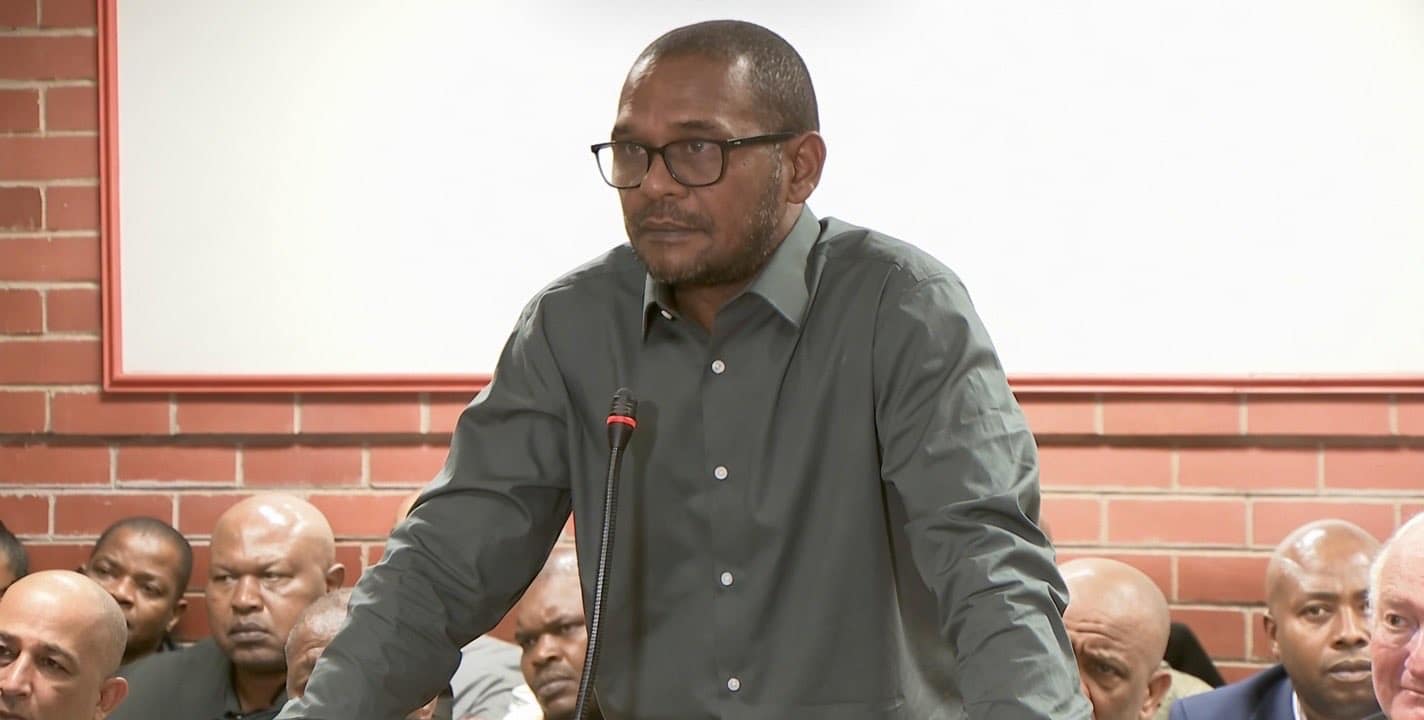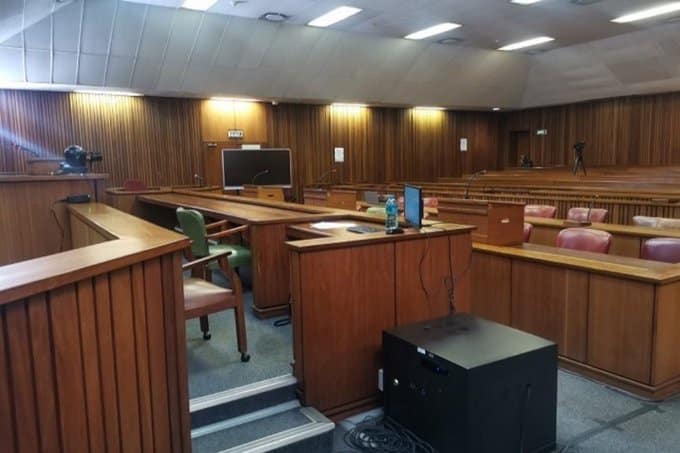
The heavy oak doors of the Pretoria Magistrate’s Court swung shut on Tuesday afternoon, but for the South African Police Service (SAPS), the damage was already done. Inside, standing in the cold fluorescent light of the dock, was one of their own: Police Captain Johannes van Rensburg, a man once entrusted with the nation’s highest-security secrets.
Van Rensburg, a veteran officer assigned to the elite Protection and Security Services (PSS) unit—the division responsible for safeguarding top government officials, dignitaries, and state assets—was granted bail of R50,000 following his arrest on serious charges of corruption, fraud, and theft.
The state did not oppose bail, but the conditions attached to his release painted a picture of a man whose reputation, and the reputation of the unit he served, now lies in tatters.
The Man Behind the Badge
For years, Captain van Rensburg was the invisible shield. The PSS unit, often referred to as the “president’s guards,” operates in the shadows. Its members are trained to detect threats, secure perimeters, and move silently through the corridors of power. They are held to a higher standard. Or so the public is told.
But according to the charge sheet—a document that has sent shockwaves through the SAPS headquarters in Pretoria—Van Rensburg allegedly used his position not to protect, but to plunder.
While the prosecution remained tight-lipped about the specific details of the evidence, sources close to the investigation revealed that the charges stem from a lengthy probe by the SAPS Anti-Corruption Unit, working in conjunction with the Hawks’ Serious Commercial Crime Investigation team.
It is alleged that Van Rensburg manipulated procurement processes, falsified documents, and siphoned state resources intended for security operations into private accounts. The “theft” charge suggests that physical assets—possibly specialized security equipment or vehicles—may also have been misappropriated.
“The irony is staggering,” said a senior police official, speaking anonymously because he was not authorized to comment on an open case. “This man was paid to stop thieves. Instead, he became one.”
The Courtroom Drama
Dressed in a dark suit rather than his police uniform—a deliberate choice, noted legal observers, to distance himself from the badge he once wore—Van Rensburg sat stone-faced in the accused’s dock. He showed little emotion as the prosecutor read out the charges: three counts of corruption, five of fraud, and two of theft.
His legal counsel, prominent defense attorney Kobus van der Merwe, argued for bail on the grounds that his client was a long-serving officer with no previous criminal record, had deep roots in the community, and posed no flight risk.
“Captain van Rensburg has served this country for over two decades,” Van der Merwe told the court. “He is not a danger to society. He will present himself for trial. He intends to clear his name.”
But Magistrate Thabo Mkhize was cautious. While granting bail of R50,000—a relatively modest sum given the seriousness of the charges—Mkhize imposed strict conditions. Van Rensburg must surrender his passport, report to his local police station twice a week, and refrain from contacting any state witnesses or tampering with evidence.
Perhaps most significantly, he was ordered to step aside from all SAPS duties immediately. His service weapon, state vehicle, and security clearance have been revoked.
“You are presumed innocent until proven guilty,” Mkhize said, peering over his reading glasses. “But you are also a police captain. The public expects more from those who enforce the law. Do not disappoint this court.”
The Fallout at Protection and Security Services
Back at the PSS unit’s headquarters in Pretoria, morale is said to be in freefall. The unit has long prided itself on being the elite of the elite—a brotherhood of officers who run toward danger while others flee. But recent years have seen a string of corruption scandals, internal suspensions, and allegations of tender fraud.
A junior officer, speaking on condition of anonymity, described the mood as “gutted.”
“We work 14-hour shifts. We miss our kids’ birthdays. We take bullets for people who don’t even say thank you. And then one of our captains is in court for stealing? It makes all of us look like criminals,” he said.
The Independent Police Investigative Directorate (IPID), which has oversight over SAPS misconduct, has reportedly opened a parallel review of the PSS unit’s procurement practices. Whistleblowers inside the unit have alleged that the rot may run deeper than a single captain.
“Van Rensburg is not the problem,” said Paul Berkowitz, a veteran corruption investigator. “He is a symptom. When you have a unit that operates in secrecy, with little civilian oversight, and handles massive budgets for ‘classified’ equipment, you create a playground for fraudsters. The question is: who else knew?”
COSATU Weighs In (A Recurring Chorus)
While the labor federation was not directly involved in this case, the Congress of South African Trade Unions (COSATU) was quick to issue a statement linking Van Rensburg’s arrest to the broader crisis of state ethics—the same crisis they had railed against just days earlier over the luxury vehicle scandal.
“First, ministers want R1.1 million cars. Now, a police captain steals from the security budget,” read a terse media release. “When will the rot end? The SAPS cannot police the public if it cannot police itself.”
What Comes Next
Van Rensburg is expected back in the Pretoria Magistrate’s Court on June 15, when the state will begin presenting its evidentiary record. If convicted on all counts, he faces up to 15 years in prison for the corruption charges alone, with additional sentences possible for fraud and theft.
His legal team has indicated they will fight the charges “vigorously,” hinting at potential procedural irregularities in the investigation.
But for now, Captain Johannes van Rensburg—former protector of the powerful—walked out of the courthouse a free man on bail. He was met by two family members who shielded his face from the waiting press cameras. He said nothing. He climbed into a private vehicle, not a state-owned one, and disappeared into the Pretoria afternoon traffic.
Behind him, he left a police service struggling to convince a skeptical public that the blue shield has not been permanently stained.
And somewhere in a SAPS evidence locker, a uniform—minus its captain—hangs silently, awaiting a verdict that could take years to arrive.
About The Author