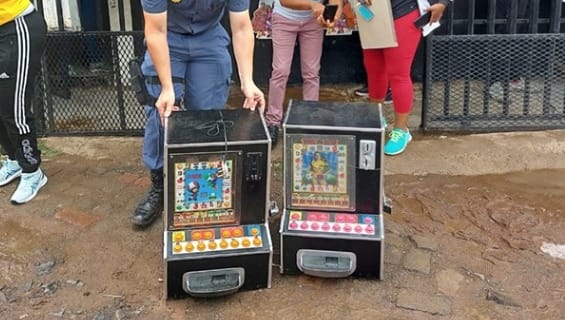
In a decisive and symbolic display of regulatory force, the North West Gambling Board (NWGB) has destroyed more than 300 illegal gambling machines seized from unlicensed establishments across the province. The mass destruction, carried out as part of an ongoing province-wide crackdown, represents one of the largest single disposals of illicit gambling equipment in the region this year and sends a clear message to operators flouting the law.
The machines—ranging from slot-style terminals to computerized gambling devices—were systematically crushed and rendered inoperable at a designated disposal site, with officials from the gambling board, the South African Police Service (SAPS), and provincial government representatives overseeing the process. The destruction followed a series of targeted raids conducted over recent months in hotspots including Mahikeng, Rustenburg, Brits, Klerksdorp, and various townships and rural areas where unlicensed gambling operations have flourished under the radar.
The Scale of the Illicit Gambling Problem
Illegal gambling machines are often found in backrooms of taverns, spaza shops, unmarked container units, and even private residences. These operations, which operate without the oversight, taxation, and consumer protections required of licensed establishments, have become a significant headache for regulators. According to the North West Gambling Board, the 300-plus machines destroyed represent only a fraction of those seized in recent years, pointing to a persistent underground economy that continues to evade enforcement.
Unlike legal gambling establishments, which are subject to strict licensing requirements, regular audits, and responsible gambling protocols, illegal operators offer no such safeguards. The machines are frequently imported unregulated, often rigged with payout rates designed to maximize operator profit while minimizing player returns. More troublingly, the proceeds from these illicit operations are often linked to broader criminal enterprises, including money laundering, loan sharking, and even the drug trade.
“These machines are not just a regulatory violation—they are a social and economic menace,” said a senior official from the North West Gambling Board who spoke on condition of being unnamed. “They operate in the shadows, preying on vulnerable community members, often in areas where unemployment is high and disposable income is low. The money that goes into these machines is money that should be staying in households, not lining the pockets of criminals.”
The Enforcement Strategy
The destruction event is the culmination of months of intelligence-driven operations. The NWGB has adopted a multi-pronged strategy that combines undercover inspections, tip-offs from community members, and collaboration with local law enforcement. In many cases, raids are timed to coincide with peak operating hours to catch offenders in the act and seize both the machines and any cash proceeds on the premises.
Operators caught running illegal gambling operations face significant penalties under the North West Gambling Act, including hefty fines and potential imprisonment. However, regulators acknowledge that enforcement alone is not enough to dismantle the illicit trade. Many operators are repeat offenders, quickly replacing seized machines with new ones sourced from unregulated suppliers.
“We are playing a game of whack-a-mole,” one enforcement official admitted. “We seize machines in one area, and within weeks, new ones pop up. That is why visible destruction is so important. It shows not only the operators but also the property owners who rent space to them that we are serious. If we find these machines on your premises, they will be crushed, and you will face consequences.”
Community Impact and Social Concerns
Beyond the regulatory and criminal dimensions, the crackdown touches on deeper social issues. Problem gambling is a recognized concern in South Africa, with studies indicating that rates of gambling addiction are disproportionately high in low-income communities. Illegal machines, which often offer small bets and quick returns, are particularly addictive and accessible, drawing in individuals who might never set foot in a licensed casino.
Community leaders in affected areas have expressed mixed reactions. While many welcome the removal of machines they view as predatory, others note that the operators often provide a source of informal employment and that the closures leave a vacuum that is not always filled with positive alternatives.
“We support the law, but we also see why these places thrive,” said a community development worker in Rustenburg. “When there are no jobs, no youth centers, no activities, people will gamble. If you take away the machines without offering alternatives, you haven’t solved the problem—you’ve just moved it.”
A Broader National Context
The North West operation is part of a wider national effort by the National Gambling Board and provincial authorities to clamp down on illegal gambling across South Africa. In recent years, similar mass destructions have taken place in Gauteng, KwaZulu-Natal, and the Eastern Cape, with thousands of machines reduced to scrap metal. Despite these efforts, the illegal gambling sector continues to thrive, driven by high demand, weak enforcement in some areas, and the relatively low cost of replacing seized equipment.
Regulators are now pushing for legislative reforms that would impose stricter penalties on property owners who knowingly allow illegal gambling operations on their premises, as well as greater powers to pursue the financial networks behind these syndicates.
A Clear Warning
As the last of the 300 machines was crushed under heavy machinery, reduced to twisted metal and shattered circuit boards, officials struck a defiant tone. The message, they said, was unambiguous: illegal gambling will not be tolerated, and those who persist in operating outside the law will find their investments reduced to scrap.
“This destruction is a warning to anyone who thinks they can operate outside our regulatory framework,” the NWGB official said. “We are watching. We are listening to communities. And we will continue to come for every illegal machine in this province. The game is up.”
With operations ongoing and intelligence gathering continuing, the board has signaled that this is not the end but rather a milestone in an unrelenting campaign. For communities caught in the crossfire between enforcement and economic desperation, the hope is that regulatory action will eventually be matched by investment in the social infrastructure that addresses the root causes of the problem. For now, the crushing of 300 machines stands as a powerful symbol of the state’s determination to restore order—one illegal device at a time.
About The Author