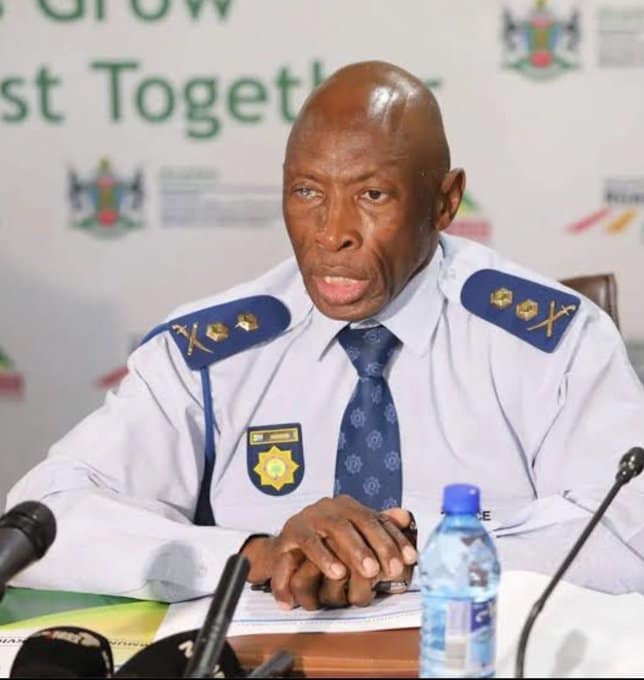
A powerful tremor shook the upper echelons of the South African Police Service in the North West province this week as Major-General Patrick Asaneng, the deputy provincial commissioner, was found guilty of fraud in the Potchefstroom Magistrate’s Court. The conviction, stemming from the unlawful misuse of state resources dating back to 2019, has sent shockwaves through the ranks of law enforcement and raised serious questions about accountability and integrity within the country’s highest policing structures.
Asaneng, who occupies one of the most senior positions in the provincial SAPS hierarchy, sat stoically in the dock as Magistrate Sello Mofokeng delivered the verdict. The court found that the deputy commissioner had fraudulently misappropriated state resources for purposes unrelated to official police business, thereby contravening the very laws he had sworn an oath to uphold. While the full details of the misuse—including the nature of the resources and the scale of the financial loss to the state—are expected to be fully detailed during the sentencing proceedings, sources close to the investigation have indicated that the case involved the unauthorized use of state vehicles, fuel allocations, and other logistical resources for private benefit.
The case originated from an internal investigation conducted by the SAPS’s own anti-corruption unit, following a whistleblower complaint that was lodged in 2019. The investigation meticulously traced the movement of state assets and uncovered a pattern of irregular usage that pointed to a deliberate and sustained effort by the senior officer to exploit his position for personal gain. The evidence presented to the court included documentation, witness testimony, and forensic accounting reports that collectively painted a picture of systematic abuse of authority.
Magistrate Mofokeng, in delivering his judgment, emphasized the gravity of the offense not merely in terms of the financial value involved, but in the context of the accused’s position. “The accused was entrusted with immense responsibility as a senior law enforcement official,” the magistrate said. “When a person in such a position chooses to abuse state resources for personal benefit, it is not simply a theft of property. It is a theft of public trust. The court cannot and will not treat such offenses as minor transgressions.”
The conviction marks a stunning fall from grace for Asaneng, who had risen through the ranks over decades of service. He had held key positions within the SAPS, earning promotions and accolades along the way, before being appointed as the deputy provincial commissioner of the North West. In that role, he was responsible for overseeing operational command and ensuring the effective delivery of policing services across a province that has often struggled with violent crime, service delivery protests, and political instability.
News of the conviction sent immediate ripples through the SAPS provincial headquarters in Mahikeng and police stations across the North West. Colleagues and subordinates expressed a mixture of shock and resignation—shock that one of the province’s top officers had been found guilty of such offenses, and resignation that corruption had apparently reached even the highest levels of the organization. For many frontline officers who work under difficult conditions with limited resources, the conviction reinforced a painful narrative that resources meant for policing are too often diverted by those at the top.
The reaction from civil society and policing oversight groups was swift. The Independent Police Investigative Directorate (IPID), which has often clashed with SAPS leadership over accountability issues, issued a statement welcoming the conviction as a step in the right direction, while cautioning that it represented only a single case in what many believe is a systemic problem. Community policing forums in the North West also weighed in, with several chairpersons calling for a full audit of resource allocation and utilization within the provincial SAPS to ensure that other similar cases of misuse are uncovered and prosecuted.
The National Prosecuting Authority (NPA) in the North West hailed the conviction as a significant victory in its ongoing efforts to combat corruption within the public sector. Regional spokesperson Henry Mamothame noted that the case was a testament to the effectiveness of collaboration between the SAPS anti-corruption unit and the prosecuting authority. “This conviction demonstrates that no one is above the law,” Mamothame said. “We will continue to pursue cases of corruption and fraud with the full might of the law, regardless of the position held by the accused.”
Asaneng, who had been out on bail throughout the trial, was remanded in custody pending sentencing, although his legal team immediately indicated their intention to apply for bail pending an appeal. His lawyer argued that the court should consider his long years of service and clean disciplinary record prior to this incident, but the magistrate appeared unmoved, noting that the seriousness of the offense and the potential sentence—which could include a lengthy term of imprisonment—warranted careful consideration of the bail application.
The conviction of a deputy provincial commissioner is an exceptionally rare event in South African policing history. While low-level officers are regularly prosecuted for corruption and theft, cases reaching the highest echelons of provincial command are uncommon, in part because such figures often have access to resources and networks that can shield them from scrutiny. That Asaneng was investigated, prosecuted, and convicted is being viewed by anti-corruption activists as a sign that internal accountability mechanisms may be strengthening—or alternatively, that the case against him was simply too egregious to ignore.
For the South African Police Service as an institution, the timing of the conviction is particularly sensitive. National Commissioner General Fannie Masemola has made the rooting out of corruption within the organization a central pillar of his tenure, launching several high-profile internal purges and calling for ethical renewal within the ranks. The Asaneng conviction presents a test of whether those stated commitments will translate into meaningful action. The SAPS national office released a brief statement acknowledging the conviction and stating that internal disciplinary processes would follow in parallel with the criminal proceedings.
In the Potchefstroom Magistrate’s Court, as the gavel fell on the conviction, the wider implications began to take shape. For the community members who look to the police for protection and justice, the sight of a deputy commissioner being led away in handcuffs was a complicated symbol—on one hand, proof that accountability is possible; on the other, a stark reminder that corruption has flourished in the very institutions designed to combat it. As Major-General Patrick Asaneng awaits sentencing, the case stands as a cautionary tale about the corrosive nature of power when it is divorced from accountability, and a test of whether South Africa’s criminal justice system can apply the same standard of justice to the guardians of the law as it does to those they are meant to police.
About The Author