The shot was not aimed at anyone in particular. That was the point. As Cape Times photographer Brenton Geach raised his camera to capture the aftermath of a gang-related shooting in Hanover Park last month, a single bullet cracked past his left ear and embedded itself in a concrete wall behind him. No warning. No demand to stop. Just a message etched in copper and gunpowder: You are not welcome here.
Geach survived. But the message has been received loud and clear across South Africa’s newsrooms. The South African National Editors Forum (SANEF), the country’s most representative body of senior editors and media leaders, has issued a stark warning: large swaths of the Cape Flats have become no-go zones for journalists. And the consequences, SANEF says, are dire—not just for media professionals, but for democracy itself.
“Gang violence and criminal activity have turned parts of the Cape Flats into dangerous no-go zones for the very people whose job it is to tell the stories of those living there,” said SANEF co-chairperson Nwabisa Makunga, speaking from the organization’s Cape Town offices. “When reporters cannot safely enter a community, that community becomes invisible. And when a community is invisible, their suffering no longer counts as a national priority.”
The Geography of Fear
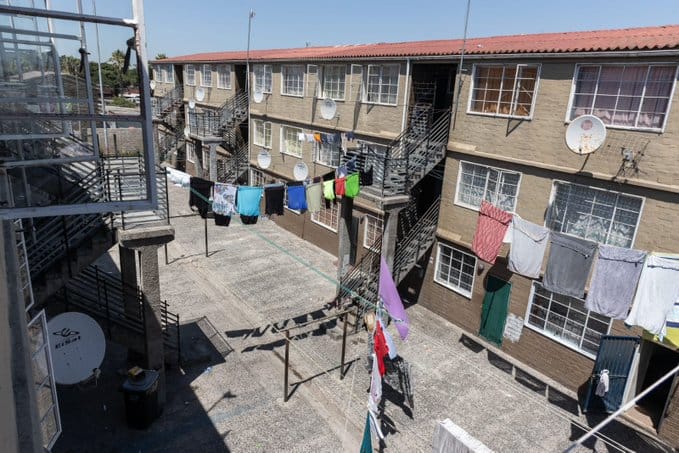
The Cape Flats—a vast, windswept expanse of sandy soil and tightly packed housing stretching from Table Bay to False Bay—is home to over 1.5 million people. It is also home to some of the most violent gangs on the African continent. The Numbers, the Americans, the Hard Livings, and the 28s have carved the Flats into fiefdoms, each marked by graffiti boundaries and enforced by teenagers with stolen pistols.
For years, journalists navigated these territories through a fragile web of fixers, local contacts, and unspoken agreements. You do not photograph faces. You do not name gang leaders. You leave before nightfall. Those rules, never formalized, kept a semblance of access alive.
That access has now collapsed.
According to SANEF’s internal safety audit, conducted between January and April 2026, there have been 23 documented incidents of violence or intimidation against journalists on the Cape Flats in the past 18 months—including 11 cases of assault, 7 of death threats, 3 of equipment destruction, and 2 of journalists being shot at. No journalist has been killed—yet—but multiple have been hospitalized.
“The gangs have realized that media coverage brings police attention, and police attention disrupts business,” said veteran crime journalist Aron Hyman, who has covered the Flats for two decades. “So they’ve adopted a simple strategy: make it too dangerous to report. If the cameras don’t come, the world doesn’t see. And if the world doesn’t see, nothing changes.”
The Journalists’ Stories
Case 1: The Stoning of Themba Khumalo
Themba Khumalo, a freelance video journalist for eNCA, was covering a community meeting in Nyanga in March 2026 when a group of young men surrounded his vehicle. They demanded his memory cards. He refused. They threw bricks. Khumalo suffered a fractured skull and spent ten days in a medically induced coma. His camera was destroyed. Police have made no arrests.
“I remember waking up in the hospital and the first thing I thought was: ‘Did I get the shot?'” Khumalo told SANEF during a closed-door briefing. “Then I realized—I almost died for footage no one will ever see because I can’t go back to that area to follow up.”
Case 2: The Warning Call to Lisa Petersen
Lisa Petersen, a radio journalist for community station Bush Radio, received a phone call in February 2026. The voice on the other end was calm, almost polite. “We know where your mother lives, Lisa. Stop reporting on our business.” Petersen, who had been investigating extortion rings in Philippi, has not returned to the Flats since. She now covers education news from a studio in Salt River.
“I feel like I abandoned the community,” Petersen said. “But I also feel like I had no choice. The story is not worth my mother’s life.”
Case 3: The Ambush of the Weekend Argus Team
In what SANEF described as a “coordinated attack,” a three-person team from Weekend Argus—a reporter, a photographer, and a driver—was ambushed in Manenberg in January 2026. Six masked men forced them out of their vehicle, confiscated two cameras and three phones, and forced them to delete all images from the previous two hours. The reporter was pistol-whipped. The photographer was forced to kneel on broken glass.
The story they had been covering: a community-led anti-crime march. The gang’s message: there will be no stories without our permission.
The Ripple Effect: What Goes Unreported
The media blackout on the Cape Flats has consequences that extend far beyond the newsroom. Without journalists on the ground, crucial stories go untold:
- Police brutality in the Philippi East precinct has been alleged by residents but never independently documented.
- Extortion of spaza shop owners in Lavender Hill has driven at least 15 small businesses to close, but no one has tracked the economic toll.
- The murder of a 14-year-old girl caught in crossfire in Elsies River received one day of national attention; the investigation has since vanished from public view.
- A vigilante group operating in Tafelsig has executed at least four suspected gang members in the past three months. No journalist has been able to verify the claims or speak to the families.
“When the media retreats, accountability retreats with them,” said Dr. Thandeka Gqubule, a media scholar at the University of Cape Town. “The Cape Flats are not a war zone. They are South African territory. And South Africans have a constitutional right to know what is happening in their own country.”
The Police and Political Response
Western Cape Police Commissioner Thembisile Patekile acknowledged the danger facing journalists but offered little concrete action. “We urge media houses to coordinate with our provincial joint operational center before entering high-risk areas,” Patekile said in a statement. “We can provide escorts when resources permit.”
SANEF rejected this as inadequate. “There are not enough police escorts for the dozens of journalists who need to do daily reporting,” Makunga responded. “And frankly, police escorts compromise editorial independence. We cannot be seen as traveling under police protection if we are also meant to hold the police accountable.”
Premier Alan Winde, who has clashed with the national government over the SANDF deployment, called the media blackout “a crisis within a crisis.” In a statement, Winde said: “An informed public is our first line of defense against criminality. If the media cannot report, the criminals have already won.”
The national Ministry of Police declined to comment directly, referring questions to SAPS’s media liaison office, which did not respond to repeated requests.
The Human Cost: Voices from the Flats
Perhaps the most heartbreaking dimension of the media blackout is its impact on the residents of the Cape Flats themselves. Many feel abandoned by the state, by the media, and increasingly, by hope.
Isa Gamieldien, 62, a community activist in Hanover Park, used to speak to journalists multiple times a week. Now, she struggles to get anyone to answer her calls.
“The journalists are scared. I understand. I’m scared too,” she said, sitting on her stoep as children played in a nearby street littered with shattered glass. “But if no one writes about us, no one in parliament will care. No one in Sandton will care. We will just keep dying in silence.”
Another resident, who asked to be identified only as “Fatima” for fear of gang retaliation, described the paradox of media coverage. “When they came, it was bad because the gangs would target anyone seen talking to them,” she said. “Now that they don’t come, it’s worse because no one knows what is happening. We are cut off from the country. We are a forgotten people.”
The Industry’s Response
SANEF has convened an emergency task team to address the crisis, comprising editors from major newspapers, broadcasters, and digital platforms. Proposals on the table include:
- Shared security protocols — pooled resources for armor, vests, and emergency extraction plans.
- Training programs in hostile-environment reporting for local journalists.
- A “red list” of no-go zones updated weekly based on intelligence from community partners.
- Legal action against the state for failing to fulfill its constitutional duty to protect journalists as civilians.
- Community-based reporting hubs located in safer adjacent neighborhoods, with residents trained to submit verified information remotely.
Several major news organizations have also begun equipping their Cape Flats correspondents with body cameras, satellite phones, and GPS trackers—though some journalists argue that more equipment makes them bigger targets.
“We are not asking for sympathy,” said eNCA’s Mbali Nkosi, who still ventures into the Flats despite multiple threats. “We are asking for protection. And we are asking the public to understand: if you don’t see a story, it doesn’t mean nothing happened. It means we couldn’t get there. And that should terrify everyone.”
The Larger Picture: Democracy in Darkness
The Cape Flats media crisis is not occurring in isolation. Across South Africa, journalists face increasing threats—from political violence in KwaZulu-Natal, to cash-in-transit heist crews in Gauteng, to the assassination of several community radio journalists in the Eastern Cape over the past three years. According to the Committee to Protect Journalists (CPJ), South Africa is now the most dangerous country in Africa for media workers, measured by non-conflict-related attacks.
SANEF’s warning is therefore not just about one region. It is about a trajectory.
“When the fourth estate retreats, the other estates—executive, legislative, judicial—operate in a vacuum,” Makunga said. “We are seeing the slow erosion of accountability. And once that erosion reaches a tipping point, it is almost impossible to reverse.”
What Comes Next
SANEF has requested an urgent meeting with Police Minister Senzo Mchunu and Defence Minister Angie Motshekga to discuss the crisis. The forum is also exploring a potential court application to compel SAPS to provide dedicated protection for journalists in identified high-risk zones.
Meanwhile, some journalists continue to do the work—quietly, carefully, and often without their families knowing where they are going. They use code names. They switch cars. They meet sources in church halls and community centers far from the front lines. They do not post on social media about their assignments.
“I am not a hero,” said one Cape Town-based journalist who has covered the Flats for six years and asked not to be named. “I am just a person with a notebook in a place where notebooks are seen as weapons. And that is the saddest thing of all—that the truth has become dangerous.”
In the dusty streets of Manenberg, Hanover Park, and Nyanga, life goes on. Shootings happen. Children cry. Mothers pray. And the journalists who would bear witness watch from a distance, their lenses pointed at a country they can no longer safely see.
About The Author