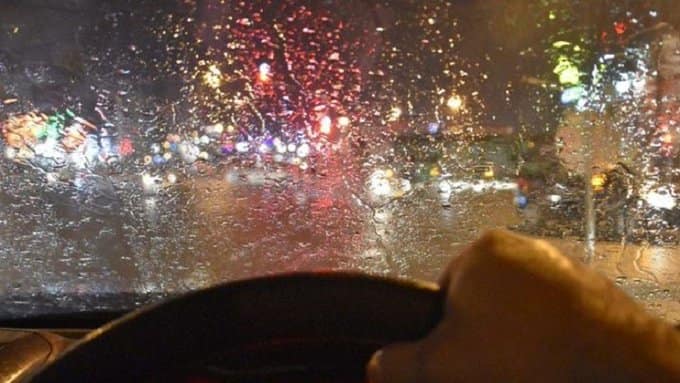
The wind came first—a howling, relentless gale that stripped leaves from trees and sent rubbish bins tumbling down suburban streets. Then came the rain, not the gentle drizzle the city knows in spring, but a thick, sideways curtain of water that turned afternoon into twilight.
By midday on Monday, Cape Town’s roads had become danger zones.
From the N2 highway slicing through the Cape Flats to the winding suburban lanes of Constantia and Durbanville, drivers found themselves fighting for control. Stopping distances doubled. Visibility shrank to a few meters. And on roads slick with oil residue lifted from months of dry asphalt, tires lost their grip like shoes on ice.
The result was predictable but no less devastating: a cascade of crashes—pile-ups, rollovers, cars wrapped around lampposts, and trucks jackknifed across highways. Emergency services, already stretched thin, raced from one scene to another as the city’s trauma system groaned under the weight of a single afternoon’s destruction.
By nightfall, at least 47 accidents had been reported across the Cape Town metro and surrounding Winelands. Three people were dead. Dozens more were injured. And the rain showed no sign of stopping.
The Toll: A Grim Tally
The City of Cape Town’s Traffic Service released preliminary figures late Monday evening:
- Fatalities: 3 confirmed
- Serious injuries: 18 (hospitalized, including 5 in intensive care)
- Minor injuries: 34 (treated and released)
- Vehicles involved: 72
- Major crash sites: N2 near Borcherds Quarry, M3 near Kirstenbosch, R300 near Highlands Drive, and multiple intersections in Bellville, Parow, and Strand.
Among the dead was a 34-year-old mother of two whose vehicle hydroplaned on the N2, spun across three lanes, and was struck by an oncoming delivery truck. Her two children, aged six and eight, survived with minor injuries. They were found by first responders still strapped into their car seats, crying for their mother.
Another victim, a 57-year-old retired teacher, lost control of his sedan on the wet off-ramp of the M3 at Fernwood. The vehicle struck a concrete barrier, rolled twice, and came to rest on its roof. He died at the scene before paramedics could arrive.
The third fatality was a 22-year-old passenger in a minibus taxi that collided with a stationary garbage truck on the R300. The driver of the taxi fled the scene and had not been located by late Monday night.
“It has been one of the worst weather-related accident days we have seen in years,” said City of Cape Town Mayoral Committee Member for Safety and Security, Alderman JP Smith, speaking from the Joint Operations Centre in Goodwood. “Our teams are exhausted. But they are not stopping. We cannot afford to stop.”
The Highways: Scenes of Chaos
The N2 at Borcherds Quarry
The N2 highway, Cape Town’s main arterial route connecting the city to the airport and beyond, became a parking lot of crumpled metal and flashing hazard lights by 2 p.m.
A chain-reaction crash involving 11 vehicles—including two minibus taxis, a delivery truck, and eight passenger cars—blocked all three eastbound lanes for nearly four hours. The cause: a sedan that hydroplaned, spun out, and was rear-ended by a taxi. The taxi then veered into the truck, setting off a domino effect that left vehicles at odd angles, some with their airbags deployed, others with their engines smoking.
Traffic backed up for eight kilometers. Frustrated drivers sat stationary for hours, some abandoning their cars to walk to nearby petrol stations for shelter. Others sat in stunned silence, watching emergency workers cut metal with hydraulic tools to free trapped passengers.
“I saw the whole thing in my rearview mirror,” said Thandiwe Nkosi, 41, a nurse who was driving home to Khayelitsha after a night shift. “One moment everyone was driving normally. The next, cars were spinning like toys. I pulled over and just prayed. I have never been so scared on that road, and I have driven it for fifteen years.”
The M3 at Kirstenbosch
On the M3, the scenic highway that winds along the eastern slopes of Table Mountain, conditions were even more treacherous. The combination of steep gradients, tight curves, and running water across the asphalt proved lethal.
Three separate single-vehicle crashes occurred within two kilometers of each other. In one, a delivery driver lost control on a bend, crashed through a guardrail, and came to rest in a drainage ditch. He escaped with a broken arm. In another, a female driver going too fast for conditions slid into oncoming traffic but managed to swerve onto the shoulder, clipping a tree but avoiding a head-on collision.
The third crash was the one that killed the 57-year-old retired teacher. Investigators believe he was driving below the speed limit but hit a patch of standing water that had pooled on an uneven section of the off-ramp. The vehicle aquaplaned, and he overcorrected—a classic error that turned a recoverable skid into a fatal rollover.
“Wet weather driving requires a completely different mindset,” said driving instructor and road safety advocate Johan van der Merwe, who has trained thousands of drivers in the Western Cape. “You cannot drive the same way you do in dry conditions. You need to slow down, increase following distance, and avoid sudden movements. Most drivers know this. But knowing and doing are two different things.”
The Suburban Streets: Hidden Hazards
While highways bore the brunt of the high-speed crashes, suburban streets were not spared.
In Bellville, a collision between two sedans at an intersection with non-functioning traffic lights—already a problem before the rain—sent one vehicle crashing into a perimeter wall. The driver, a 29-year-old woman, suffered a fractured pelvis. The other driver fled.
In Parow, a minibus taxi carrying 14 passengers overturned after hitting a pothole filled with rainwater. The driver lost control, the vehicle tipped onto its side, and passengers scrambled out through shattered windows. Seven were hospitalized with cuts and bruises. The driver blamed the pothole, which he said was invisible under the water.
“The roads in this city are already in a bad state,” said taxi driver Vusi Mthethwa, 45, who was not involved in any crash but spent the afternoon ferrying stranded passengers. “Then you add rain, and it becomes a war zone. The government talks about road safety, but they don’t fix the potholes. They don’t clear the drains. They don’t put reflectors on the lane lines. We are driving blind, and people are dying.”
In Strand, a pensioner drove through a flooded underpass despite flashing warning signs. Her small hatchback stalled in waist-deep water. Firefighters had to wade in and carry her out. She was treated for mild hypothermia. Her car was written off.
“HOW MANY TIMES MUST WE WARN PEOPLE?” the City’s transport department posted on X (formerly Twitter) alongside a video of the flooded underpass. “DO NOT DRIVE THROUGH STANDING WATER. TURN AROUND. FIND ANOTHER ROUTE. YOUR LIFE IS NOT WORTH THE RISK.”
The Emergency Response: Heroes in the Rain
Behind the statistics are the men and women who ran toward the chaos while others fled.
Emergency Medical Services (EMS) reported that all available ambulances in the Cape Town metro were deployed by 1 p.m., forcing dispatchers to call in backup units from Stellenbosch, Paarl, and even as far as Worcester. Fire and rescue crews worked 12-hour shifts without breaks. Traffic officers stood in the rain directing vehicles away from crash scenes, their luminous jackets soaked through, their hands frozen.
Among the responders was paramedic Lungile Ndaba, 29, who attended to the scene of the fatal crash on the N2 involving the young mother.
“We arrived and saw the children in the back seat, still strapped in, crying,” Ndaba said later, her voice breaking. “Their mother was already gone. There was nothing we could do for her. So we focused on them. We got them out, wrapped them in blankets, and took them to the hospital. I held the little girl’s hand the whole way. She asked me, ‘Is my mommy okay?’ I didn’t know what to say.”
Ndaba, who has been a paramedic for six years, said the weather made every aspect of the response harder.
“The rain just doesn’t stop. It gets in your eyes, it soaks the equipment, it makes the roads slippery even for the ambulance. You’re trying to treat a patient and you’re standing in a puddle. Your hands are shaking from the cold. But you push through because someone needs you.”
By Monday evening, the Western Cape government had activated its disaster management protocols, allowing for the deployment of additional resources from neighboring districts. Premier Alan Winde issued a statement expressing condolences to the families of the deceased and thanking emergency personnel for their “extraordinary courage.”
“On days like this, we see the best and worst of our province,” Winde said. “The worst is the devastation on our roads. The best is the response of those who refuse to look away.”
The Science: Why Rain Makes Roads So Dangerous
To understand the spike in crashes, one must understand the physics of wet roads.
When dry asphalt meets rain, the first few millimeters of water combine with oil, dust, and rubber residue that have accumulated over time. The result is a slick, greasy film that drastically reduces tire traction. This is why the first half-hour of rainfall is often the most dangerous period—before the water has washed away the contaminants.
As rain continues, standing water can accumulate in depressions and ruts. When a tire hits standing water at speed, it can aquaplane—losing contact with the road entirely as a wedge of water lifts the vehicle. In that moment, the driver has no steering control and no braking ability. The vehicle becomes a passenger, sliding wherever momentum and gravity take it.
“Most drivers don’t know how to react to aquaplaning,” said van der Merwe, the driving instructor. “Their instinct is to brake hard and turn the wheel. That is exactly the wrong response. You should ease off the accelerator, keep the wheel straight, and wait for the tires to regain contact. But in the moment, instinct overrides training.”
Additionally, rain reduces visibility, making it harder to see other vehicles, road markings, and hazards. Drivers who refuse to turn on their headlights—a common frustration—become invisible to others.
“I cannot tell you how many cars I saw this afternoon driving in the rain with no lights on,” said traffic officer Sergeant Marlene Jacobs. “They might think they can see. But we cannot see them. It’s a recipe for disaster.”
The Human Stories: Beyond the Statistics
Behind every accident report is a story that numbers cannot capture.
The Good Samaritan
On the R300, after the taxi collided with the garbage truck, bystanders rushed to help. Among them was a 24-year-old security guard named Thabo Ndlovu, who was off-duty and driving home. He pulled over, ran to the overturned taxi, and helped pull three injured passengers out of the wreckage before emergency crews arrived.
“I didn’t think,” Ndlovu said later, his uniform soaked with rain and blood that was not his own. “I just saw people screaming and I ran. Anyone would have done the same.”
The passenger he pulled out first—the 22-year-old who later died—was already unconscious. Ndlovu performed CPR until paramedics took over. They could not revive him.
“I keep seeing his face,” Ndlovu said. “I did everything I could. But it wasn’t enough.”
The Family Waiting
In a hospital waiting room in Mitchells Plain, a family gathered around a grandmother who had been rear-ended on the M7. The grandmother, 68-year-old Dorothy Williams, suffered a broken hip and a concussion. Her granddaughter, 16-year-old Chloe, had been driving her home from a doctor’s appointment.
“She was going so slow,” Chloe said tearfully. “We were barely moving because of the rain. And then this car just slammed into us from behind. I don’t know how he didn’t see us. I don’t know.”
Chloe escaped with whiplash. But the trauma of the crash, she said, will linger.
“I’m never driving in the rain again,” she said. “I don’t care if it’s an emergency. I won’t do it.”
The Survivor’s Guilt
And then there is the driver who caused the chain-reaction crash on the N2—the sedan that hydroplaned and set off the pile-up that killed the young mother. He survived with minor injuries. He has not been charged, pending investigation. But he is being treated at a private clinic for psychological trauma.
“He cannot stop crying,” a source close to the family said. “He keeps saying, ‘I killed her. I killed her.’ The investigators say it was an accident. The weather caused it. But he will carry this for the rest of his life. There is no charge for that.”
The Warnings: What You Can Do
The South African Weather Service has issued a Level 6 warning for disruptive rain across the Western Cape, valid until Wednesday. More rain is forecast. More wind. More danger.
Road safety authorities have issued urgent advice for drivers:
- Slow down. Speed limits are for ideal conditions. In heavy rain, cut your speed by at least 20 km/h—more on highways.
- Increase following distance. Leave at least six seconds between you and the car ahead. In dry conditions, three seconds is sufficient. In rain, double it.
- Turn on your headlights. Not your hazard lights—your headlights. Make yourself visible to others.
- Avoid standing water. If you cannot see the road surface, do not drive through it. Turn around.
- Do not brake suddenly. Brake gently and earlier than usual to avoid skids.
- If you start to aquaplane, do not panic. Ease off the accelerator. Keep the wheel straight. Do not brake hard. Wait for the tires to regain contact.
- If conditions are too severe, pull over. Find a petrol station, a parking lot, or a safe shoulder away from traffic. Wait for the rain to ease. No destination is worth your life.
“Driving in heavy rain is not a test of skill,” said van der Merwe. “It’s a test of judgment. The skillful driver knows when to stop. The foolish driver keeps going. Don’t be foolish.”
What Comes Next
The rain is expected to ease by Wednesday, but the aftermath will linger for weeks. Crash scenes must be cleared. Investigations must be conducted. Families must bury their dead.
The City of Cape Town has announced an emergency road maintenance program, focusing on pothole repairs and drain clearing in the areas hardest hit by accidents. But critics say that is too little, too late.
“We have been warning about these roads for years,” said Alderman Smith. “But warnings are not the same as action. And the Western Cape government has not allocated enough funding for road maintenance. That must change. People are dying.”
The Western Cape Department of Transport and Public Works has promised a review of high-risk accident zones, with potential interventions including improved signage, road markings, and drainage systems. Timelines have not been provided.
For now, the only certainty is more rain. And with it, more risk.
Epilogue: A Prayer for the Road
Late Monday night, after the last crash victim had been admitted to the hospital and the last tow truck had hauled away the last wreck, a small group gathered at the N2 crash site. They were family members of the young mother who died. They lit candles. They prayed.
The rain had not stopped. The flames flickered and died, reignited, flickered again. The mourners stood in a circle, holding each other, refusing to leave.
“She loved this road,” said the woman’s brother, a tall man with red-rimmed eyes. “She said the N2 was the artery of Cape Town, connecting all of us. Now it has taken her from us. I don’t know if I can ever drive it again.”
He paused, looking up at the dark sky, the rain streaming down his face.
“But I will. For her. For her children. I will drive it again. And I will remember her every time.”
The candles went out. The mourners dispersed. And the rain kept falling.
About The Author