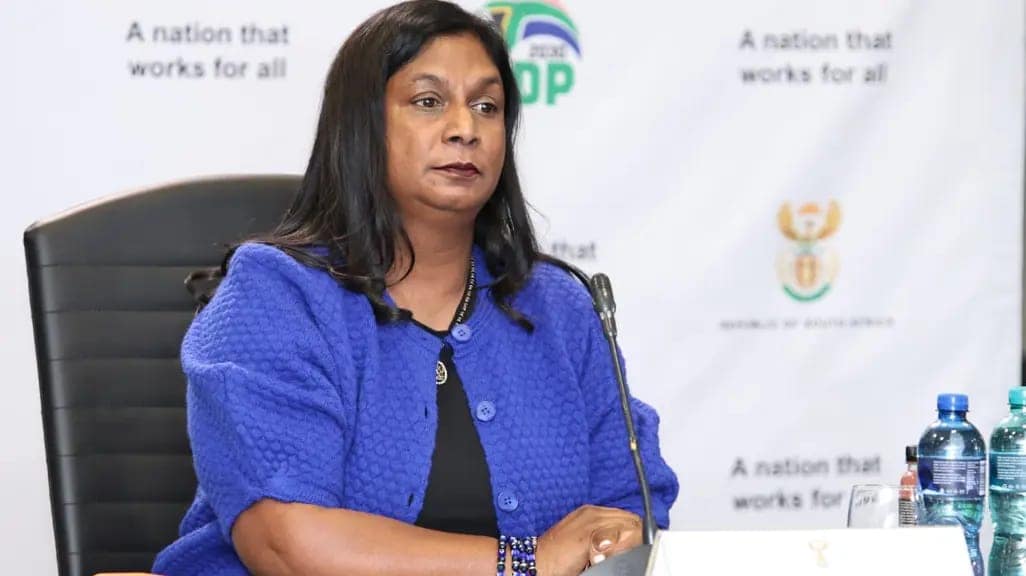
The selection process for South Africa’s next National Director of Public Prosecutions (NDPP) was plunged into controversy on Tuesday when one of the leading candidates, Advocate Andrea Johnson, head of the high-stakes Investigating Directorate (ID), was forced to admit to significant inaccuracies in her curriculum vitae during her gruelling interview before the Parliamentary selection panel.
The admission, described by observers as a rare moment of public contrition in a politically charged process, came under intense questioning from members of the panel who had scrutinised her submitted documents. The discrepancies centred on two key areas: mismatched dates pertaining to her tenure in certain senior legal roles, and a questionable professional reference whose legitimacy and connection to her career were challenged by the committee.
Facing the panel, Johnson did not attempt to deflect blame or offer complex excuses. In a candid and sombre tone, she attributed the errors to her “own carelessness” in the preparation and final verification of her CV. “I accept full responsibility for these inaccuracies,” Johnson stated. “In the press of my duties and the application process, I failed to exercise the meticulous diligence required. This was my oversight, and I apologise unreservedly to this panel. It does not reflect the standard of professionalism I have upheld throughout my career.”
The specifics of the discrepancies, though not fully detailed in the public session, are understood to be significant enough to raise concerns about procedural rigour. Sources close to the process indicate the date errors relate to periods of employment in the early 2000s, while the reference in question was from a senior legal figure whose stated endorsement did not align with records available to the panel.
The revelation has introduced a sudden and unpredictable variable into the race for one of the country’s most critical law enforcement positions. Johnson, who leads the ID in its pursuit of complex state capture and high-level corruption cases, has been widely viewed as a frontrunner, possessing both specialised anti-corruption experience and the backing of civil society groups demanding an independent prosecutor. Her credibility is considered central to her candidacy.
“This is deeply concerning,” said MP and panel member Glynnis Breytenbach of the Democratic Alliance, a former prosecutor herself. “The position of NDPP demands absolute integrity and scrupulous attention to detail. A CV is the foundational document of one’s candidacy. Errors here, however they are explained, cannot be taken lightly.”
Other panel members, however, appeared to weigh the admission in the context of her overall record. ANC MP Bulelani Magwanishe noted, “While the errors are regrettable, what we are evaluating is a candidate’s full capability to lead the NPA. We must consider this incident alongside a decades-long career of substantive legal work.”
The episode has sparked a broader debate beyond Parliament. Governance experts and civil society organisations have expressed mixed reactions. Some argue that the voluntary admission and acceptance of blame demonstrate a transparency that could be valuable in the role. Others contend that the very nature of the errors—in a document for the top prosecuting job—is disqualifying, as it suggests a lapse in the exacting standards the NDPP must embody.
“The NDPP must be beyond reproach, and their documentation must be unimpeachable,” said Lawson Naidoo of the Council for the Advancement of the South African Constitution (CASAC). “While her admission is commendable, it does not erase the fact that the panel now has to decide whether this was a simple administrative failure or a symptom of a more problematic approach to due diligence.”
As the panel deliberates on its shortlist, Johnson’s fate hangs in the balance. Her candidacy now faces a rigorous test: whether her acknowledged “carelessness” in a foundational document will eclipse her recognised expertise and the compelling narrative of her work leading the fight against grand corruption. The decision will send a powerful signal about the standards demanded for restoring integrity to the National Prosecuting Authority.
About The Author