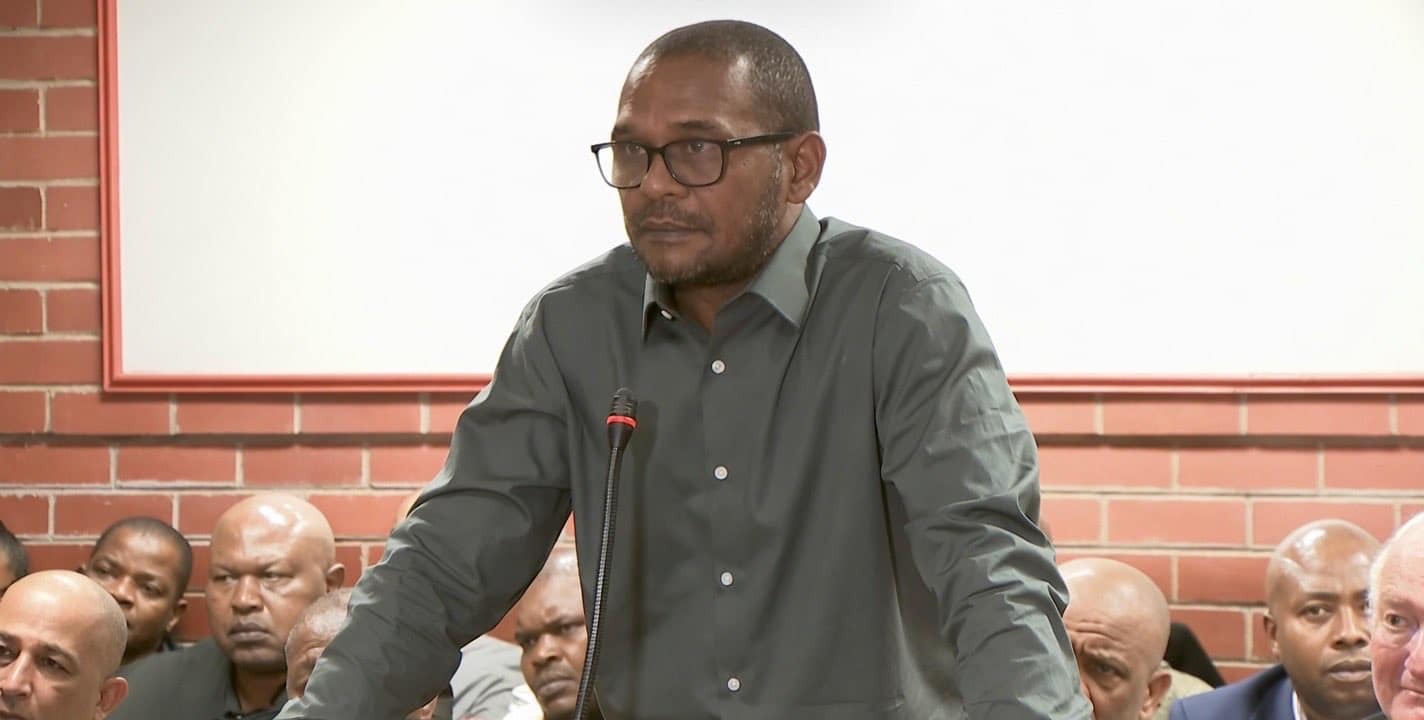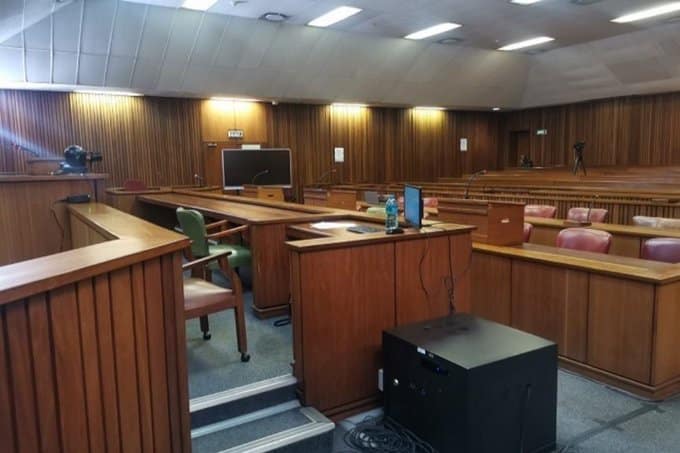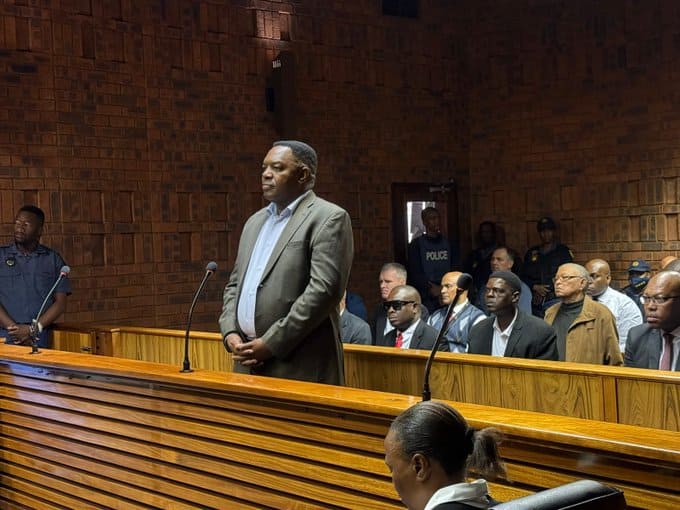
In a historic and seismic moment for South African law enforcement, National Police Commissioner General Fannie Masemola appeared in the Pretoria Magistrate’s Court on Tuesday morning, 21 April 2026, to face charges linked to the controversial R360 million Medicare24 tender for police health services. Masemola, the country’s most senior police officer, is the highest-ranking sitting SAPS official ever to be criminally charged in post-apartheid South Africa.
Dressed in a dark navy suit, white shirt, and a somber expression, Masemola stood calmly in the dock as the charges were read out before a packed courtroom. The gallery was filled with senior police officials, lawyers, journalists, and members of the public, many of whom had queued since dawn to witness the unprecedented proceedings.
The case has sent shockwaves through the police hierarchy and the broader criminal justice system, raising urgent questions about corruption at the highest levels of state institutions and the government’s commitment to tackling it.
The Charges: Fraud, Corruption, and Racketeering
The state has charged Masemola on 12 counts, including fraud, corruption, money laundering, and racketeering. According to the charge sheet, the allegations stem from the awarding of a R360 million contract to Medicare24, a little-known medical services company, to provide health and wellness services to SAPS employees nationwide between 2021 and 2024.
The state alleges that the tender process was rigged from the outset, with specifications tailored specifically to favor Medicare24 over more established and qualified competitors. Several bidders who had previously provided similar services to SAPS were allegedly excluded on flimsy technical grounds, while Medicare24—which had no prior track record in large-scale public health contracting—was fast-tracked through the evaluation process.
Specific allegations against Masemola include:
- Influence peddling: Masemola allegedly received instructions from senior political figures—whose names remain under seal for now—to ensure Medicare24 won the tender. In exchange, he was promised accelerated promotion and protection from disciplinary action.
- Kickbacks and bribes: The state claims that Masemola received approximately R4.5 million in cash payments, deposited into bank accounts controlled by his close associates, between 2021 and 2023. An additional R1.2 million was allegedly spent on home renovations for Masemola’s private residence in Pretoria, paid for by a company linked to Medicare24’s directors.
- Concealment of conflicts of interest: Masemola is accused of failing to declare that his nephew was employed as a “consultant” by Medicare24 during the tender process, receiving a monthly retainer of R75,000 despite having no formal qualifications in health administration.
- Obstruction of justice: When the Special Investigating Unit (SIU) began probing the contract in 2024, Masemola allegedly instructed subordinates to “misplace” key documents and to delay responding to information requests.
Masemola has pleaded not guilty to all charges. His legal team has described the case as “a politically motivated witch hunt” designed to discredit a dedicated public servant who has spent 34 years in the police service.
The Court Appearance: A Brief but Dramatic Hearing
Masemola arrived at the Pretoria Magistrate’s Court shortly before 9 a.m., accompanied by a team of five lawyers and a personal security detail that remained outside the courtroom. Unlike his usual appearances in full police regalia, the General wore civilian clothes—a symbolic stripping of his official identity.
As he entered the dock, a murmur rippled through the gallery. Several senior officers who had served under Masemola sat in the front rows, their faces unreadable. One retired general, who asked not to be named, whispered: “I never thought I would see the day. The Commissioner. In the dock. It is a sad day for the SAPS.”
State prosecutor Advocate Mpho Ndlovu requested that the case be postponed to 12 May 2026 for further investigation and for the state to finalize its disclosure of evidence to the defense. Ndlovu noted that the docket currently contains over 15,000 pages of documents, including bank statements, email trails, sworn affidavits from 22 witnesses, and forensic reports from the Hawks and the SIU.
“The state is ready to proceed with the bail hearing today, but we require additional time to provide the defense with the full scope of our evidence. We submit that a postponement of three weeks is reasonable and will not prejudice the accused,” Ndlovu said.
Defense counsel, Advocate Bongani Mkhabela, did not oppose the postponement but expressed concern about the volume of evidence and the time needed to review it. “My client has been arrested and charged based on what we believe is a flawed and incomplete investigation. We need adequate time to prepare a proper defense. Three weeks is barely sufficient, but we will accept it under protest.”
Magistrate Susan de Klerk granted the postponement and ordered that Masemola be released on bail of R100,000, with strict conditions: he must surrender his passport, report to the Pretoria Central Police Station every Monday and Friday, and not contact any state witnesses directly or indirectly.
The state did not oppose bail, citing Masemola’s long-standing service record and lack of prior criminal history. However, Ndlovu warned that if any bail conditions were violated, the state would immediately apply for revocation.
The Medicare24 Tender: A Timeline of Controversy
The Medicare24 contract has been shrouded in controversy since its inception. Here is a brief timeline:
- March 2021: SAPS issues a tender for the provision of “comprehensive health and wellness services” for its 180,000 active members. The estimated value is R360 million over three years.
- June 2021: Four companies submit bids, including two established medical schemes and a non-profit health foundation. Medicare24, a company registered only six months earlier with a single director and no employees, also submits a bid.
- August 2021: The tender evaluation committee, allegedly under pressure from senior leadership, recommends Medicare24 as the preferred bidder. The two established competitors are disqualified for “non-compliance with technical requirements.”
- October 2021: The contract is signed. Within months, complaints emerge from SAPS members about poor service, delayed payments to healthcare providers, and a lack of proper medical infrastructure.
- 2022-2023: The SIU receives multiple whistle-blower complaints and opens a preliminary investigation. Masemola is reportedly uncooperative, according to SIU sources.
- January 2025: The SIU submits its final report to President Cyril Ramaphosa, recommending criminal charges against “senior SAPS officials” and the directors of Medicare24.
- April 2026: Masemola is arrested at his home in Brooklyn, Pretoria, at 5 a.m. on Monday, 20 April 2026.
Medicare24’s directors have also been arrested and are facing similar charges. Their case has been joined with Masemola’s and will be heard concurrently.
Political Reactions: Shock, Support, and Silence
The arrest of a sitting National Police Commissioner has triggered a wave of political reactions, ranging from shock and condemnation to cautious support for the rule of law.
President Cyril Ramaphosa, speaking at a separate event in Cape Town, said: “No one is above the law. Not a police officer. Not a commissioner. Not a president. The law must take its course. I have full confidence in our criminal justice system.”
The president’s statement carefully avoided endorsing the charges against Masemola or commenting on his guilt, but the subtext was clear: the administration will not protect its own if corruption is alleged.
Opposition parties have seized on the case to attack the ANC’s record on corruption. Democratic Alliance (DA) Shadow Minister of Police Andrew Whitfield said: “The man responsible for leading the fight against crime is himself accused of corruption. This is not an isolated incident. This is a system that rewards loyalty over integrity. Masemola must resign immediately.”
The Economic Freedom Fighters (EFF) went further, calling for Masemola’s immediate dismissal and the placement of SAPS under administration. “The police cannot police themselves. They have proven that time and again. We need independent oversight,” said EFF MP Mbuyiseni Ndlozi.
The African National Congress (ANC) issued a cautious statement expressing “concern” and calling for “respect for the legal process.” Notably, the party did not offer Masemola any public support or defense.
Within the police service itself, reactions are deeply divided. Some officers see Masemola as a victim of a political conspiracy. Others see his arrest as long-overdue justice.
“We have known for years that something was wrong with that Medicare24 contract,” said a senior officer in Gauteng, speaking anonymously. “But no one could speak up because Masemola was untouchable. He had friends in very high places. Now, maybe, things will change.”
Others worry about the impact on morale and the reputation of the service. “The commissioner is the face of the SAPS. If he is corrupt, what does that say about the rest of us?” asked another officer.
The SIU and Hawks Investigation
The investigation that led to Masemola’s arrest was a joint effort between the Special Investigating Unit (SIU) and the Hawks’ Serious Corruption Investigation Unit. It took nearly two years and involved forensic audits, witness interviews, and the analysis of complex financial transactions.
SIU head Advocate Andy Mothibi confirmed that the investigation is ongoing and that more arrests are possible. “We are following the money. We are following the evidence. No one is off the table,” Mothibi said in a brief statement.
The SIU has also referred its findings to the National Prosecuting Authority (NPA) for possible prosecution of the Medicare24 directors and several senior SAPS procurement officials.
One of the key pieces of evidence, according to sources familiar with the investigation, is a series of encrypted WhatsApp messages between Masemola and a senior political figure, in which the tender is discussed in coded language. While the political figure has not been named or charged, the messages reportedly suggest that Masemola was acting on instructions from above.
What Happens Next?
Masemola’s next court appearance is scheduled for 12 May 2026. Between now and then, several key developments are expected:
- Bail conditions monitoring: Masemola will be required to report to police twice weekly and must not leave Gauteng without written permission.
- Disclosure of evidence: The state will continue to provide the defense with documents and witness statements. The defense may file applications to have certain evidence declared inadmissible.
- Possible plea bargain: Sources close to the investigation suggest that the state may offer Masemola a plea deal if he cooperates and provides evidence against higher-ups. Such a deal would likely involve a reduced sentence in exchange for a guilty plea.
- Internal SAPS disciplinary process: Masemola has been suspended from his position as National Police Commissioner pending the outcome of the criminal case. Deputy Commissioner Lieutenant-General Tebello Mosikili has been appointed as acting commissioner.
- Parliamentary oversight: The Portfolio Committee on Police has announced that it will hold special hearings on the Medicare24 tender and the broader culture of corruption within SAPS.
A Historic Fall
General Fannie Masemola rose through the ranks over three decades. He served as a beat cop in Soweto, a detective in the murder and robbery unit, a provincial commissioner in two provinces, and finally, in 2022, was appointed as National Police Commissioner—the pinnacle of a South African police career.
He was known as a tough, no-nonsense officer who demanded discipline and results. He was respected by many, feared by some, and disliked by those who crossed him. But he was never publicly accused of corruption—until now.
On Tuesday morning, as he walked out of the Pretoria Magistrate’s Court a free man on bail, his face was pale and drawn. He did not speak to the press. He did not wave to supporters. He climbed into a waiting black BMW and was driven away, the tinted windows hiding whatever emotions he carried.
Behind him, the courtroom buzzed with speculation. Ahead of him, a long, uncertain legal battle. And above him, the shadow of a question that will not fade: How did the nation’s top cop become a criminal accused?
About The Author