The N2 highway that snakes through the rolling hills of the Eastern Cape is many things. It is a lifeline for commuters, a trade artery for businesses, and a ribbon of hope connecting rural communities to cities. But for those who drive it after dark, it is also a hunting ground.
On a quiet Tuesday evening, that dual reality played out once again. A courier van, laden with packages destined for doorsteps across the province, was intercepted by armed men near the Tholeni Location in the Ndabakazi Administrative Area, just outside Butterworth. Within hours, however, the hunters had become the hunted.
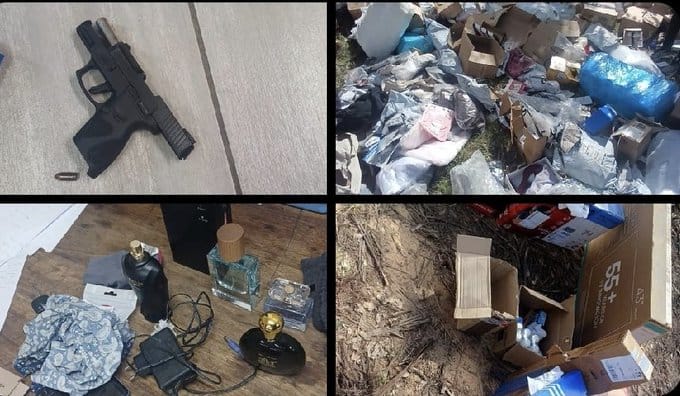
Four suspects, aged between 25 and 27, were arrested in a swift joint operation that brought together a private security company, the South African Police Service (SAPS) Tactical Response Team, and the sharp eyes of Crime Intelligence. The hijacked vehicle was recovered. So was another stolen car. And various items linked to the crime were seized.
The bust, announced on Wednesday morning, has been hailed as a model of cooperation between the public and private sectors. But it has also underscored a troubling reality: crime along the N2 is not letting up, and those tasked with delivering goods are increasingly in the crosshairs.
“We cannot afford to be complacent,” said Eastern Cape police spokesperson Brigadier Tembinkosi Kinana. “The N2 remains a high-risk corridor. But this arrest sends a clear message to criminals: we are watching. We are coordinating. And we will catch you.”
The Heist: A Routine Run Turns Dangerous
The courier van, operated by one of South Africa’s major logistics companies, had left East London earlier in the day, its route taking it along the N2 toward Mthatha. The driver, a man in his 40s who has asked to remain anonymous, has driven this road hundreds of times. He knows its curves, its potholes, and its dangers.
But on this evening, knowledge was not enough.
As the van approached the Tholeni Location—a stretch of road flanked by dense vegetation and dotted with informal settlements—a vehicle pulled out from a side road, blocking the way. Two armed men emerged. A third stayed behind the wheel of the blocking car.
“I saw them coming,” the driver later told investigators. “I tried to reverse, but there was a truck behind me. I was trapped.”
The men demanded he step out of the van. They did not shout. They did not need to. The guns in their hands spoke loud enough. The driver complied. Within seconds, the hijackers had climbed into the courier van, and both the van and the blocking car sped off into the fading light.
The driver, shaken but unharmed, used his cellphone to call his dispatch. The dispatch called the police. And a net began to close.
The Response: A Coordinated Dragnet
What happened next was a testament to what can be achieved when law enforcement and private security work in tandem.
The private security company, whose name has been withheld for operational reasons, has a dedicated tracking unit for high-value cargo. Within minutes of the hijacking being reported, they had activated the van’s GPS tracker. The signal was weak—the hijackers had likely attempted to disable it—but it was enough to give a general location: a rural area outside Butterworth, not far from the crime scene.
The security company relayed the information to the SAPS Tactical Response Team (TRT), an elite unit trained for high-risk operations. The TRT, in turn, coordinated with Crime Intelligence, which had been tracking a suspected hijacking syndicate operating along the N2.
“We had been building a case for weeks,” said a Crime Intelligence source, speaking on condition of anonymity. “We knew there was a group operating in the Butterworth area. We had descriptions of vehicles. We had patterns of behavior. The hijacking gave us the trigger we needed.”
By 9:00 PM, a multi-vehicle task force was converging on the location. The suspects, apparently unaware that they had been tracked, had driven the van into a secluded area, likely intending to offload the cargo into a secondary vehicle.
They never got the chance.
The Arrest: Caught Red-Handed
The TRT team, supported by local police, surrounded the area shortly before 10:00 PM. The suspects, caught off guard, attempted to flee on foot but were quickly apprehended. All four were found in possession of items from the courier van—packages that had been ripped open, their contents scattered.
The hijacked van was recovered intact. So was the vehicle used to block the road—a Toyota sedan that had been reported stolen in East London two weeks earlier. Forensic teams would later find gloves, balaclavas, and a crowbar inside.
“These were not amateurs,” said Kinana. “They had planned this. They had the blocking vehicle. They had a secondary location. They had a system. But they underestimated our capacity to respond.”
The four suspects, all residents of the Butterworth area, were taken into custody. They are expected to appear in the Butterworth Magistrate’s Court on Friday, facing charges of hijacking, possession of stolen property, and possession of suspected stolen vehicles.
The Suspects: Young, Local, and Allegedly Connected
The ages of the suspects—25, 26, and two aged 27—are typical of those arrested for hijackings in the Eastern Cape. Young men, often with few employment prospects, drawn into a life of crime by a combination of desperation and opportunity.
“This is a poverty-driven crime,” said criminologist Dr Naledi Mofokeng. “These are not masterminds. They are foot soldiers. They are recruited by older, more experienced criminals who provide the vehicles, the weapons, and the intelligence. The foot soldiers take the risk. The organizers take the profit.”
Police have not ruled out the involvement of a wider network. The recovered sedan—stolen weeks earlier—suggests that the suspects had access to a vehicle supply chain. The GPS tracker interference suggests technical knowledge. And the speed of the response—which caught the suspects still offloading cargo—suggests that the group may have been under surveillance for some time.
“We are following leads,” said Kinana. “More arrests are possible.”
The N2: A Highway of Risk
The Butterworth hijacking is not an isolated incident. The N2, which runs from Cape Town through Port Elizabeth, East London, Mthatha, and onward to Durban, is one of South Africa’s most dangerous roads—not just in terms of accidents, but in terms of crime.
Truck drivers, courier vans, and motorists have long complained of:
- Hijackings: Armed groups block the road, force drivers out, and steal vehicles and cargo.
- Smash-and-grabs: At intersections and slow-moving traffic, windows are shattered and valuables snatched.
- Carjackings: At rural stops and quiet stretches, vehicles are taken at gunpoint.
- Cargo theft: Trucks and vans are targeted specifically for their contents—electronics, clothing, food, pharmaceuticals.
The Eastern Cape has seen a particular spike in courier van hijackings, as criminals have realized that these vehicles often carry high-value, easily resellable goods.
“Courier vans are like loot boxes on wheels,” said security analyst Kobus Roelofse. “They are less secure than cash-in-transit vehicles but more valuable than private cars. They are a sweet spot for criminals.”
The rise of e-commerce has only made the problem worse. More packages on the road means more targets. And many smaller courier companies lack the sophisticated tracking and security systems of their larger competitors.
The Private Security Role: A Growing Partnership
The successful resolution of the Butterworth hijacking was made possible by the involvement of a private security company. This is not unusual. In South Africa, private security often acts as the first line of defense against crime, particularly in the logistics sector.
“Private security is faster, more agile, and often better resourced than the police,” said Roelofse. “They have tracking technology. They have rapid response units. They have intelligence networks. The police bring the legal authority and the tactical capability. Together, they are formidable.”
The partnership is not without tensions. Private security companies operate for profit; their primary loyalty is to their clients, not to the public good. And there are concerns about accountability, oversight, and the use of force.
But in the Butterworth case, the cooperation appears to have been seamless.
“The security company did not try to be cowboys,” said Kinana. “They provided intelligence. They stayed back. They let us make the arrest. That is how it should work.”
The Community: Relief and Resignation
News of the arrests was greeted with relief in the Ndabakazi Administrative Area, where the hijacking occurred. Residents have long complained of criminals using the rural roads as escape routes and staging grounds.
“Those men were not from here,” said a community elder who spoke on condition of anonymity. “They came here to hide because they think we are too scared to talk. But we talk. We told the police what we saw. Now they are caught.”
Others were more resigned. “They will be back,” said a young woman selling vegetables by the roadside. “Maybe not these four. But others. The road is long. The police cannot be everywhere. We just hope we are not in the wrong place at the wrong time.”
The Butterworth police have promised increased patrols along the N2, particularly during peak hours and at known hotspot locations. But resources are limited, and the road stretches for hundreds of kilometers.
“We do what we can with what we have,” said a local police officer. “But we cannot be everywhere. We need the public’s help. If you see something suspicious, report it. Do not wait until someone is hurt.”
The Courier Company: A Close Call
The courier company whose van was hijacked has declined to comment publicly, citing ongoing investigations. But sources within the company say that the driver—who was not physically harmed—is receiving counseling.
“He is shaken,” said a colleague. “He has done this route for years. He thought he knew the risks. But nothing prepares you for a gun in your face.”
The company is reviewing its security protocols, including the possibility of equipping vans with additional tracking devices, panic buttons, and onboard cameras. Some larger courier companies have also begun using armed escorts for high-value shipments.
“We are in a war,” said a logistics industry insider. “The criminals are organized. They are well-funded. They are not going away. We have to adapt, or we will keep losing.”
The Legal Process: What Happens Next?
The four suspects are expected to appear in the Butterworth Magistrate’s Court on Friday morning. The State is expected to oppose bail, arguing that the suspects are a flight risk and a danger to the community.
“We will argue that they should remain in custody pending trial,” said a spokesperson for the National Prosecuting Authority (NPA). “Hijacking is a serious offense. The perpetrators showed a complete disregard for the safety of the driver and the public. They should not be walking free.”
If convicted, the suspects face lengthy prison sentences. Hijacking carries a minimum sentence of 15 years for a first offense. Possession of stolen vehicles and goods adds additional years.
“These are not young men who made a mistake,” said the NPA spokesperson. “They are criminals who made a choice. They must face the consequences.”
The Bigger Picture: Road Crime in South Africa
The Butterworth hijacking is a microcosm of a national crisis. South Africa has one of the highest rates of vehicle crime in the world. Hijackings, carjackings, and cargo theft are everyday occurrences on major routes.
The N2 is particularly dangerous because it passes through both urban and rural areas, with long stretches of isolated road where help is far away. The Eastern Cape, with its high poverty rates and weak policing, is a hotspot.
“Road crime is a symptom of deeper problems,” said Dr Mofokeng. “Unemployment. Inequality. Weak institutions. Corruption. You cannot fix the crime without fixing the society that produces it. That is the hard truth.”
In the meantime, drivers and courier companies must take precautions:
- Vary routes and times to avoid predictable patterns.
- Install tracking devices in multiple locations within the vehicle.
- Use panic buttons that can alert security companies silently.
- Travel in convoys where possible.
- Report suspicious activity to the police immediately—do not wait.
“You cannot eliminate risk,” said Roelofse. “But you can reduce it. The criminals who were caught in Butterworth got sloppy. They used a stolen vehicle that had been reported. They did not disable the GPS properly. They stopped too close to the crime scene. They made mistakes. And those mistakes cost them.”
Epilogue: A Road Never Safe
As the sun rose over the N2 on Wednesday morning, the road was busy again. Trucks rumbled toward East London. Cars carried families to work and school. A different courier van—this one with a driver who had heard about the hijacking and said a silent prayer—passed the Tholeni Location without stopping.
The hijacked van had been towed to a police impound lot. The packages, those that could be salvaged, were being returned to the courier company for re-shipping. The suspects were in cells, awaiting their court appearance.
The road was quiet. For now.
But those who live along it know that quiet is temporary. The N2 is a highway of opportunity—for commerce, for travel, and, for those with ill intent, for crime. The bust in Butterworth was a victory. But the war continues.
“We celebrate today,” said Kinana. “Tomorrow, we go back to work. There is no rest. There is no finish line. There is only vigilance.”
About The Author