For nearly two years, the farmers of KwaZulu-Natal have lived under a kind of quiet siege. Their cattle—the lifeblood of rural economies, the currency of lobola negotiations, the pride of generations—were prisoners in their own pastures. Movement permits, quarantine zones, and the constant shadow of abattoir closures turned the province’s green hills into a bureaucratic labyrinth. But on a crisp autumn morning, Agriculture Minister John Steenhuisen signed the document that changed everything.
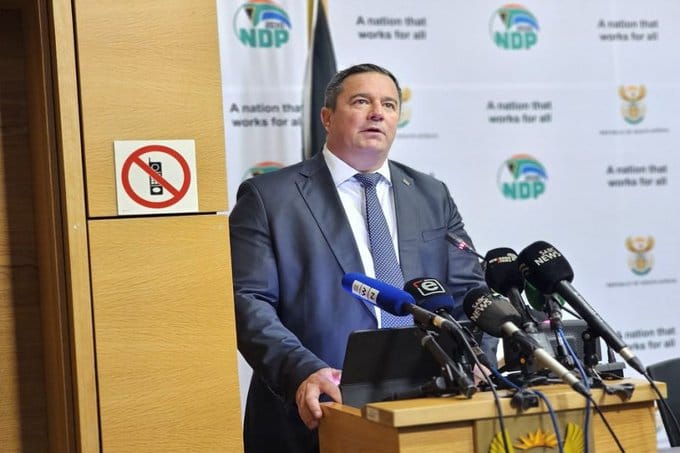
With the stroke of a pen, Steenhuisen officially lifted all Foot and Mouth Disease (FMD) restrictions in KwaZulu-Natal, ending the province’s status as the country’s only Disease Management Area (DMA). The announcement, made from the department’s offices in Pietermaritzburg, sent a ripple of relief through auction houses, feedlots, and traditional kraals from the Drakensberg foothills to the subtropical coast of the Indian Ocean.
“KwaZulu-Natal is now fully open for business,” Steenhuisen told a small gathering of agricultural officials and livestock representatives. “Our farmers have endured extraordinary hardship. Today, we return to them the freedom they have always deserved—the freedom to move their animals, to trade, and to rebuild.”
The Long Road to Freedom
The story of the FMD restrictions begins not with a bang, but with a blister. In early 2022, routine surveillance detected the presence of the highly contagious viral disease in cattle near the Umfolozi Game Reserve. The virus, which causes painful sores on the mouths and hooves of cloven-hoofed animals, does not typically kill adult cattle, but it decimates productivity and closes international markets with ruthless efficiency. Within weeks, the Department of Agriculture had carved out a massive DMA covering most of KZN, cordoning off the province from the rest of the country.
For farmers, the restrictions were devastating. Cattle could not be moved across municipal boundaries without permits that took weeks to process. Auctions were cancelled. Feedlots ran low on stock. The once-thriving trade in weaner calves between KZN and the highveld pastures of Mpumalanga and the Free State ground to a halt. According to industry estimates, the livestock sector in KZN lost upward of R1.5 billion in potential revenue during the peak of the outbreak.
Small-scale and emerging farmers—many of whom rely on a handful of cattle for school fees, household expenses, and cultural ceremonies—were hit hardest. Without the ability to sell at competitive prices, families fell behind on loans. Some were forced to sell their animals at a fraction of their value to unlicensed buyers operating in legal gray zones.
“The permit system broke us,” said Thokozani Mkhize, a cattle farmer from Richmond who runs a herd of 80 Nguni cattle. “You would apply for permission to move 10 cows to a buyer in Pietermaritzburg. Two weeks later, they would approve five. The buyer would have moved on. The cows would still be in your field, eating grass you cannot afford to replace.”
The Science of Surveillance
The lifting of restrictions was not an act of political generosity. It was the culmination of months of intensive surveillance and vaccination campaigns. The Department of Agriculture, working with the Onderstepoort Veterinary Institute and state veterinarians across KZN, conducted three successive rounds of serological surveys—essentially mass blood testing of cattle herds—to confirm that the virus had been suppressed.
The final survey, completed in late April, tested over 12,000 cattle across 2,300 locations. Not a single positive case was detected. The vaccination buffer zones, originally established around known outbreak hot spots, had held. The disease, for now, was beaten.
Steenhuisen made clear, however, that the lifting of restrictions does not mean the threat is permanently extinguished. The FMD virus circulates in wildlife, particularly buffalo in the Kruger National Park and surrounding game reserves. The proximity of KZN’s communal grazing lands to conservation areas means that the province will remain at higher risk than others.
“The surveillance does not stop,” the minister emphasized. “We are shifting from emergency response to routine vigilance. Farmers must continue to report any signs of lameness or salivation in their herds. Our state veterinary services will remain active and accessible.”
Economic and Cultural Rebound
For the agricultural economy of KZN, the timing of the lifting could not be more critical. Autumn is the peak marketing season for weaners—young calves ready to be sold to feedlots for finishing. With the restrictions lifted, auction houses in Dundee, Ixopo, and Kokstad are already reporting a surge in listings. Prices, which had been depressed by the closed borders, are beginning to climb back toward pre-outbreak levels.
“This is not just about money,” said Dr. Sarah van der Merwe, an agricultural economist at the University of KwaZulu-Natal. “This is about the psychological health of a farming community that has been under immense strain. Farmers need to see movement. They need to see trucks rolling. They need to feel that their industry is alive.”
The cultural dimensions are equally significant. For KZN’s large Zulu-speaking population, cattle are not merely commodities. They are living repositories of lineage, status, and tradition. The FMD restrictions made it impossible for families to complete lobola negotiations—the payment of cattle in exchange for a bride—without navigating a web of permits and exceptions. Traditional leaders have privately complained for months that the disease controls were undermining customary marriage practices.
Now, those barriers have fallen. A father in Nongoma can once again accept cattle delivered from a suitor’s family in Durban without hours of paperwork. A chief can preside over a ceremony without explaining why the cows arrived in a truck that does not officially exist.
Cautious Optimism
Not everyone is celebrating. Meat processors who rely on export markets note that KZN’s FMD-free status must now be recognized by international trading partners—a process that can take months. The European Union, China, and neighboring countries like Eswatini and Mozambique maintain their own import protocols. Until those are updated, certain markets will remain closed.
“Lifting domestic restrictions is the first step,” said Francois Rossouw, CEO of the Red Meat Producers’ Organisation. “The second step is regaining our export certifications. That is a diplomatic and bureaucratic marathon, not a sprint.”
There is also the lingering question of compensation. Farmers whose herds were culled during the outbreak—a standard disease control measure—have been waiting for payouts from the state. Some have waited over a year. Steenhuisen acknowledged the backlog and promised that his department would prioritize outstanding claims, but he offered no specific timeline.
A New Dawn
As the sun set over the KZN midlands on the evening of the announcement, a trailer loaded with 15 weaner calves rolled past a police checkpoint that has been manned for 18 months. The officer on duty waved it through without asking for a permit—because none was required. The driver, a young man named Sipho, honked his horn not once but three times, a signal to no one in particular and everyone at once.
His father, waiting at a feedlot outside Pietermaritzburg, heard the horn before he saw the truck. He smiled—a small, tired, grateful smile. Tonight, the cows would sleep in new grass. Tomorrow, the auction would begin. And for the first time in two years, KZN’s farmers could breathe.
The gates are open. The long wait is over.
About The Author