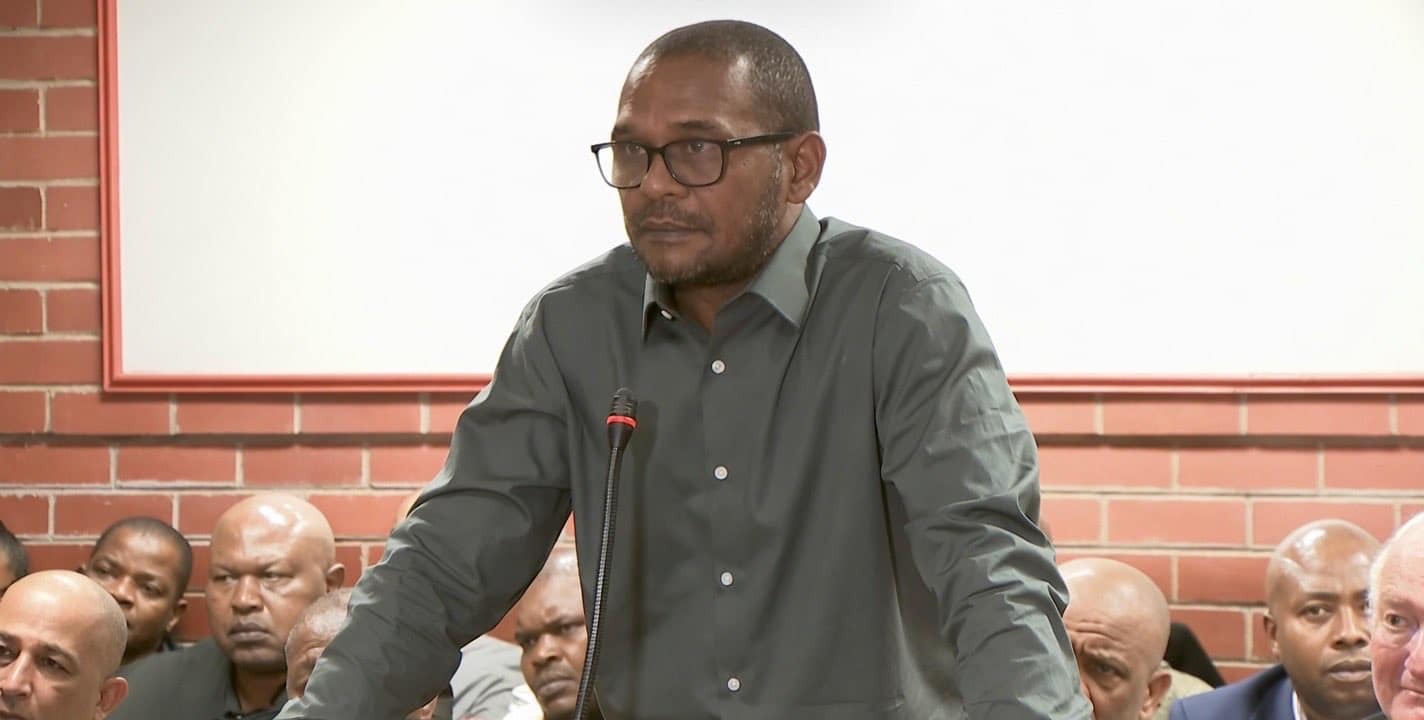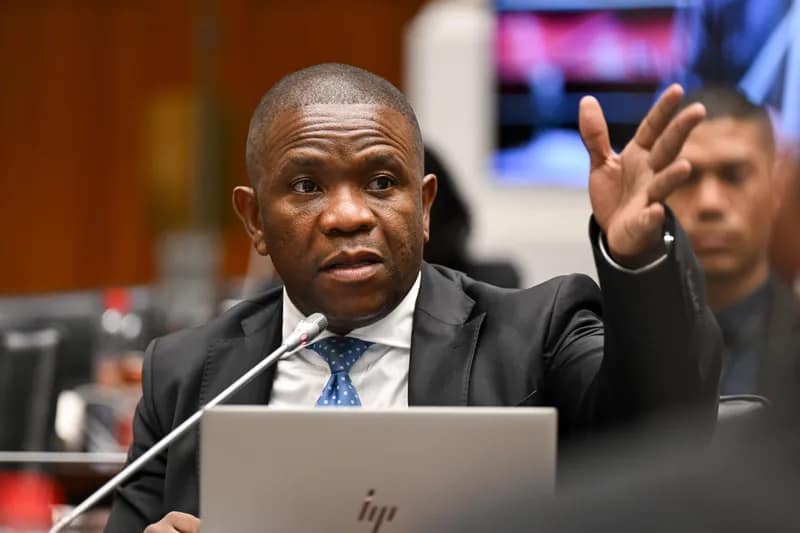
In a dramatic escalation of his testimony before Parliament, KwaZulu-Natal Police Commissioner Lieutenant-General Nhlanhla Mkhwanazi has called for a formal intelligence-driven investigation into former IPID boss Robert McBride and forensic investigator Paul O’Sullivan, alleging the existence of a “shadow network” that orchestrated police investigations from a private home.
Appearing for a second day before the Ad Hoc Committee on police corruption, Mkhwanazi delivered a series of explosive allegations, painting a picture of a compromised state institution where official probes were allegedly planned and “executed” not from the boardrooms of the Independent Police Investigative Directorate (IPID), but from O’Sullivan’s residence.
The bombshell claim emerged during a tense exchange with EFF leader Julius Malema. Mkhwanazi did not merely suggest an inquiry; he laid out a precise roadmap for investigators, urging Parliament to use its intelligence structures to scrutinize “how McBride interacted with Paul O’Sullivan, the meeting venues, cellphone locations, where they met and the way they engaged in terms of investigations.”
“Operations of IPID were planned, coordinated, and executed at O’Sullivan’s house.”
This stunning assertion, which Mkhwanazi attributed to Police Minister Senzo Mchunu’s chief of staff, Cedric Nkabinde, forms the core of his demand for a probe. He expressed supreme confidence in digital evidence, stating, “I am to require such to be investigated in detail because the phone will put McBride in this place, put Paul O’Sullivan in this place, put Nkabinde in this place, and others. When that investigation is concluded, nobody can deny it because we will know exactly all of them were operating, guided by Paul O’Sullivan.”
The call for a probe into McBride and O’Sullivan was not the only incendiary moment in a session fraught with tension. Mkhwanazi also revealed that the WhatsApp messages linked to the controversial disbandment of the Political Killings Task Team (PKTT) are now the subject of an active criminal investigation. He issued a stern warning to MPs, stating that public disclosures of this classified material had severely “compromised operational safety.”
This warning came amid a simmering conflict with DA MP Dianne Kohler Barnard, whom Mkhwanazi has accused of disclosing classified intelligence at both the parliamentary inquiry and the separate Madlanga Commission—an allegation she denies. Kohler Barnard attended Wednesday’s session virtually, as the DA confirmed it was seeking legal advice regarding any potential request for her recusal.
Mkhwanazi’s testimony has fundamentally shifted the narrative of the inquiry. It no longer focuses solely on alleged corruption within the SAPS but has expanded to encompass a counter-narrative of alleged external manipulation of police oversight bodies. By naming high-profile figures like McBride and O’Sullivan and demanding a probe based on cellphone data and meeting locations, Mkhwanazi has thrown down a gauntlet, challenging Parliament to investigate not only his own forces but the very actors once celebrated as anti-corruption crusaders.
The Ad Hoc Committee now faces immense pressure to untangle these mutually destructive allegations, where the lines between police corruption and the weaponization of police oversight have become dangerously blurred.
About The Author