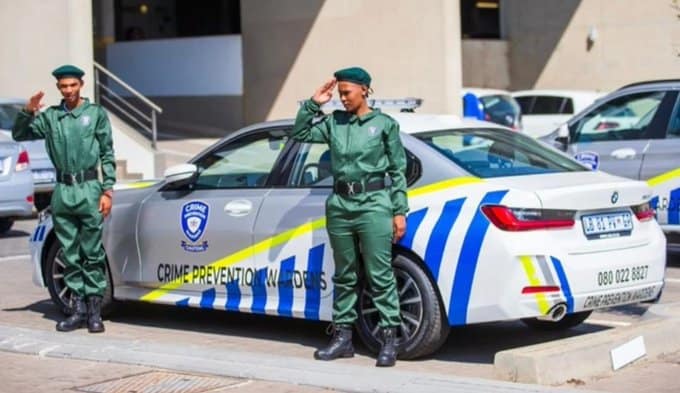
The sun-baked highways of Gauteng have become the unlikely stage for a high-stakes political clash, where questions of public safety, legal authority, and electoral strategy collide. At the centre stands the figure of the traffic warden—the Amapanyaza—newly anointed as a Peace Officer, and now, just as swiftly, transformed into a political pawn.
The Democratic Alliance’s announcement that it would seek a judicial review of the provincial government’s declaration was delivered with legalistic precision. Framed as a necessary check on executive overreach and a defence of the constitutional separation of policing powers, the DA’s stance argued that bestowing Peace Officer status upon the 9,000-strong warden corps was a procedural and potentially dangerous overstep. “This is not about crime prevention,” a DA shadow minister insisted, “it is about the rule of law. You cannot simply declare a municipal traffic official into a provincial peace officer with a stroke of a pen. It creates confusion, risks abuse, and undermines the South African Police Service.”
A Blistering Retort: “Cynical Opportunism”
The response from the Gauteng provincial government was not merely a rebuttal; it was a blistering accusation. Spokespersons labelled the DA’s move as “transparently cynical political opportunism,” designed to sabotage a popular intervention for sheer partisan gain.
“While the DA hosts press conferences in air-conditioned rooms, our people are being hijacked and robbed on the roads,” charged MEC for Community Safety, Themba Mthembu. “The Amapanyaza are the eyes and ears we desperately need. This programme was developed in consultation with legal experts to operate within a strict framework. The DA does not want it to work because they fear its success. They would rather see our communities remain vulnerable than see this government deliver.”
The declaration itself, rushed through in the wake of soaring public anxiety over violent crime, grants wardens expanded powers to search, seize, and arrest for certain offences. For residents of townships and suburbs alike, long accustomed to a paralyzing police response time, the sight of the high-visibility vests has offered a fragile, yet palpable, sense of reassurance.
The Tangled Web of Law and Perception
Legal scholars are divided, creating a grey area the DA is poised to exploit. Some concur that the move pushes the boundaries of the Second-Hand Goods Act and the Peace Officer designation, potentially creating jurisdictional conflicts with SAPS and Metro Police. “It’s a creative use of existing legislation,” noted one constitutional law expert, “but ‘creative’ often means ‘legally vulnerable.’ The courts will need to decide if this is a valid extension of power or an unlawful creation of a parallel police force.”
Others, however, argue the province is acting within its mandate to innovate in the face of a national policing crisis. “When the central function of the state—to protect citizens—is failing, sub-national governments will and must try to fill the gap,” countered a criminologist from a Gauteng university. “The legal technicalities matter, but so does the existential reality of communities under siege.”
Caught in the Crossfire: Communities and Wardens
Amidst the political artillery fire, the wardens themselves are caught in an uncertain limbo. Many are young, unemployed individuals who saw the recruitment drive as a lifeline. Now, their authority and their future are under a legal cloud.
“They gave us this uniform, this training, and told us to go out and help our own people,” said Sipho, a warden deployed in Tembisa, who asked to use only his first name. “Now the politicians are fighting. Do we still have the power to stop a suspicious car? If we do nothing and a crime happens, the community blames us. If we act, a lawyer might say we overstepped. We are stuck.”
For residents, the political tussle translates into a fearful uncertainty. “We finally started feeling a bit safer,” said Maria Ndlovu, a street vendor in Alexandra. “These young people, they know the streets. They are here all the time, not like the police who only come after the damage is done. Now I hear this might be taken away because of politics? Our safety is not a game.”
The Unspoken Electoral Calculus
Beneath the legal arguments lies the raw nerve of impending elections. Analysts suggest the DA’s legal challenge is a calculated risk. By taking a hardline, legalistic stance, it aims to galvanise its core base, which prioritises governance and procedural rigor, and to paint the provincial government as lawless and populist. Simultaneously, it hopes to appeal to broader middle-class anxieties about untrained, potentially politicised security forces.
The governing party, in turn, is betting that the tangible, visible presence of the wardens will prove more powerful than legal arguments. They are positioning themselves as the pragmatic champions of immediate safety, willing to bend bureaucracy to protect the people, while framing the DA as a party of obstructive elites, more concerned with technicalities than with blood on the streets.
As lawyers prepare their papers and politicians trade soundbites, the Amapanyaza continue their patrols on Gauteng’s treacherous roads. Their every intervention is now a potential test case, their very presence a symbol of a deeper conflict: a battle over who has the right to guarantee security, the limits of provincial power, and the unsettling reality that in South Africa, even the promise of safety can become a bitterly contested commodity. The gavel of the court may soon decide the legality of the programme, but the court of public opinion, in communities living in fear, is already in a tumultuous session.
About The Author