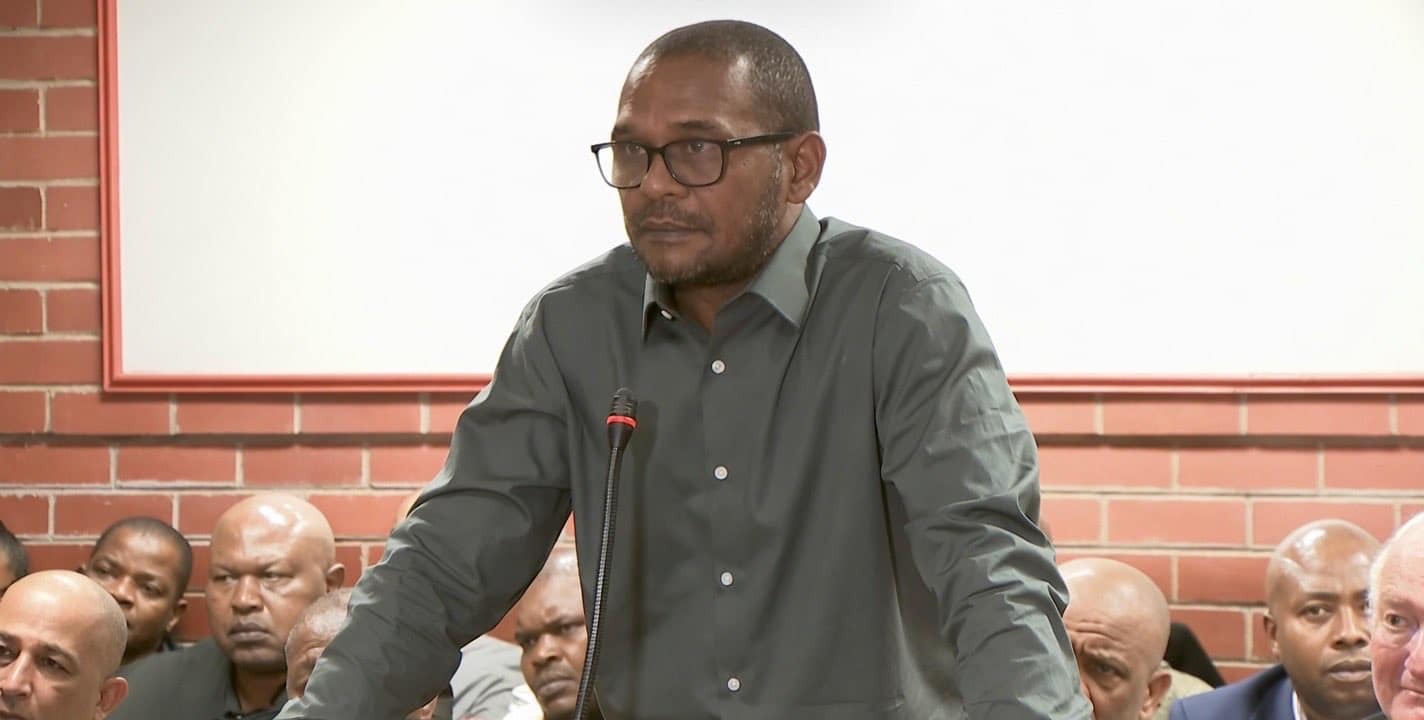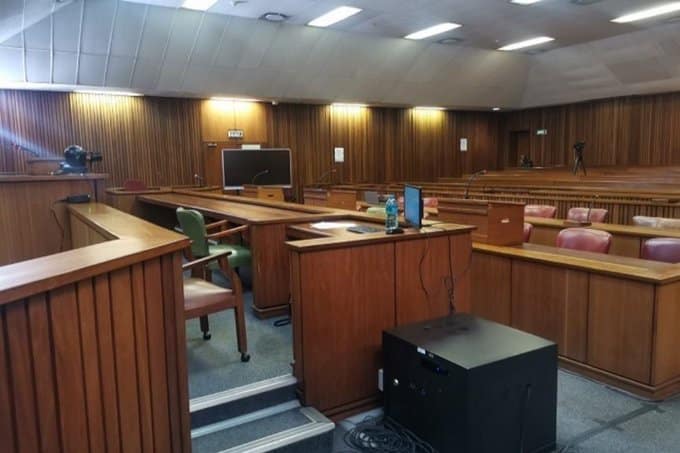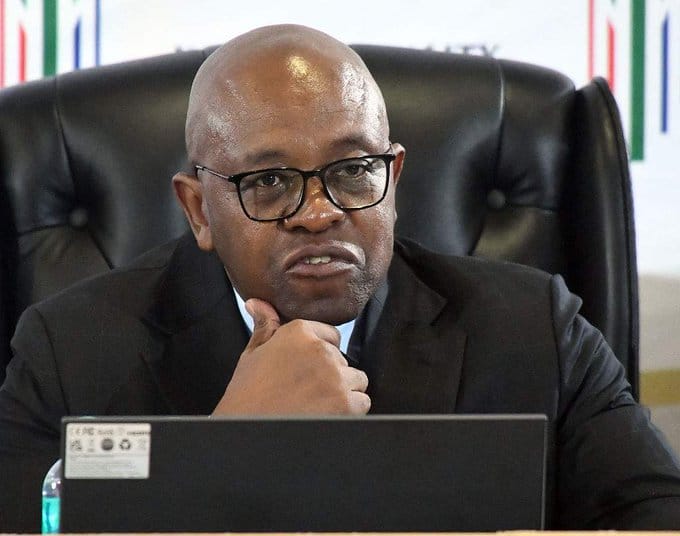
The gavel struck the mahogany block with a sound that echoed through the hushed hall of the Johannesburg High Court, reconvened as the Madlanga Commission of Inquiry. After a brief recess to allow the weight of the morning’s testimony to settle, Justice Madlanga adjusted his spectacles and peered over the rims at the room. The commission, tasked with the monumental duty of probing systemic rot within South Africa’s criminal justice apparatus, had returned this week to a grim focus: the police themselves.
Not the national SAPS alone, but the municipal police forces of the country’s economic heartland—the Tshwane Metropolitan Police Department (TMPD) and its counterpart in Ekurhuleni. The hearings, initially centered on isolated procurement irregularities, had swiftly metastasized into a sprawling investigation of ghost contracts, forged signatures, and the unsettling ease with which politicians and mid-level officers alike had allegedly pillaged public safety funds.
The day’s key witness was Yolande Faro, a steely-voiced deputy director of supply chain management for the TMPD. Dressed in a dark blazer and clutching a blue folder bulging with spreadsheets, she detailed the breathtaking saga of an R800 million security contract—a deal meant to guard police stations and impound lots, but which she testified had been “stillborn from the start.”
“The bidding process was a pantomime,” Faro told the commission, her voice steady despite the evident strain. “Preferred bidders were identified before the tender was even advertised. Technical evaluations were altered overnight. And when we tried to raise a red flag, we were told to ‘facilitate,’ not investigate.” She recounted her own successful campaign to cancel the irregular contract and her proposal to insource security services—a move she argued would save the city millions and restore accountability. “The criminals were being paid to guard the guardians,” she said. “It had to stop.”
But under sharp questioning from the commission’s legal team, Faro’s testimony revealed an even more disturbing layer. She conceded that for nearly eighteen months, suspicious expenditure worth over R120 million had flowed through the department’s accounts unnoticed. “The internal controls were either disabled or simply ignored,” she admitted. “Payment certificates were approved without delivery notes. Vendors who existed only on paper were paid on time, every time.”
Then came the messages.
The commission’s chair entered into evidence a series of WhatsApp exchanges recovered from a seized phone. The sender: a TMPD sergeant whose name was provisionally suppressed. The recipient: a mid-level official in the city’s finance department. The messages were chillingly casual. “Approve the annexure by 2pm. The contractor is friends with the MMC.” Another: “If Faro asks questions, tell her the audit is classified. I’ll handle her.”
“This sergeant,” Justice Madlanga interjected, his voice low but carrying the full force of the room’s attention, “was not a detective. He was not a financial officer. He was a traffic officer with a badge and a smartphone, yet he dictated the movement of hundreds of millions of rand. Who empowered him? And how many such sergeants exist in other municipalities, silently steering contracts while their commanders look away?”
Faro had no answer. She only shook her head, her eyes fixed on the folder in her lap.
It was at this moment that Justice Madlanga set aside his notes and delivered what would become the day’s most alarming pronouncement. He turned from the witness to face the prosecutors, the journalists, and the handful of municipal officials who had dared to attend.
“What we have witnessed here in Tshwane—the rigged tenders, the political interference via encrypted messages, the collapse of basic financial oversight—is not a local anomaly,” he said, his words measured but laden with gravity. “I have reviewed sealed affidavits from whistleblowers in six other provinces. From the eThekwini metro in KwaZulu-Natal to the Cape Town CBD, the same patterns emerge. Ghost vendors. ‘Facilitation fees’ disguised as consulting costs. Procurement officers reassigned or silenced when they ask too many questions. I am now convinced that this is a nationwide phenomenon, embedded in the very machinery of municipal police procurement.”
He paused, letting the silence stretch. “We are not merely investigating a few corrupt officials in two cities. We are mapping a system that has been deliberately hollowed out.”
The commission recommended immediate nationwide audits of all municipal police procurement dating back to 2019. It called for the National Treasury to implement real-time tender monitoring and for the creation of an independent anti-corruption unit within the Department of Cooperative Governance, insulated from local political pressure. But most urgently, Justice Madlanga warned that without urgent legislative reforms to protect constitutional procurement rules—Section 217 of the Constitution, which demands contracts be awarded “fairly, equitably, and transparently”—the rot would continue.
“If a sergeant with a WhatsApp can bypass the Constitution,” he concluded, “then the criminal justice system is not protecting the public. It is protecting the criminals within. And that is a betrayal of every citizen who pays taxes and prays for safety.”
As the commission adjourned for the day, Yolande Faro walked slowly down the courthouse steps, the winter sun low and pale behind the city skyline. Behind her, a clutch of journalists rushed to file their stories. Ahead, she knew, lay the hardest part: returning to an office where her phone might ping with another message, and where the enemies she had exposed still held their badges, their budgets, and their silence.
About The Author