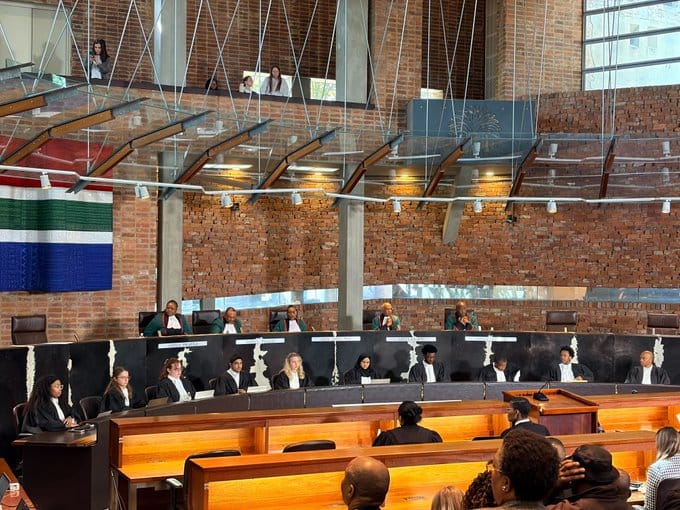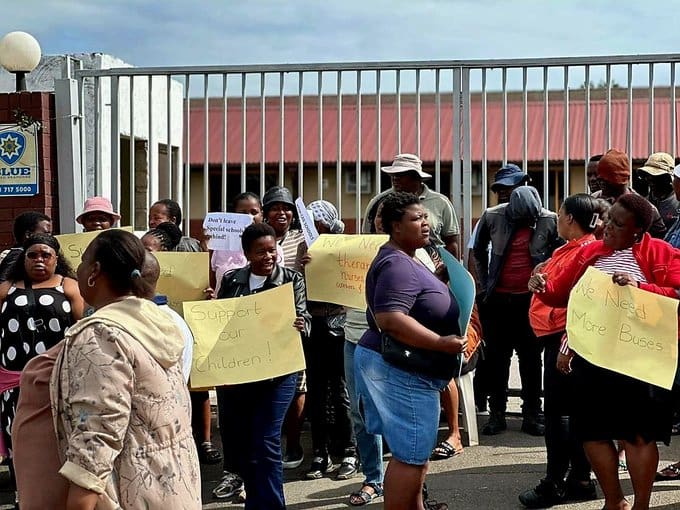
In a decisive move to defuse a volatile community standoff, KwaZulu-Natal Education MEC, Mbali Frazer, personally intervened in the escalating crisis at Darlington Primary School on Tuesday, engaging in tense but critical talks with parents, community leaders, and concerned civic groups.
The emergency meeting, held at the school hall under heavy security, was convened to address a festering dispute over learner placements that has left dozens of children stranded without classrooms at the start of the academic year, and ignited dangerous clashes between local residents and foreign nationals in the surrounding area.
For over a week, Darlington Primary has been the epicenter of growing anger and frustration. The core of the conflict stems from severe overcrowding and a critical shortage of classrooms. A group of parents, primarily South African nationals, have protested vehemently, alleging that their children were unfairly denied placement while children of foreign nationals—many from other African countries—were admitted. This accusation, fiercely denied by school management and migrant communities, has fueled xenophobic undertones and led to sporadic, heated confrontations outside the school gates.
MEC’s Direct Intervention and Firm Commitments
Facing a situation threatening both educational delivery and social cohesion, MEC Frazier did not mince words. “The right to basic education is enshrined in our Constitution for every child on South African soil, irrespective of origin. However, the legitimate frustrations of parents who see no space for their children in their own community school cannot be ignored. This is not a question of ‘us versus them,’ but a systemic failure of planning and resource allocation that we are duty-bound to fix,” Frazer stated to a packed hall.
The MEC outlined an immediate action plan to resolve the crisis:
- Emergency Infrastructure Audit: The Department will dispatch a technical team within 48 hours to conduct an urgent assessment of the school’s infrastructure. The priority is to determine the feasibility of erecting additional temporary mobile classrooms on the school grounds or adjacent land.
- Verification and Placement Process: An independent panel, including district officials and a representative from the South African Human Rights Commission (SAHRC), will oversee a transparent verification of all placement applications for Grade 1 and Grade 8. The process will be made public to ensure fairness and adherence to official placement policies.
- Community Dialogue Forum: A permanent community liaison committee will be established, comprising school governing body members, parent representatives from all community groups, religious leaders, and local NGOs. This forum will meet weekly to address concerns and monitor progress.
- District-Wide Review: Acknowledging that Darlington is a symptom of a broader challenge, the MEC announced a rapid review of learner placement pressures in all hotspot schools across the eThekwini metro, promising to fast-track infrastructure projects where possible.
A Community on Edge Seeks Solace
Parents from all sides expressed cautious relief at the high-level intervention. Thandeka Mthethwa, a local parent whose 6-year-old remains at home, said, “We have been singing and protesting for days. Finally, someone is listening. We are not against any child, but we need answers and we need spaces for our children. The MEC’s promise of a clear, fair process is what we wanted.”
Representatives from the migrant community, who had feared being scapegoated, welcomed the MEC’s inclusive language. “Our children are also scared. They just want to learn,” said Jean-Claude Niyonzima, a community leader. “We are ready to cooperate fully with the department’s verification. We believe in rules and processes.”
Analysts Point to Deeper Systemic Issues
Education analysts warn that the Darlington crisis is a microcosm of a national challenge. Rapid urbanization, inward migration to major metros, and historical backlogs in school building have created a perfect storm, particularly in township schools. “The department’s planning models have not kept pace with demographic shifts,” said Professor Nomalanga Mkhize of the University of KwaZulu-Natal. “While the MEC’s intervention is necessary and welcome, it is a reactive crisis management. What is needed is a proactive, data-driven provincial plan for school infrastructure that anticipates population movement and growth.”
As the meeting concluded, MEC Frazer issued a firm plea for calm and cooperation. “Let the department’s teams do their work. I have committed to returning to this community in one week with a detailed progress report. In the meantime, I implore everyone: allow the school to function, protect the children, and let us solve this problem through dialogue and the system.”
The situation at Darlington Primary remains fragile, but the direct and structured intervention from the highest level of provincial education leadership has provided a critical roadmap away from the brink, offering a glimmer of hope for a resolution that serves the best interests of all learners.
About The Author