The global shockwaves from the war in Iran have reached deep into East Africa. Kenya, the region’s economic powerhouse and a vital hub for trade, logistics, and finance, has formally requested rapid and significant financial support from the World Bank to cushion its economy against the severe disruptions caused by the ongoing conflict. Central Bank Governor Kamau Thugge confirmed the request in a statement on Thursday, warning that the country faces “unprecedented economic pressure” as global supply chains buckle and energy prices spiral.
“The war in Iran is not a distant event,” Thugge said during an emergency briefing at the Central Bank headquarters in Nairobi. “It is here. It is at our petrol pumps. It is at our ports. It is in the prices our people pay for food, for transport, for electricity. We have acted swiftly to seek emergency support from the World Bank because delay will cost lives. Delay will cost livelihoods.”
The request, which was submitted to the World Bank’s International Development Association (IDA) earlier this week, seeks a combination of budget support, concessional loans, and technical assistance aimed at stabilizing Kenya’s shilling, securing fuel imports, and protecting the country’s most vulnerable households from the cascading effects of the war.
The shockwaves: How the Iran war is hurting Kenya
Kenya is not a direct party to the conflict between the United States and Iran. But as a net importer of oil and a country deeply integrated into global trade, it is highly exposed to the economic fallout.
The most immediate impact has been on energy prices. Since the outbreak of hostilities three weeks ago, global crude oil prices have surged by more than 35%, pushing Brent crude above $110 per barrel for the first time since 2022. Kenya, which imports 100% of its refined petroleum products, has seen petrol and diesel prices rise by nearly 20% in a matter of days.
“Every Kenyan feels this,” said James Mwangi, CEO of Equity Bank, Kenya’s largest commercial bank. “The mama mboga frying chips feels it in the cost of cooking oil. The boda boda rider feels it at the pump. The farmer feels it in the cost of transporting maize to market. This is not an abstract economic indicator. It is a daily, painful reality.”
The second shock has been to the Kenyan shilling. The currency, which had been stabilizing after a turbulent 2024, has lost nearly 8% of its value against the US dollar since the war began. The depreciation is driven by two factors: higher demand for dollars to pay for more expensive oil imports, and a flight of foreign portfolio investors from emerging markets perceived as risky.
“A weaker shilling means everything imported becomes more expensive,” said economist Dr. David Ndii, a member of the government’s fiscal advisory team. “Medicine. Machinery. Fertilizer. Spare parts. Every sector of the economy is affected. And the people who suffer most are the poor, who spend a larger share of their income on basic goods.”
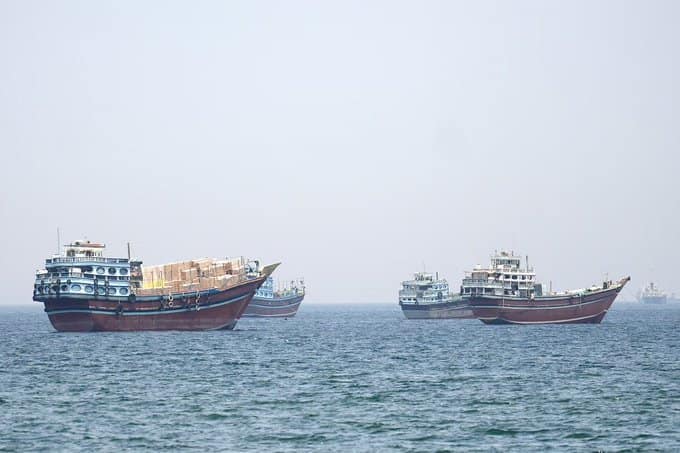
The third shock is to trade. The Iran war has disrupted shipping routes through the Strait of Hormuz, a critical chokepoint through which nearly 20% of global oil passes. While Kenya does not import oil directly from Iran, the broader disruption has increased shipping costs and caused delays in the delivery of goods from Asia and the Middle East.
“The port of Mombasa is seeing longer turnaround times,” said John Mwendwa, CEO of the Kenya International Freight and Warehousing Association. “Container shipping rates have doubled in some cases. Importers are struggling to secure letters of credit. Some shipments have been rerouted around the Cape of Good Hope, adding weeks to delivery times. This is not sustainable.”
The government’s response: An emergency request
Faced with these converging shocks, the Kenyan government has moved quickly. In addition to the World Bank request, the government has:
- Subsidized fuel prices using funds from the Petroleum Development Levy, though the subsidy is expected to run out within 60 days without additional financing.
- Reduced fuel taxes temporarily, at a cost of an estimated KSh 15 billion (approximately $115 million) to the exchequer.
- Negotiated a deferred payment agreement with three Gulf oil-exporting nations to ease pressure on foreign reserves.
- Ordered state-owned enterprises to cut non-essential spending by 15%.
But these measures, officials acknowledge, are temporary. The World Bank request is designed to provide a more durable buffer.
“We are seeking approximately $1.2 billion in emergency budget support,” said National Treasury Cabinet Secretary Njuguna Ndung’u, speaking alongside Thugge. “This is not a luxury. It is a necessity. Without it, we will be forced to cut essential services, raise taxes, or borrow from commercial markets at punitive rates. None of those options are acceptable.”
The request is being processed under the World Bank’s Crisis Response Window, a facility designed to provide rapid financing to countries facing external shocks. The window was used extensively during the COVID-19 pandemic and, more recently, to support countries affected by the war in Ukraine.
“We are in close dialogue with the Kenyan authorities,” a World Bank spokesperson said from Washington, D.C. “We understand the urgency of the situation and are working to disburse support as quickly as possible, subject to our standard safeguards and approval processes.”
The regional dimension: East Africa feels the heat
Kenya is not the only East African nation feeling the heat from the Iran war. Uganda, Tanzania, Rwanda, and Ethiopia all import fuel through the Mombasa port and are facing similar price pressures. But Kenya’s larger, more diversified economy makes it both more resilient in some ways and more exposed in others.
“Kenya is the region’s gateway,” said Ahmed Salim, a trade economist based in Dar es Salaam. “If Kenya’s economy stumbles, the entire region stumbles. That is why the World Bank’s response to Kenya’s request will be watched closely by its neighbors. If Kenya gets support, others will likely line up for similar assistance.”
The East African Community (EAC), the region’s trade bloc, has convened an emergency meeting of finance ministers for next week to coordinate a regional response to the Iran war’s economic fallout.
“We cannot afford to act as individual countries,” said EAC Secretary General Veronica Nduva. “We must act as a bloc. We are exploring joint procurement of fuel, coordinated monetary policy, and shared access to emergency financing facilities. The crisis is regional. The response must be regional.”
The political context: An election-year squeeze
The economic crisis comes at a particularly delicate time for Kenya’s government. President William Ruto, who took office in 2022 on a platform of economic transformation and “bottom-up” growth, is facing increasing public frustration over the cost of living. While inflation has moderated from its post-COVID peak, the new shock from the Iran war threatens to reverse that progress.
“We are watching the situation closely,” said Eliud Owalo, Ruto’s deputy chief of staff. “The President is in constant communication with the Treasury and the Central Bank. His priority is protecting ordinary Kenyans. Whatever support we can secure from the World Bank will be directed to that end.”
Opposition leaders have seized on the crisis to criticize Ruto’s economic policies, arguing that the government should have built up larger foreign reserves and reduced dependence on imported fuel.
“This is the consequence of poor planning,” said Raila Odinga, the veteran opposition leader. “We have known for decades that Kenya is vulnerable to oil price shocks. And yet we have no strategic fuel reserves. No meaningful investment in renewable energy. No diversification of our energy sources. The government must answer for this.”
The human cost: ‘We are struggling to survive’
Behind the statistics and the political debates are real people struggling to make ends meet.
In the sprawling Eastlands neighborhood of Nairobi, Jane Wanjiku, 45, a mother of three, runs a small food kiosk. She has seen her costs rise sharply in recent weeks.
“Maize flour is up. Cooking oil is up. Sugar is up,” she said, counting coins into her palm. “I have had to raise my prices, but my customers cannot afford to pay more. So I sell less. My profit is shrinking. I am not sure how much longer I can stay open.”
In Mombasa, Hassan Juma, 52, a long-distance truck driver who transports goods between the port and the interior, has seen his fuel costs double.
“I used to make a profit of KSh 5,000 per trip,” he said. “Now I am lucky to break even. I have three children in school. My wife is unwell. I cannot afford to stop working, but I cannot afford to continue either. I am trapped.”
In Kisumu, Mary Akinyi, 38, a fishmonger, has seen her supply chain disrupted by the shipping delays.
“The fish comes from Tanzania through Mombasa,” she explained. “The trucks are late. The fish is not fresh. Customers complain. I am losing business. I do not know who to blame. I just know I am suffering.”
The World Bank’s calculus: Why Kenya matters
The World Bank’s decision on Kenya’s request will be closely watched not only in East Africa but across the developing world. Kenya is a bellwether for emerging market economies facing the dual shocks of higher energy prices and currency depreciation.
“Kenya is a test case,” said Dr. Mthuli Ncube, a former finance minister of Zimbabwe and now a visiting fellow at Oxford University. “If the World Bank supports Kenya effectively and quickly, it will signal to other vulnerable countries that the international financial system is still functioning. If it hesitates or imposes punitive conditions, it will reinforce the perception that the global financial architecture is broken.”
The World Bank’s Crisis Response Window has limited funds — approximately $25 billion globally — and is already being stretched by multiple simultaneous crises: the aftermath of COVID-19, the war in Ukraine, climate disasters, and now the Iran conflict.
“There are many competing demands,” a World Bank official acknowledged. “We have to triage. Kenya’s case is strong because its economy is large, its institutions are relatively strong, and its vulnerability is clearly linked to an external shock beyond its control. But we cannot help everyone. Hard choices will have to be made.”
Kenya’s resilience: A history of weathering storms
Despite the current crisis, Kenya has a history of resilience. The country weathered the COVID-19 pandemic without a full-blown economic collapse. It absorbed the initial shock of the Ukraine war. It has maintained democratic stability while many neighbors have slid into turmoil.
“Our economy has been tested before,” said Central Bank Governor Thugge. “We have learned from each crisis. We have built buffers. But the Iran war is different. It is not a single shock. It is a cascade of shocks — energy, trade, currency, inflation — all hitting at once. No buffer is large enough to absorb that alone. That is why we need help.”
Thugge pointed to Kenya’s successful engagement with the International Monetary Fund (IMF), which approved a $2.4 billion extended credit facility in 2023. That program remains on track, but the IMF’s resources are also stretched, and the fund has not yet indicated whether it will provide additional emergency support.
“The IMF is an important partner, but the World Bank is better suited to provide the kind of long-term budget support we need right now,” Thugge said. “We are in discussions with both institutions. We are hopeful.”
The road ahead: What happens next
The timeline for the World Bank’s decision is uncertain, but officials on both sides have indicated that they expect a response within four to six weeks. In the meantime, Kenya will rely on its existing reserves, which stand at approximately $7.5 billion — enough to cover about four months of imports.
“That is dangerously low by historical standards,” said economist Ndii. “A healthy reserve level for Kenya would be eight to ten months of imports. Four months leaves no room for error. If the war intensifies, if oil prices rise further, if shipping is further disrupted, we could be in serious trouble within weeks.”
The government has urged calm and warned against panic buying or hoarding, which could exacerbate shortages.
“There is no need for panic,” said Treasury CS Ndung’u. “We have fuel. We have food. We have a plan. The World Bank is listening. We will get through this. But we must get through it together.”
A nation holds its breath
As the sun set over Nairobi on Thursday, the city’s streets were filled with the usual evening rush: matatus honking, hawkers calling out their wares, office workers heading home. On the surface, life appeared normal. But beneath the surface, anxiety simmered.
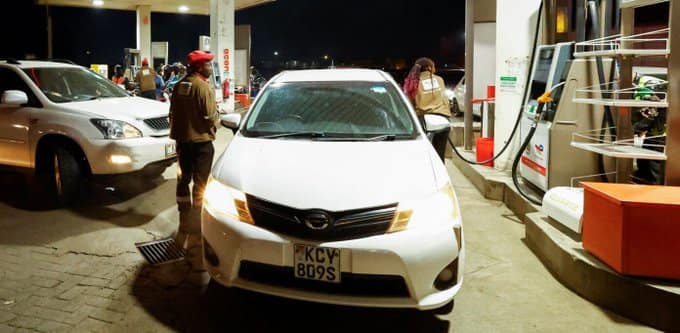
At a petrol station on Uhuru Highway, a queue had formed — not because of a shortage, but because drivers were anxious about future prices. “I am filling up now because who knows what tomorrow will bring,” said Peter Odhiambo, 34, a taxi driver. “Every day, the price goes up. Every day, my profit goes down. I am scared.”
At a small café in the central business district, Grace Muthoni, 28, a waitress, scrolled through news on her phone. “I don’t understand all the economics,” she admitted. “But I know that my rent went up. My food costs more. And my salary is the same. Something is wrong. I hope the government fixes it. I don’t know what else to hope for.”
The request for World Bank support is a lifeline. Whether it arrives in time — and in sufficient quantity — will determine whether Kenya weathers the Iran war’s economic shock or is swept away by it.
For now, the country waits. The Central Bank watches. The World Bank deliberates. And the people of Kenya — resilient, resourceful, and increasingly weary — hope for the best while preparing for the worst.
The war in Iran is thousands of miles away. But its economic aftershocks have arrived in Nairobi. And they are shaking the ground beneath Africa’s most dynamic economy.
About The Author