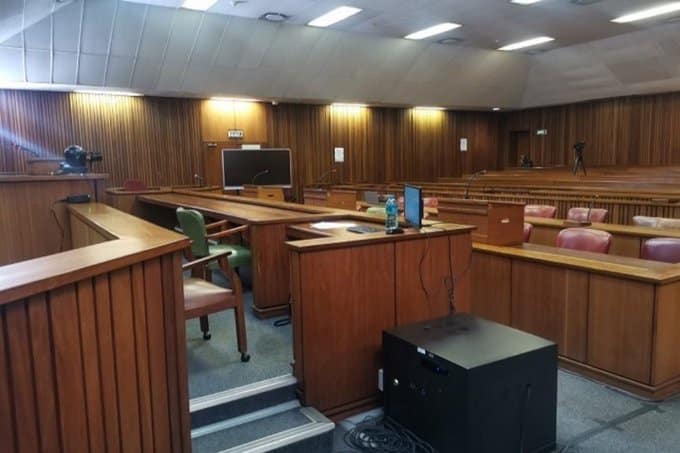
The air outside the Boksburg Magistrate’s Court was thick long before the doors opened. By 7am, a crowd had gathered—journalists jostling for position, police officers keeping a watchful eye, and curious onlookers clutching coffee cups, drawn by the gravitational pull of high-stakes justice. Inside Courtroom 4, the benches were packed. The accused were coming.
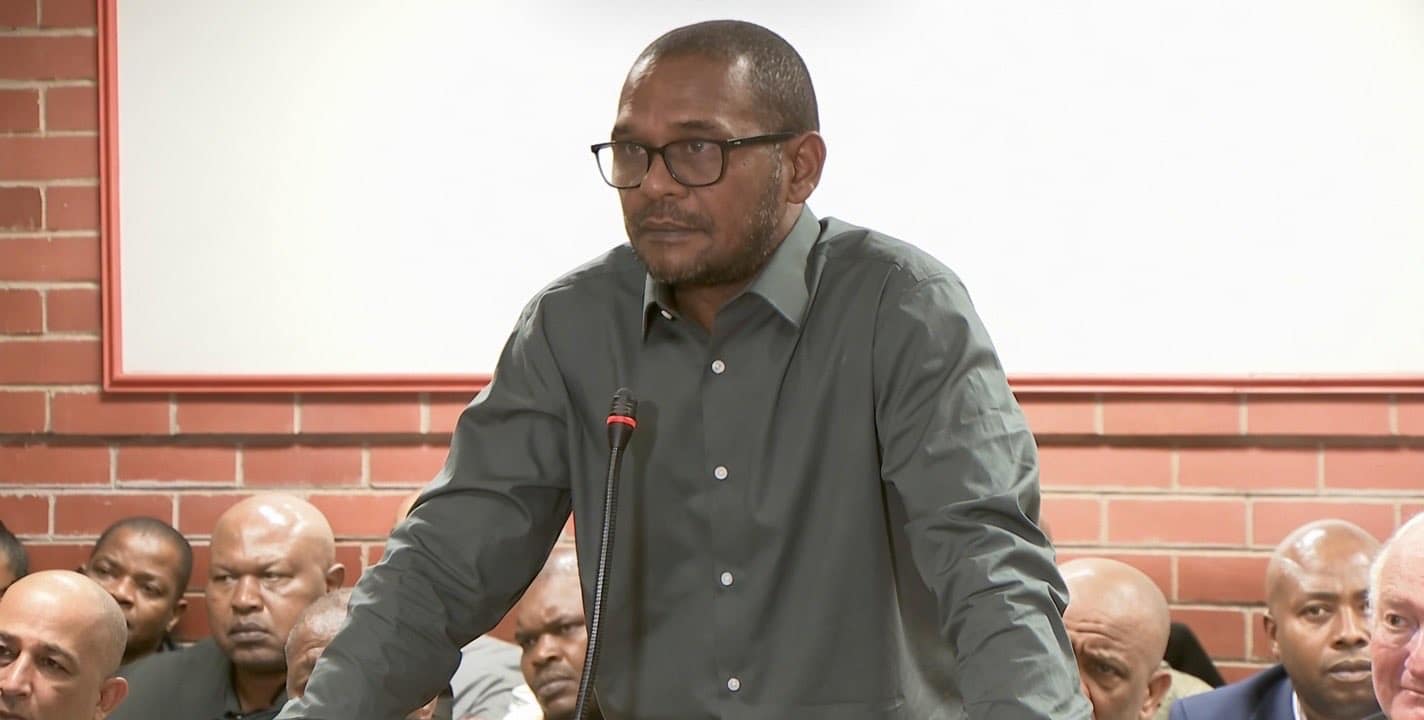
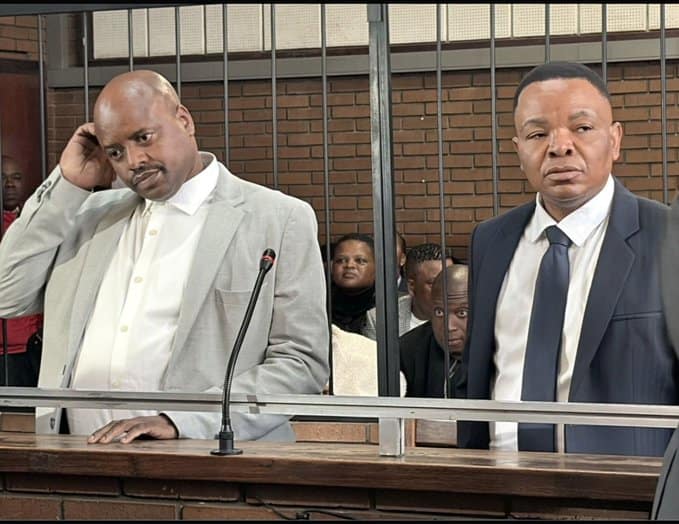
Suspended Ekurhuleni Metro Police Department (EMPD) Deputy Chief Julius Mkhwanazi and Ekurhuleni City Manager Kagiso Lerutla—two of the most powerful men in Gauteng’s second-largest municipality—sat in the dock, waiting for a magistrate to decide whether they would walk out of this building or be led back to their holding cells.
Today was judgment day. Not on their guilt or innocence. That trial lies ahead. But on the question that has consumed legal analysts, political commentators, and the residents of Ekurhuleni for weeks: Do these two men pose a flight risk? Would they interfere with witnesses? Should they be granted bail?
The magistrate’s answer, when it comes, will send shockwaves far beyond Boksburg.
The Accused: Two Pillars of Power
To understand the gravity of this moment, one must understand who sits in the dock.
Julius Mkhwanazi is no ordinary police officer. As EMPD Deputy Chief, he was the second-highest ranking official in a municipal police force of over 3,000 officers. A career law enforcer with decades of service, Mkhwanazi was known as a street-smart operator who rose through the ranks. He was also, according to the State, the alleged lynchpin of a sprawling corruption network that extended from impound lots to procurement offices.
Kagiso Lerutla is the City Manager of Ekurhuleni—the municipality that includes Boksburg, Germiston, Kempton Park, and parts of the East Rand. As the accounting officer, he was responsible for contracts worth billions of rand. He reported directly to the mayor and the council. He was, in effect, the chief executive of a city of more than four million people.
Both men were arrested last month following a gripping investigation by the Hawks’ Serious Corruption Unit. The charges? Fraud, corruption, money laundering, and contravention of the Municipal Finance Management Act (MFMA). The alleged scheme, according to the State, involved the manipulation of service provider contracts, kickbacks, and the systematic looting of municipal coffers.
Both have pleaded not guilty. Both deny any wrongdoing. Both say they are victims of a political witch-hunt.
Today, a magistrate will decide if they will fight those charges from home or from a prison cell.
The Bail Hearing: A Legal Battle in Two Acts
The bail proceedings, which stretched over three days last week, were a masterclass in legal brinkmanship. The State, led by seasoned prosecutor Adv. Thabo Nxumalo, argued passionately that Mkhwanazi and Lerutla should remain behind bars until their trial.
“The accused occupy positions of enormous influence,” Nxumalo told the court, pointing at the dock. “They have access to resources. They have networks within law enforcement and municipal structures. There is a real and substantial risk that if released, they will intimidate witnesses, destroy evidence, or flee the jurisdiction.”
The State presented what it called “compelling evidence” of potential witness tampering, including allegations that Lerutla had contacted a municipal employee after his arrest—a contact the State said was a veiled threat. Lerutla’s legal team dismissed the claim as “a routine call about outstanding leave days.”
The State also noted that both men possess multiple passports and have international travel histories. “South Africa has no extradition treaty with certain countries,” Nxumalo reminded the magistrate. “The risk of flight is not theoretical.”
But the defense teams, led by high-profile attorneys and two senior advocates, fought back fiercely.
Mkhwanazi’s lawyer, Adv. Sarah Mthembu (SC), argued that her client was a decorated officer with deep roots in the community. “He has lived in Ekurhuleni for thirty years. His family is here. His pension is here. He surrendered his passport voluntarily. He is not a flight risk—he is a scapegoat.”
Lerutla’s legal team echoed the sentiment, adding that their client was cooperating fully with investigators. “The State’s case is built on inference and innuendo,” Lerutla’s advocate told the court. “There is no direct evidence that Mr. Lerutla received a single rand of corrupt money. To detain him now would be to punish him before trial.”
At the heart of the defense argument was a simple, powerful claim: bail is a right, not a privilege. Unless the State proves exceptional circumstances, the accused must be released.
The magistrate reserved judgment. And now, the courtroom waits.
The Charges Beneath the Headlines
While the bail decision dominates today’s headlines, the underlying charges are staggering.
The investigation, codenamed “Operation Clean Hands,” began eighteen months ago after a whistleblower submitted a dossier to the Hawks. The dossier alleged a sophisticated kickback scheme involving EMPD vehicle towing contracts. According to the State, service providers were required to pay “commissions” to municipal officials in exchange for lucrative impound and towing rights.
Mkhwanazi, the State alleges, acted as the enforcer—pressuring subordinates to award contracts to specific companies and ensuring that payments flowed upward. Lerutla, the State alleges, signed off on irregular contracts and facilitated payments through a web of shell companies.
The total value of the allegedly corrupt contracts is estimated at over R120 million. The State says it has bank records, phone recordings, and sworn affidavits from three former municipal employees who have turned State witnesses.
“This is not a small-time hustle,” one investigator told a newspaper last week. “This is organized theft of public money. And these two men were at the top of the food chain.”
The Political Earthquake
The case has already had dramatic political consequences. Both Mkhwanazi and Lerutla were suspended shortly after their arrests—Mkhwanazi by the EMPD’s national commissioner, Lerutla by Ekurhuleni Mayor Nkosindiphile Xhakaza.
The Economic Freedom Fighters (EFF) and ActionSA have called for a full forensic audit of all EMPD and municipal contracts signed in the last five years. The Democratic Alliance (DA), which controls several Gauteng metros but not Ekurhuleni, has seized on the case to attack the African National Congress (ANC)’s record on corruption.
“The ANC talks about cleaning house, but their own officials are being led out of their offices in handcuffs,” said DA Gauteng leader Solly Msimanga. “The people of Ekurhuleni have been robbed. Those responsible must face the full might of the law.”
The ANC’s regional leadership in Ekurhuleni has remained largely silent, though sources say the party is deeply unsettled. Both Mkhwanazi and Lerutla have powerful allies within the ANC. Their arrests have exposed fractures that were previously hidden.
“If bail is denied, there will be a political reckoning,” said a senior ANC source, speaking anonymously. “If bail is granted, the State will look weak. Either way, the party loses.”
The Families: Waiting in the Gallery
In the public gallery, two groups of family members sit apart from each other, their faces etched with anxiety. Mkhwanazi’s wife clutches a Bible. Lerutla’s adult daughter grips her mother’s hand.
“We are praying for justice,” the wife whispered to a reporter before the proceedings began. “He is a good man. He served this city for years. This is a misunderstanding.”
Lerutla’s daughter declined to speak, but her eyes said everything. Fear. Frustration. A desperate hope that the magistrate will say the words that will allow her father to come home.
Behind them, a row of journalists type furiously, their eyes fixed on the bench where the magistrate will soon enter. This is not just a bail ruling. It is a verdict on the credibility of the State’s case. If bail is granted, the defense will claim vindication. If bail is denied, the State will claim it has a watertight case.
Either way, the story is far from over.
The Legal Stakes: What the Judgment Means
Today’s ruling will turn on three legal questions, each fiercely contested:
- Flight Risk: Does the State have credible evidence that Mkhwanazi and Lerutla would flee if released? The defense says no—both have deep roots, surrendered passports, and no prior criminal records. The State says yes—powerful men with resources can disappear if they choose.
- Witness Intimidation: Has there been any actual interference with witnesses? The State points to the alleged phone call by Lerutla. The defense calls it a routine conversation blown out of proportion.
- The Interests of Justice: Would releasing the accused undermine public confidence in the criminal justice system? This is the most subjective factor. The magistrate must weigh the presumption of innocence against the seriousness of the allegations.
If bail is granted, conditions will likely be strict: reporting to a police station weekly, surrendering all travel documents, a significant financial surety (likely R50,000–R100,000 each), and a prohibition on contacting State witnesses.
If bail is denied, Mkhwanazi and Lerutla will remain in custody at the Johannesburg Correctional Centre (formerly Sun City prison) until their trial—which could be months or even years away.
The Broader Context: Corruption in the Crosshairs
This case is not happening in a vacuum. South Africa is in the midst of a renewed anti-corruption drive, spearheaded by the National Prosecuting Authority’s (NPA) Investigating Directorate. High-profile arrests—from former ministers to municipal managers—have become almost routine.
But convictions remain elusive. South Africa’s conviction rate for high-level corruption is notoriously low. Cases drag on for years. Witnesses are bought off or disappear. Accused officials often return to work before their trials conclude.
The Mkhwanazi-Lerutla case has become a test of whether the system has truly changed. The Hawks say they have a “rock-solid” case. The defense says the State is overreaching. The magistrate’s decision on bail will be the first indicator of which side has the stronger argument.
What Happens After Judgment
When the magistrate finishes reading the ruling—expected to take approximately 45 minutes—one of two things will happen.
If bail is granted:
Mkhwanazi and Lerutla will sign bail documents, pay their sureties, and walk out of the Boksburg Magistrate’s Court as free men, albeit with strict conditions. They will likely be greeted by cheering family members and supporters. Their legal teams will declare victory. The State will express disappointment but vow to press on with the trial.
If bail is denied:
The two men will be handcuffed and led down to the holding cells beneath the courthouse. From there, they will be transported to the Johannesburg Correctional Centre in a police van. They will be processed, strip-searched, and assigned prison numbers. Their families—watching from the gallery—will likely break down in tears. Their lawyers will immediately signal an intention to appeal to a higher court.
Either way, the courtroom will empty, the journalists will file their stories, and the long, slow machinery of justice will grind on.
The Mood in Courtroom 4
As the clock ticks toward 10am, the tension is almost visible. Lawyers shuffle papers. The accused sit motionless, their faces betraying nothing. Mkhwanazi, in a dark suit, stares straight ahead. Lerutla, wearing glasses and a grey blazer, occasionally whispers to his attorney.
The magistrate, a woman known for her no-nonsense approach and her refusal to be swayed by political pressure, has not yet entered. When she does, the courtroom will rise. She will sit. She will open a thick file. She will clear her throat.
And then, in a flat, measured voice, she will speak the words that will change two lives—and perhaps reshape the political landscape of Ekurhuleni.
Epilogue: Beyond the Bail Ruling
Whatever happens today, this is not the end. It is not even the beginning of the end. It is, at best, the end of the beginning.
The criminal trial, if it proceeds, could take years. Witnesses will testify. Documents will be examined. Lawyers will argue. And all the while, the residents of Ekurhuleni—who pay taxes, who use EMPD services, who trust their city manager to manage their money—will watch and wonder: Is justice real? Does it apply equally to the powerful and the powerless?
Today’s bail judgment will not answer those questions. But it will send a signal.
And in Boksburg, on this crisp morning, the city holds its breath.
About The Author