The golden gates of Gold Reef City, usually thrown open to the sounds of children’s laughter, clanking roller coasters, and the smell of caramel popcorn, stood padlocked and silent on Tuesday morning. A handwritten sign, taped to the ticket booth window, offered a terse message to the small crowd of disappointed families: “Closed until further notice. We apologize for the inconvenience.”
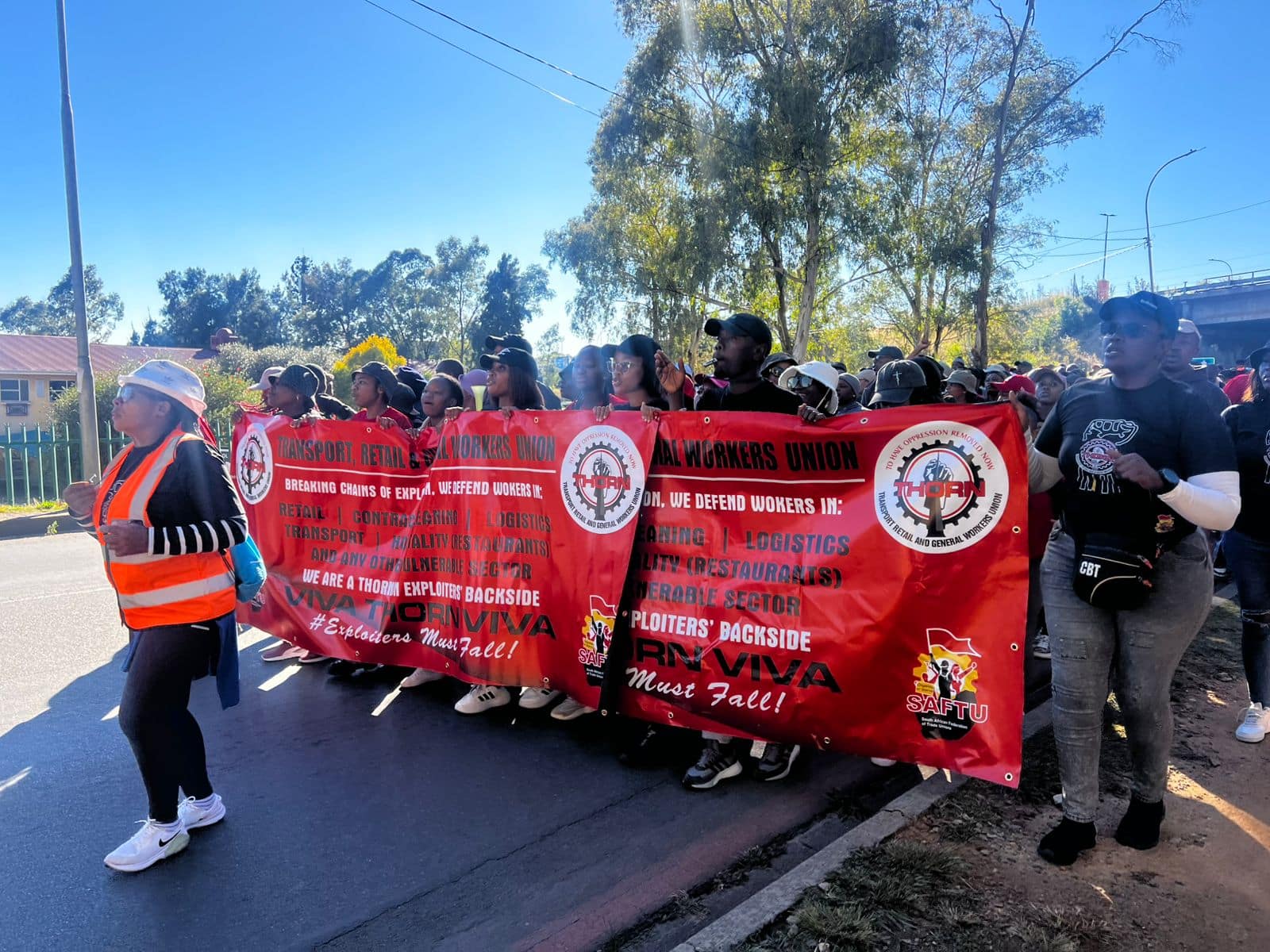
Behind those gates, the Anaconda roller coaster sat motionless. The Golden Loop hung frozen mid-swing. The auditorium of the famous Apartheid Museum, which shares the precinct, was dark. And at the main entrance, hundreds of striking workers gathered under a blazing Highveld sun, chanting slogans and waving handwritten placards.
What began as a quiet dispute over wages has escalated into a full-blown shutdown of one of Gauteng’s most beloved tourist attractions. The strike, now entering its second week, has forced management to lock the gates indefinitely. And with no resolution in sight, both workers and tourists are feeling the pain.
The Strike: From Grievance to Shutdown
It started simply enough. On a Monday morning two weeks ago, a group of approximately 300 employees—ride operators, ticket sellers, cleaners, food service staff—presented a list of demands to management. They wanted a wage increase of 15% to keep pace with inflation and the rising cost of living in Johannesburg. They wanted safer working conditions, including proper safety harnesses on aging rides and better training. They wanted an end to what they called “unfair shift scheduling” and “arbitrary deductions” from their paychecks.
Management, represented by Gold Reef City’s parent company, offered 5%. The union rejected it. The workers downed tools.
By the end of the first week, the strike had grown. Workers from the casino, the hotel, and even the maintenance crews joined in sympathy. Picketing lines formed at every entrance. Buses full of school children on end-of-term outings were turned away. International tourists, clutching selfie sticks and maps, stared in confusion at the locked gates.
“We are not asking for the moon,” said Thandi Nkosi, a 34-year-old ride operator who has worked at Gold Reef City for eight years. She stood on the picket line wearing her bright orange staff polo shirt, now faded from years of washing. “We are asking to live. My rent went up. My children’s school fees went up. My salary stayed the same. How am I supposed to survive?”
Her colleague, Mpho Dlamini, nodded. “They tell us we are family. But family doesn’t let you go hungry.”
On Friday of last week, after failed negotiations mediated by the Commission for Conciliation, Mediation and Arbitration (CCMA), management made the decision that shocked many: they closed the theme park entirely.
The Closure: A Risky Gamble
For Gold Reef City, closing its doors is not a small decision. The theme park is one of Johannesburg’s top tourist attractions, drawing hundreds of thousands of visitors annually—locals celebrating birthdays, international tourists seeking a taste of Joburg’s gold rush history, and school groups combining education with fun.
The park is also a significant economic engine. According to industry estimates, a single day of closure costs the company millions in lost ticket sales, food and beverage revenue, and souvenir purchases. And with the peak winter school holidays just weeks away, every day the gates remain shut is a financial wound that will take months to heal.
But management, in a statement released over the weekend, insisted they had no choice.
“The safety and security of our guests and staff is our paramount concern,” the statement read. “Escalating tensions at the picket lines have created an environment that is not conducive to the safe operation of the theme park. We have therefore taken the difficult decision to suspend operations until further notice.”
The company also accused striking workers of “intimidation tactics,” including blocking employee entrances, harassing non-striking staff, and damaging company property. The union has denied these allegations, calling them “a smear campaign to distract from the real issues.”
The Picketers: Voices from the Frontline
On Tuesday morning, the picket line outside the main entrance was a study in contrasts. At times, it felt like a festival—workers singing struggle songs, sharing cool drink from a communal ice chest, a portable speaker blasting amapiano. A group of women danced in a circle, their placards bobbing to the beat.
“Ayasaba! Ayasaba! Abaphathi bayasaba!” they sang. (“They are scared! They are scared! The bosses are scared!”)
But the festive mood could not mask the desperation underneath. Many of these workers are the primary breadwinners for their families. Two weeks without pay is not a political statement—it is a crisis.
“I have not paid my rent,” said a 45-year-old cleaner who gave her name only as Mama Rose. “My landlord is calling me. I tell him, ‘Please, just wait. The strike will end.’ But he says, ‘I also have bills.’ What do I do?”
Others spoke of going days without a hot meal, relying on neighbors and family members to scrape by. One young man, a ticket seller named Sibusiso, held up a photograph of his infant daughter. “She needs formula,” he said, his voice breaking. “I cannot buy formula. How is this a victory?”
The union representing the workers, the South African Municipal Workers’ Union (SAMWU), has set up a relief fund, but donations have been meager. “We are doing what we can,” said regional secretary Linda Mkhize, who was on the picket line Tuesday morning. “But the real solution is for management to come back to the table with a serious offer. We cannot feed families on solidarity alone.”
The Tourists: Disappointment and Confusion
At the locked gates, a steady stream of disappointed visitors arrived throughout the morning, unaware of the strike.
” We came all the way from Cape Town,” said Mandy Petersen, a mother of two who had promised her children a day at Gold Reef City. Her son, aged eight, tugged at her sleeve, pointing at the silent roller coaster. “But the sign says closed. What do I even tell them?”
A group of German tourists stood in a huddle, consulting a travel app on a phone. “We booked tickets online,” said one, holding up a confirmation email. “No one told us. Is there a refund? Can we get a refund?”
Staff at the ticket booth, themselves caught in the middle, could only shrug and point to the management hotline. The hotline, when called, played a recorded message: “Due to unforeseen circumstances, Gold Reef City Theme Park is temporarily closed. We apologize for the inconvenience.”
For the tourists, the disappointment was real. But for the workers, the stakes were far higher than a spoiled holiday.
The Broader Context: Labour Unrest in Post-Pandemic South Africa
The Gold Reef City strike is not happening in isolation. Across South Africa, labour unrest has been on the rise as workers demand wages that keep pace with an economy battered by inflation, load-shedding, and stagnant growth.
In the hospitality and tourism sector—still recovering from the body blow of the COVID-19 pandemic—tensions are particularly acute. Many workers accepted wage freezes and reduced hours during the lockdowns, believing that better days would come. But those better days have arrived slowly, if at all.
“Workers are angry,” said Professor Edward Webster, a labour sociologist at the University of the Witwatersrand. “They made sacrifices during the pandemic. They expected those sacrifices to be recognized. Instead, they are being offered below-inflation increases while executives continue to earn bonuses. That is a recipe for conflict.”
The Congress of South African Trade Unions (COSATU) has issued a statement of support for the Gold Reef City strikers, calling on management to “return to the negotiating table in good faith.” The union federation has also warned that the strike could spread to other tourist sites if unresolved.
“We are watching closely,” said COSATU spokesperson Sizwe Pamla. “If Gold Reef City thinks this is an isolated incident, they are mistaken. Workers across the sector are fed up.”
The Police: A Delicate Balancing Act
The presence of law enforcement has added another layer of tension to the strike. On Monday, a squad of Johannesburg Metro Police Department (JMPD) officers arrived at the gates to monitor the picket line. No arrests have been made, but workers say they feel intimidated.
“They stand there with their vests and their guns, staring at us,” said one striker, who asked not to be named. “We are not criminals. We are workers. We have the right to strike. Why do we need police?”
JMPD spokesperson Superintendent Xolani Faku said the officers were present “to ensure the safety of all parties and to prevent any potential breaches of the peace.” He added that no violence had been reported and that the situation was “calm but tense.”
The Economic Impact: Beyond the Gates
The closure of Gold Reef City is already sending ripples through the local economy. The nearby businesses—restaurants, souvenir shops, parking garages—that depend on the park’s foot traffic are seeing their revenues plummet.
“I used to sell 50 bunny chows a day on weekends,” said Ramesh Singh, who operates a food stall across the street from the main entrance. “Today, I have sold three. If this goes on, I will have to close. I cannot pay my staff.”
The strike also threatens Johannesburg’s reputation as a tourist destination. City officials have been working for years to position Joburg as a safe, vibrant gateway to South Africa. A high-profile labour dispute at one of its top attractions does not help that image.
“We are monitoring the situation closely,” said a spokesperson for the Gauteng Tourism Authority. “We encourage both parties to resolve their differences swiftly so that the park can reopen and visitors can once again enjoy this iconic attraction.”
What Happens Next
The coming days will be critical. Both sides have signaled a willingness to return to the negotiating table, but the gap between them remains wide.
Management is said to be considering a revised offer of 7.5%, along with a commitment to review safety protocols. The union is holding out for at least 12%, with a clear timeline for implementation.
The CCMA has scheduled another mediation session for Thursday morning. If that fails, the strike could continue for weeks—and the gates of Gold Reef City could remain locked through the start of the school holidays.
“We are not going to break,” said Thandi Nkosi, the ride operator, her jaw set. “We have been patient. We have been polite. But we cannot wait anymore. We will stand here every day, in the sun, in the rain, until they hear us.”
Across the street, a family of four walked away from the locked gates, their disappointed children trailing behind. The father looked back over his shoulder at the silent roller coaster, then at the chanting workers.
“I don’t know who is right and who is wrong,” he said quietly. “I just know my kids are sad. And that’s a shame.”
Epilogue: The Silence of the Golden City
As the sun set over Johannesburg on Tuesday, Gold Reef City stood dark and empty. The golden lights that usually twinkle along its Victorian-style facades remained off. The only sounds were the distant hum of traffic on the M1 and the fading chants of the picketing workers.
A security guard, one of the few non-striking employees still on site, stood alone at a side gate, watching the shadows lengthen. He had worked at the park for twelve years. He had never seen it like this.
“It’s like a ghost town,” he said, shaking his head. “This place used to be full of life. Now… nothing. I hope they fix it soon. For everyone’s sake.”
For now, the gates remain closed. The roller coasters wait. The workers wait. And Johannesburg waits—hoping that the silence will soon be broken by the sound of children screaming with joy, not workers screaming for justice.
About The Author