In the pre-dawn stillness, as South Africa slept, a meticulously coordinated storm was breaking. Under the cloak of a High Court preservation order, the Special Investigating Unit (SIU), flanked by elite members of the South African Police Service (SAPS) and the National Prosecuting Authority (NPA), launched a series of lightning raids across two provinces. Their target: a sophisticated syndicate accused of orchestrating one of the most brazen thefts from the nation’s social conscience—the R161 million Unemployment Insurance Fund (UIF) COVID-19 Temporary Employer/Employee Relief Scheme (TERS).
The Targets: From Plush Offices to Suburban Havens
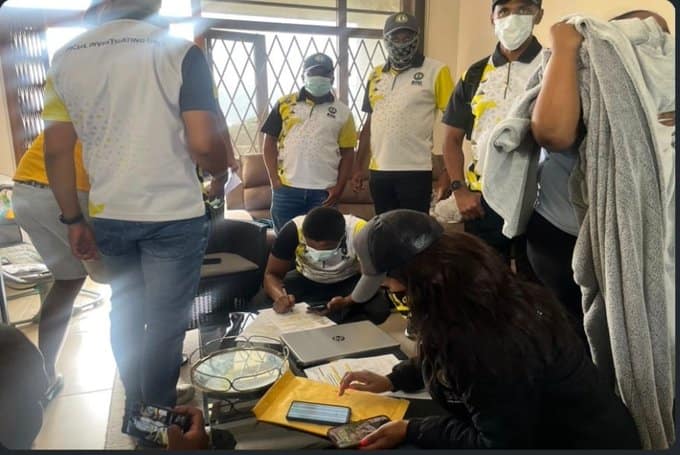
The operation, code-named “Project Lifeline,” saw simultaneous warrants executed at 12 separate locations—from sleek corporate offices in Umhlanga’s mirrored towers and Sandton’s financial heartland, to luxurious private residences in Durban’s gated estates and Johannesburg’s northern suburbs. Digital forensics teams hauled away servers, boxes of financial records, and electronic devices, while asset recovery units identified and catalogued high-value items—luxury vehicles, jewellery, and property deeds—believed to be the proceeds of this colossal fraud.
“This is not a simple case of opportunistic theft,” declared SIU Head Advocate Vernon Mkhize in a tense press conference outside a raided industrial park in Pinetown. “This is a calculated, deep-rooted plunder by a network that allegedly created a web of shell companies, fabricated employee data, and exploited the very systems designed to be a lifeline for our people. They didn’t just steal money; they stole the hope and sustenance of thousands of legitimate claimants during the nation’s darkest hour.”
The Anatomy of a Crafty Syndicate
Preliminary evidence suggests the syndicate operated with chilling precision. Posing as legitimate employers, they allegedly submitted fraudulent claims for thousands of “ghost employees” to the UIF. Using hijacked or fabricated company details and sophisticated forgeries, they siphoned relief funds into a maze of bank accounts. From there, the money was allegedly laundered through seemingly legitimate business fronts—including a tourism company, several construction firms, and a fleet services provider—all now under the SIU’s microscope.
“The irony is devastating,” said Nomsa Dlamini, a spokesperson for the Black Sash Trust, her voice heavy with emotion. “While mothers queued for hours at barren UIF offices, while fathers sold their tools to put food on the table, this network was allegedly living in obscene luxury. This R161 million wasn’t a faceless government loss. It was months of groceries, school fees, and mortgages for honest workers who contributed to the UIF their entire lives.”
A Nation’s Raw Nerve
The news has struck a raw nerve nationally. For millions of South Africans who felt the brutal sting of pandemic job losses, the UIF-TERS scheme was a fragile thread holding lives together. Social media is ablaze with anger and painful recollections.
“I remember the desperation, the failed online applications, the ‘system errors,’” posted Sipho Khoza, a former restaurant manager from Durban. “Now we see why. They were too busy processing fake claims for their phantom workers. That money had my name on it.”
The Long Road to Justice and Recovery
The SIU has confirmed the investigation is multi-pronged, focusing not only on criminal prosecution but also on civil recovery to “claw back every cent.” The preservation order freezes the identified assets, preventing their disposal. The unit is also examining potential collusion or negligence within the UIF’s own systems at the time, promising that “all complicity, inside or out, will be uncovered.”
As families prepare for a holiday season under the shadow of a struggling economy, this crackdown is a stark tableau of South Africa’s ongoing battle. It is a story of profound betrayal, but also of a glimmer of institutional resolve.
“Today’s raids are a beginning, not an end,” Advocate Mkhize concluded, his gaze steely. “The message is clear: the season of impunity for those who feast on the desperation of the poor is closing. We will follow the evidence, recover the assets, and ensure that those responsible face the full might of the law. The people of South Africa deserve nothing less.”
About The Author