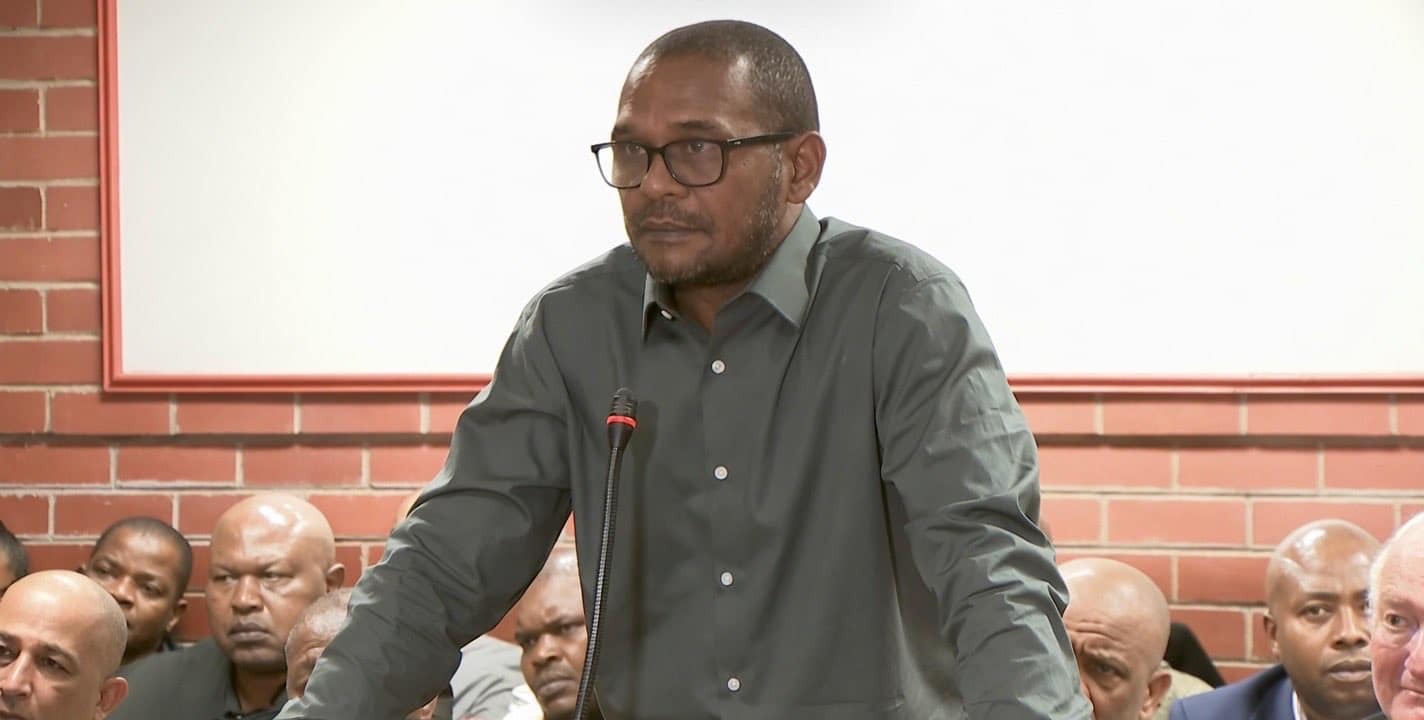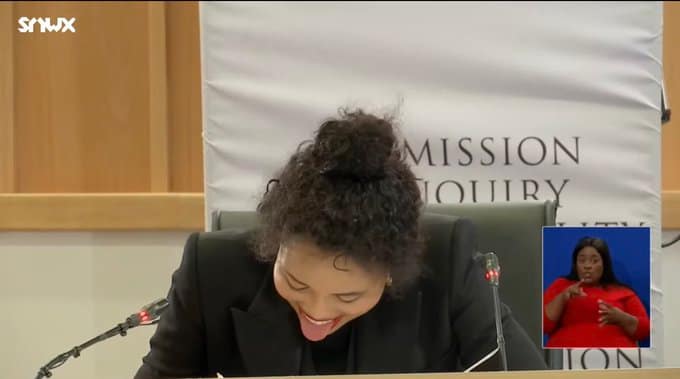
In a tense and often combative session before the Madlanga Commission of Inquiry on Monday, former Ekurhuleni City Manager, Dr. Lindiwe Mashazi, offered a staggering admission: despite being personally informed of multiple, serious sexual assault allegations against a senior police commander, she took no decisive action to protect the victims or ensure accountability, allowing a climate of fear and impunity to fester at the highest levels of the city’s police service.
Mashazi’s testimony centered on the conduct of former Ekurhuleni Metropolitan Police Department (EMPD) Chief, Isaac Mapiyeye. She detailed allegations from two female officers who claimed Mapiyeye used his towering authority to coerce them into sexual relationships. The situation, she acknowledged, escalated into allegations of rape. In one particularly harrowing instance, Mashazi confirmed that one of the officers was allegedly impregnated by Mapiyeye. Yet, under pointed questioning, Mashazi could not provide a clear account of any disciplinary or criminal steps she initiated upon learning this, beyond referring the matter to internal processes that subsequently stalled.
“The picture painted is not of a single lapse, but of a pervasive institutional paralysis,” remarked one commissioner, their voice edged with frustration. This paralysis extended beyond the sexual assault cases. Commissioners confronted Mashazi with a 2021 report from the Independent Police Investigative Directorate (IPID) concerning serious irregularities in the procurement and use of official vehicles by Mapiyeye. The report, which suggested potential corruption, was sent to Mashazi’s office. She admitted to having received it but could not substantively explain why she failed to follow up on its findings or hold Mapiyeye to account, characterizing it as an operational matter for the police department itself.
Her testimony grew increasingly evasive when discussing the current suspended EMPD Deputy Chief, Julius Mkhwanazi. Mashazi had previously authored a letter defending Mkhwanazi against misconduct charges, a move commissioners suggested was inappropriate for a city manager who should ensure impartiality. Faced with this, Mashazi offered contradictory statements, at times claiming detailed knowledge of cases and at others retreating into claims of procedural remove. When presented with documentary evidence that contradicted her version of events, she disputed the evidence’s validity but could not produce alternatives.
The commission’s chair did not conceal his dismay. “You received allegations of rape, of corruption, of abuse of power, and yet the system you oversaw moved with a lethargy that borders on complicity,” he stated. “Now, when asked to return with specific documentation to clarify these discrepancies, you refuse. This is unacceptable for someone who managed a metro with a R60 billion budget.”
This final point hung heavily in the inquiry room: the profound disconnect between the scale of responsibility—overseeing a budget larger than that of several small nations—and the failure of basic governance and duty of care to employees. The testimony suggested that the EMPD, a critical arm of public safety, may have been left to operate as a fiefdom, with whistleblowers and victims silenced by inaction at the very top.
The spotlight now turns to accountability at a national level. The inquiry continues today with expected testimony from Police Minister Senzo Mchunu. Commissioners are likely to press him on the oversight role of the national government when local structures, as alleged in Mashazi’s testimony, appear to have catastrophically failed. The central question remains: in an institution meant to uphold the law, who guards the guards when those at the helm are accused of being the predators?
About The Author