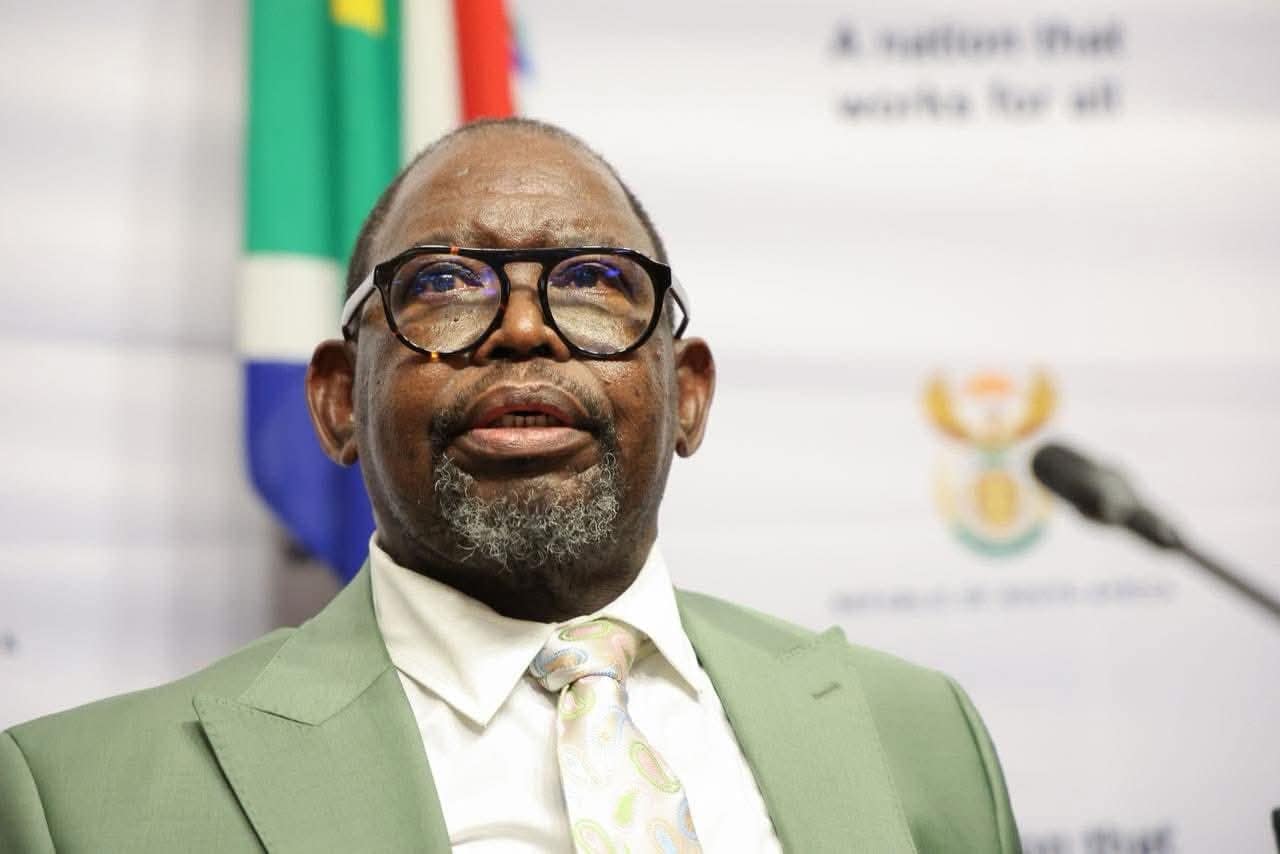
In a budget defined by tight constraints and strategic reprioritisation, Finance Minister Enoch Godongwana has tabled a 2026 Medium-Term Budget Policy Statement (MTBPS) that navigates between global ambition and domestic fiscal reality. A central feature of the announcement was the adjustment of R100 million to the Department of International Relations and Co-operation’s (DIRCO) budget to cover a funding shortfall for the upcoming G20 Leaders’ Summit, a high-stakes event South Africa is set to host next weekend at the Nasrec Expo Centre in Johannesburg.
The reallocation, announced in Parliament on Wednesday, was framed by the minister as a necessary step to ensure the country’s successful hosting of the prestigious gathering of the world’s major economies. Minister Godongwana emphasised that the funds were not new expenditures but were drawn from “other departments’ declared savings,” underscoring a key theme of his address: the government’s commitment to reprioritise spending without exceeding its predetermined fiscal ceilings.
“This is not about asking for more money; it is about using what we have more smartly,” Godongwana stated. “Hosting the G20 is a strategic imperative for South Africa. It projects stability, attracts investment, and affirms our place on the global stage. The R100 million ensures we meet our obligations to the international community without derailing our fiscal framework.”
A Budget of Roll-Overs and Unavoidable Costs
Beyond the G20 funding, the minister’s revised spending plan revealed the government’s ongoing struggle with legacy commitments and unforeseen crises. The MTBPS detailed a R5.2 billion roll-over from the previous financial year, a mechanism that allows unspent funds for specific, unfinished projects to be carried forward. This indicates challenges in project execution and budget absorption within various departments.
Furthermore, the treasury has approved R1.6 billion in unforeseeable and unavoidable expenditure. This contingency reserve will be directed toward two critical areas: ongoing disaster relief efforts following recent floods and fires, and the operational costs of the high-profile Madlanga Commission of Inquiry. The commission is investigating alleged corruption within the country’s criminal justice system, a probe that has garnered significant public attention.
“A Critical Turning Point” Amid Cautious Optimism
Concluding his address, Minister Godongwana portrayed South Africa’s economy as standing at a “critical turning point.” He pointed to modestly improved revenue collection and a slight narrowing of the budget deficit as signs of cautious progress. However, he issued a stern warning that this fragile stability was entirely contingent upon the government’s ability to maintain fiscal discipline and relentlessly implement its structural reform agenda.
“The hard-won gains we see in these numbers are not yet guaranteed,” he cautioned. “Our path forward requires unwavering commitment to spending wisely, rooting out corruption, and creating an environment where businesses can invest and grow. There is no room for deviation.”
The announcement has been met with mixed reactions. Business leaders have welcomed the commitment to discipline, while opposition parties and civil society groups have questioned the opportunity cost of the G20 expenditure, arguing that R100 million could have been directed toward immediate social needs like service delivery or load-shedding mitigation. As world leaders prepare to descend on Nasrec, the budget tabled to welcome them serves as a stark reminder of the difficult financial balancing act the South African government continues to face.
About The Author